Apple's stock climbed more than 6% on Wednesday to an unprecedented closing high of $354.33, as investors weighed the potential implications of Democratic victories in the U.S. midterm elections. The rally was driven by the possibility that political opposition to data center construction could temper demand for memory chips, a key cost pressure for the iPhone maker.
The broader tech sector saw a divergence, with AI infrastructure names like Nvidia, Micron Technology, Intel, and Broadcom all declining. Concerns mounted that Democratic wins, particularly in state-level races, could lead to moratoriums on new data centers, disrupting the industry's expansion plans. Notably, Democrat Gina Hinojosa, who campaigned on an immediate halt to new data centers, defeated incumbent Republican Governor Greg Abbott in Texas—a state that accounts for roughly 27% of planned U.S. data center capacity, according to Wells Fargo.
Goldman Sachs economists highlighted that Democratic gains at the state and local level could result in short-term data center moratoriums, potentially affecting about 45% of planned U.S. capacity expansion. This uncertainty has cast a shadow over companies whose growth is tied to massive infrastructure spending.
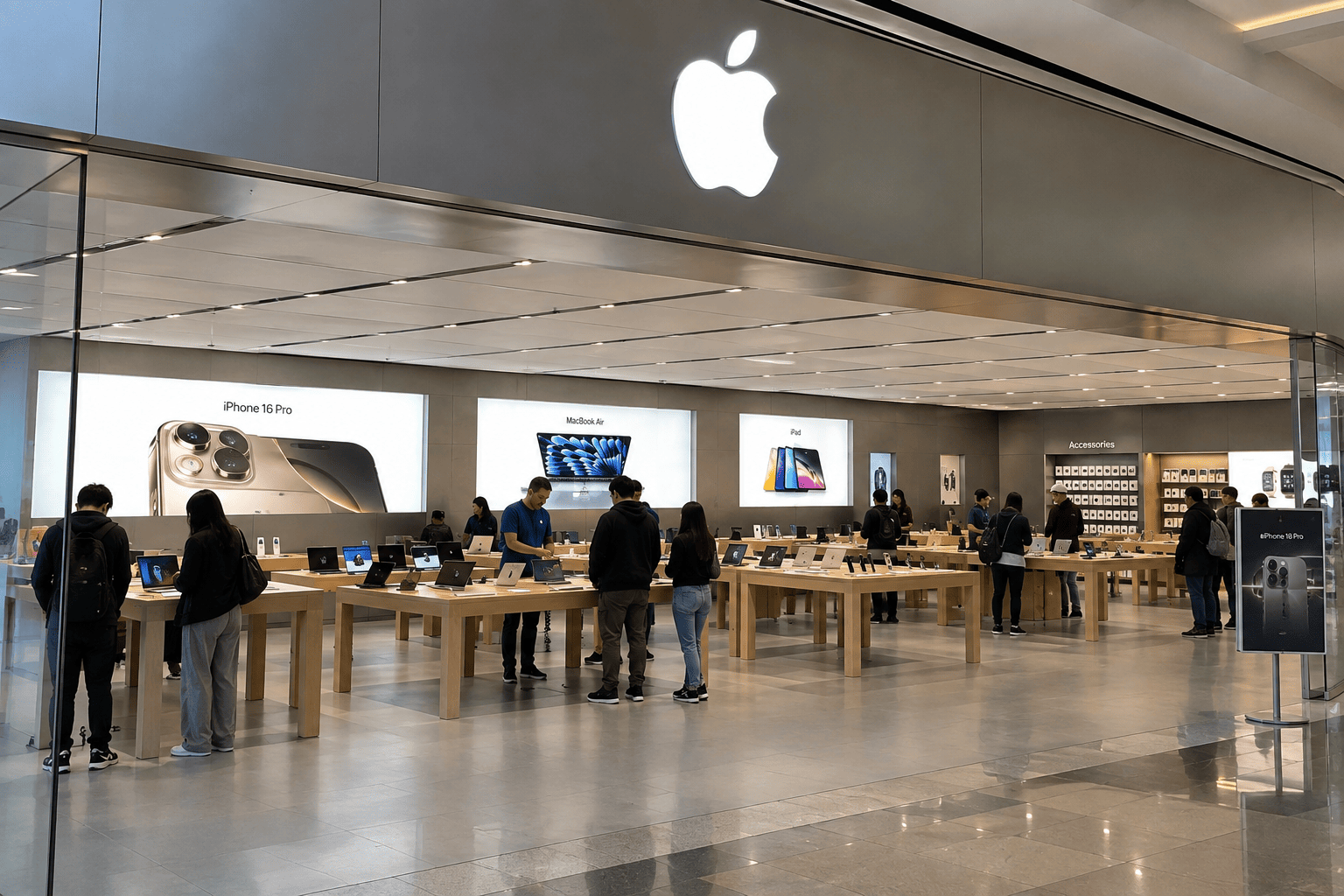
In this environment, Apple is emerging as a defensive play. Evercore ISI analyst Amit Daryanani noted that Apple's earnings are driven by iPhone mix, pricing, and services rather than data center construction. He added that the company offers resilient demand, with gross-margin recovery and price elasticity as key tests, making it a preferred name for investors seeking safety.
Apple's strategy of avoiding the expensive race to build AI data centers, unlike rivals Microsoft, Alphabet, Amazon, and Meta, was once seen as a disadvantage. However, as investors question the returns on massive AI spending, Apple's limited exposure has become a competitive advantage. Year-to-date, Apple shares are up about 30%, outperforming Alphabet (down 8%) and Meta (down nearly 3%), while Amazon and Microsoft have gained around 18-19%.
A potential slowdown in data center construction could also cool memory chip prices, which have been a significant headwind for Apple. The company has cited rising DRAM and NAND costs as a major margin pressure, with a 140 basis point gross margin headwind in the December quarter. Daryanani suggested that reduced data center demand could temper memory inflation, benefiting Apple and other companies affected by high chip prices.
Apple's latest quarterly results underscored these challenges. The company reported revenue of $114.5 billion and earnings per share of $2.10, both beating expectations, but gross margin for the September quarter stood at 47.9%, down from the prior quarter. Apple forecast a margin of 45-46% for the following quarter, below analyst estimates of 47%, attributing the pressure to an "unprecedented" rise in memory prices and costs related to its Siri AI assistant rollout.
Investors are closely watching whether Apple can monetize its Siri AI investments. A moderation in memory costs could provide some relief, though the extent of the benefit will depend on how quickly chip prices respond to changes in data center demand. For now, Apple's relative insulation from the AI infrastructure boom is proving to be a boon, as the market recalibrates its expectations for the sector.
This article is for informational purposes only and does not constitute financial advice.