Alphabet shares rose on Monday as Google introduced two new additions to its eighth-generation Tensor Processing Unit (TPU) family, signaling a more aggressive push into the AI hardware market. The stock gained 1.93% to close at $290.27, while Nvidia fell about 5.3% to $176.75 amid ongoing scrutiny of its CEO.
TPU 8tx targets secure AI workloads
The TPU 8tx is designed for organizations that handle sensitive data, such as businesses and government agencies. It focuses on secure and confidential inference, allowing users to fine-tune models and train AI agents on private data without moving it between separate computing clusters. Google highlighted hardware-level security features that protect both data and models during processing.
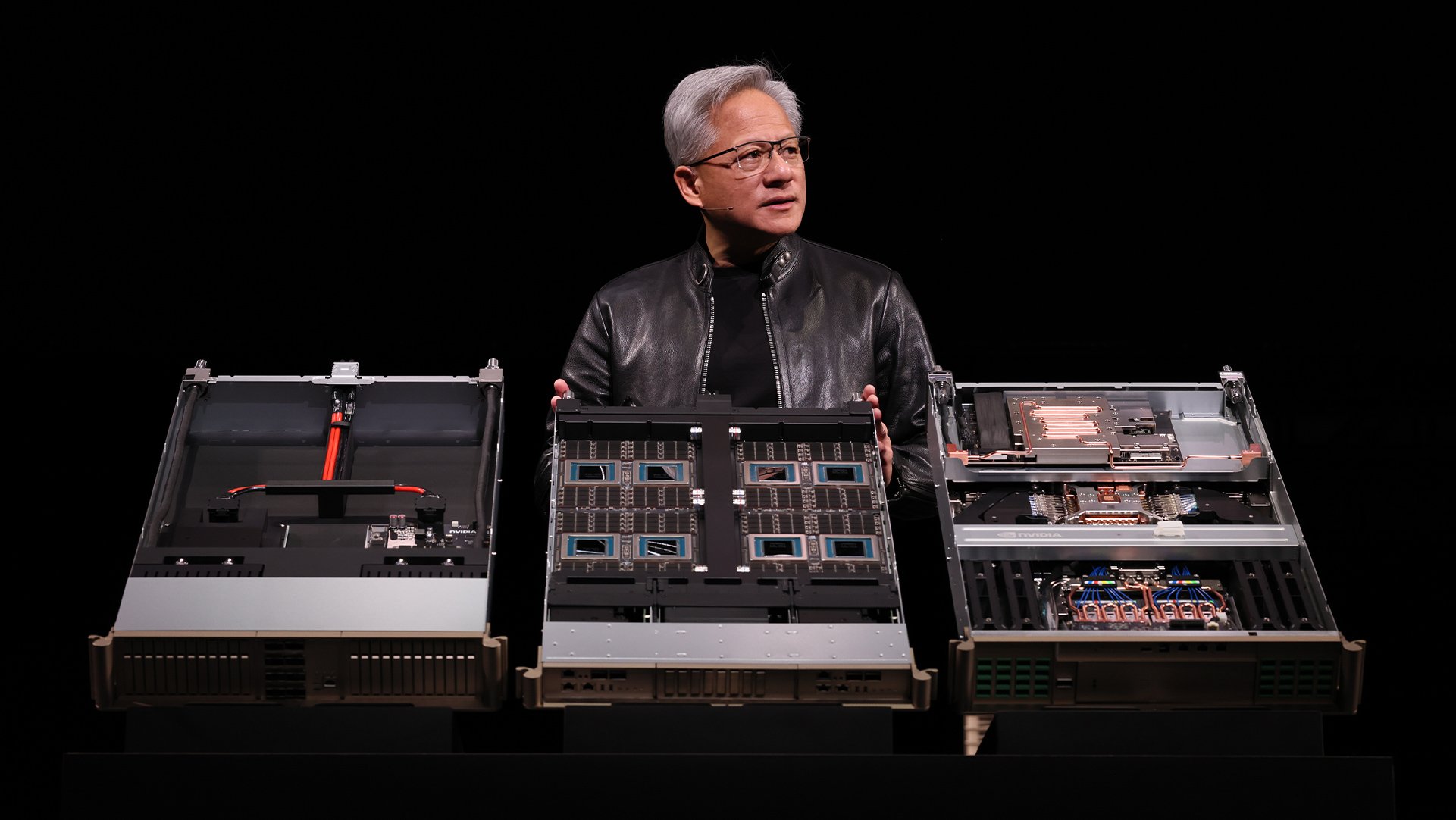
According to Google, the TPU 8tx delivers up to twice the lower latency compared with the TPU 8t, supported by a faster network optimized for AI reasoning tasks. This builds on the existing eighth-generation architecture developed in collaboration with Broadcom.
TPU 8i Max addresses memory bottlenecks
The second system, TPU 8i Max, tackles the so-called memory wall, where processors outpace memory systems. It combines two TPU 8i chips into a single package, doubling computing power, SRAM capacity, and high-bandwidth memory bandwidth relative to the TPU 8i. This configuration is intended to support complex AI workloads, including agents processing large documents, codebases, and lengthy videos.
Google stated that TPU 8i Max scales compute and memory in lockstep, ensuring processors remain supplied with essential data and preventing large workloads from stalling. The design also allows twice the silicon to fit into the same rack space, potentially increasing computing density without additional physical data-center footprint.
Expanding software access and cloud availability
To counter Nvidia's CUDA software advantage, Google has been broadening developer access. In October, it open-sourced TorchTPU, enabling developers to run existing PyTorch code and Hugging Face models on its accelerators without rewriting applications. The company also introduced dynamic slicing technology, which it says can cut computing job startup times by up to five times and accelerate recovery from hardware failures by up to 4.5 times.
Google also announced that its TPUs will become available through Oracle's cloud infrastructure platform starting in 2027, marking the first time the chips are offered on a hyperscale cloud outside Google's own infrastructure. The company said its aim is to make TPUs more accessible to every developer and cloud customer.
Bloomberg Intelligence estimates that Google's TPU sales could exceed $135 billion in 2028, up from an estimated $12 billion this year, reflecting the growing commercial reach of its AI hardware business.
This article is for informational purposes only and does not constitute financial advice.