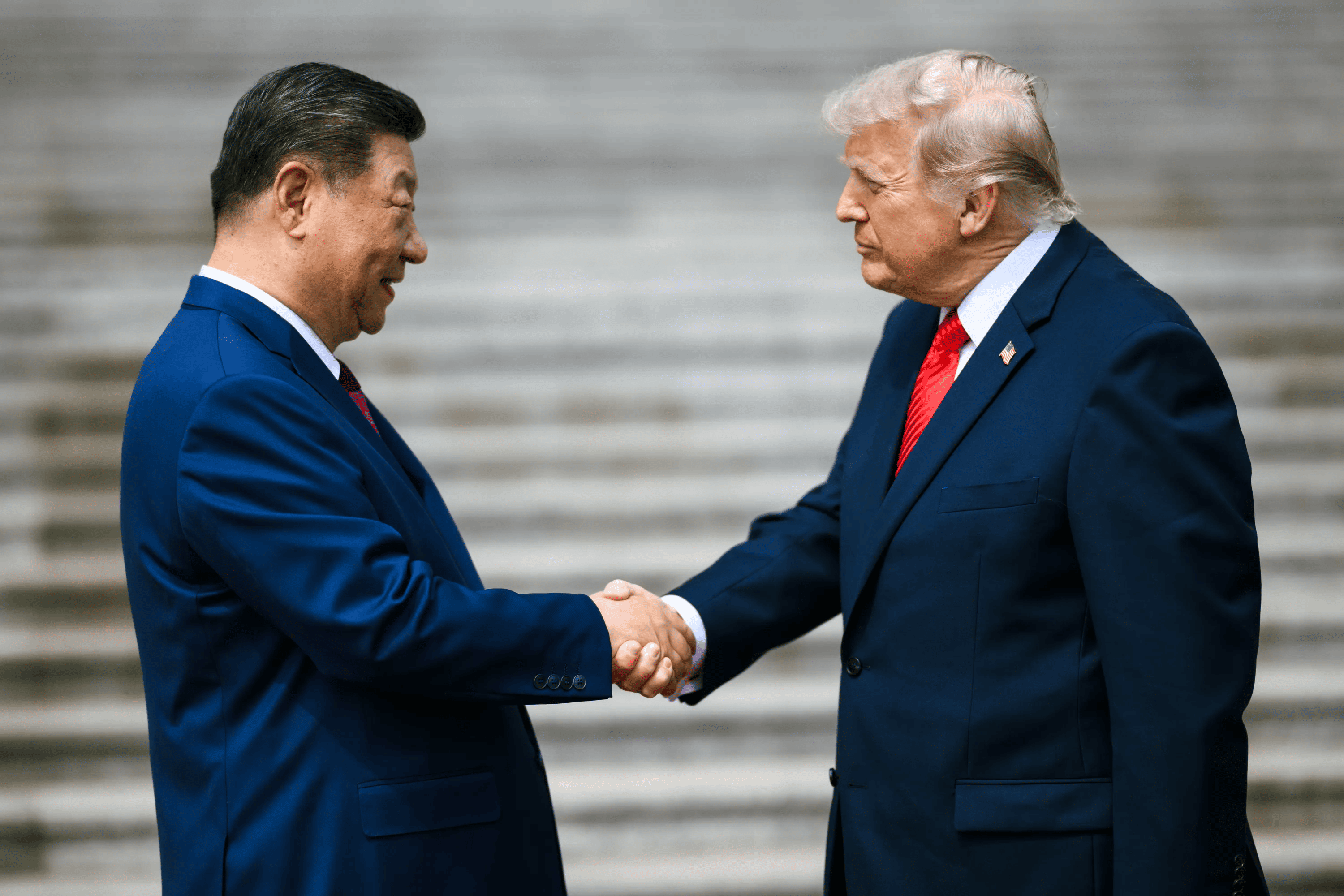
Chinese President Xi Jinping arrived in Washington on Wednesday evening for his first US visit in 11 years, with the two nations agreeing to extend their trade truce by two months to January 10, according to Treasury Secretary Scott Bessent. The extension, announced just before Thursday's summit, keeps existing tariff levels and Chinese rare earth export curbs in place while negotiators pursue a broader agreement.
Summit Agenda: AI, Trade, and Rare Earths
The leaders' second meeting this year, following Trump's May visit to Beijing, featured an arrival ceremony, military review, private Oval Office talks, and a state dinner with US business executives. Artificial intelligence took center stage in opening remarks, with Xi emphasizing that both nations, as leading AI powers, share a responsibility to ensure the technology's development remains "always under human control." Trump echoed the sentiment, stating that decisions on security, technology, and AI "can promote peace and prosperity for decades and decades to come."

However, Trump signaled little appetite for binding AI regulations, posting on Truth Social that he prefers to leave superintelligence unregulated, adding "Our guardrail is the DOJ!" This stance aligns with his recent rejection of global AI rules at the UN.
Truce Extension: What It Means
The truce, originally struck at the October 2025 Busan meeting, had been set to expire on November 10. Bessent announced the extension after his second meeting in four days with Chinese Vice Premier He Lifeng, saying it gives Washington "more time to see what we can do on the economic front." He noted China is meeting its commitment to buy 25 million tons of US soybeans but is lagging on a $17 billion pledge for other agricultural goods and on rare earth purchases.
Bessent hinted at possible announcements on financial services and farm purchases during the visit. Meanwhile, Trump has imposed a 12.5% tariff on goods from 60 trading partners, including China, over forced labor concerns. A roughly $14 billion arms package for Taiwan remains on hold, following an $11 billion sale approved in December.
Market Reaction
Wall Street traded lower on Thursday, with the S&P 500 down 0.51%, the Dow Jones Industrial Average 0.32%, and the Nasdaq Composite 0.78%. Bond yields were the primary pressure, with the 10-year Treasury yield near 5.10%, its highest since 2007, and the 30-year yield touching 5.43%, the highest since 2004. Investors are watching for purchase commitments or tariff relief from the talks.
The leaders may meet again at the APEC summit in Shenzhen in November and the G20 in Miami in December, ahead of the January 10 deadline. The extension provides a window for negotiations, but the shorter-than-expected duration has already weighed on Chinese stocks, which fell Thursday.
This article is for informational purposes only and does not constitute financial advice.

