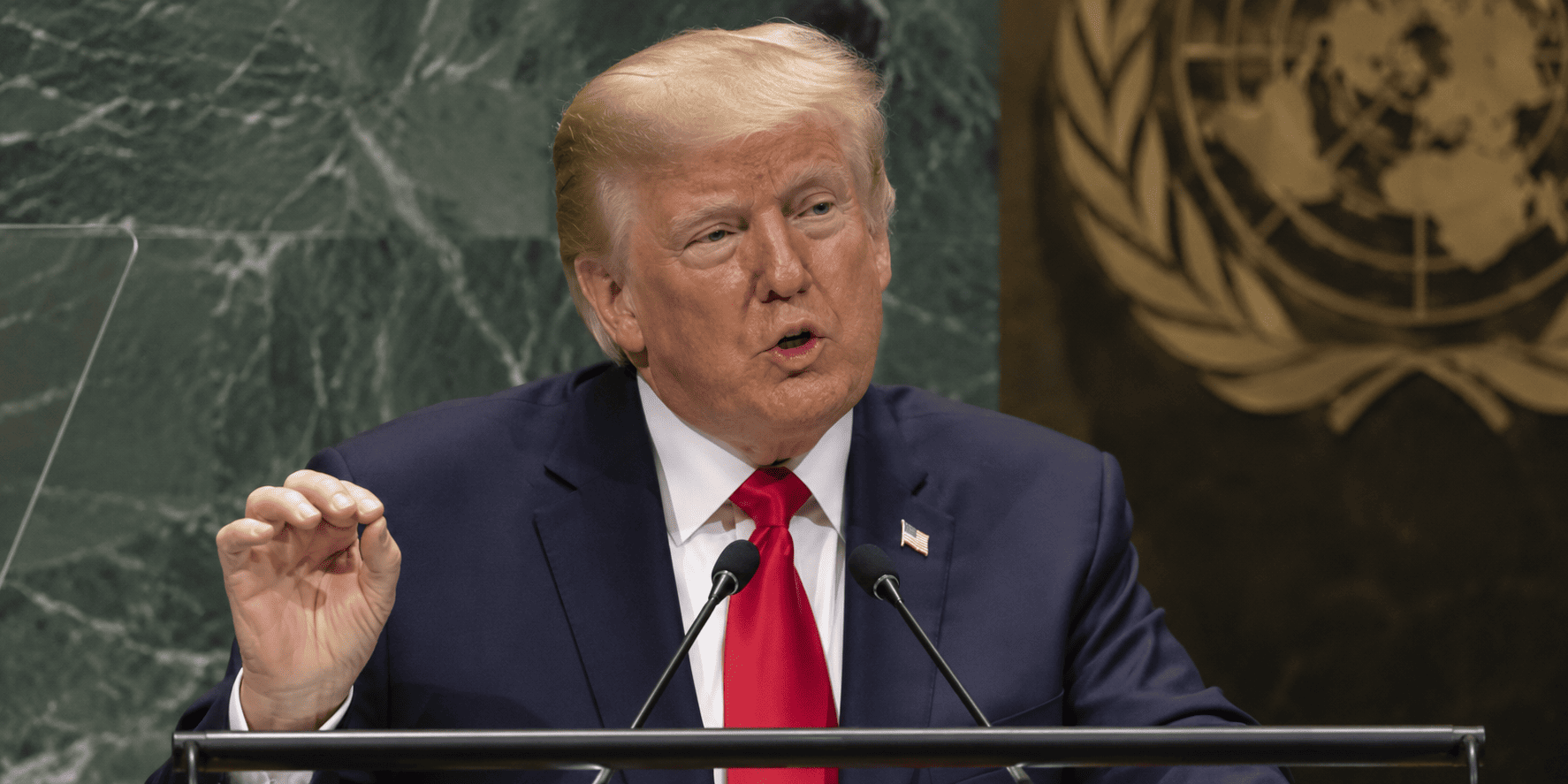
President Donald Trump used his address to the United Nations General Assembly on Tuesday to firmly reject international efforts to impose new regulations on artificial intelligence, while reaffirming his commitment to accelerating US development of the technology. He also announced that official US government documents will now refer to AI as "super intelligence," a term he argued is more accurate than "artificial."
Terminology shift to 'super intelligence'
Near the end of his 37-minute speech, Trump revealed the nomenclature change, saying the word "artificial" makes the technology "sound fake, and it is not fake. It's actually amazing." He said the change follows a social media poll in which he asked users to suggest alternative names. "From this point forward, all of United States documents, and hopefully the world's, will be changed to use the much more accurate term 'super' as opposed to 'artificial,'" Trump declared.

Rejection of global oversight
Trump explicitly rejected what he called "any attempt to construct a globalist scheme to control for the artificial intelligence being spoken of so much now." He drew a parallel between AI skeptics and climate change warnings, which he has long dismissed as a hoax, saying, "the very same people who said we'll all be dead in 12 years because of global warming—a name since reborn to climate change because the planet was cooling, not warming—and nobody was dead."
While opposing new regulations, Trump said the US government would monitor the sector through the Department of Justice and "rein things in" if necessary. He emphasized that he would not "stifle growth of something that will be bigger than the Industrial Revolution."
Contrast with industry calls for safety
Trump's stance stands in contrast to recent calls from some AI industry leaders for additional safeguards. OpenAI CEO Sam Altman and Anthropic CEO Dario Amodei have both urged greater attention to AI safety and the pace of development. The president's remarks come amid broader international debate about how to govern increasingly capable systems, with UN Secretary-General António Guterres calling for stronger global oversight of AI risks in his own address.
AI race with China remains a priority
Trump framed AI leadership as a critical component of US global competitiveness, stating, "That's the group that wins, and we're leading now over China by a lot, and everyone else, and we're going to keep it that way." His comments arrive as the US and China continue to develop separate AI supply chains and compete over advanced technology. AI is expected to be a central topic in upcoming discussions between Trump and Chinese President Xi Jinping.
The president's remarks signal a clear policy direction: the US will prioritize innovation and dominance in AI over precautionary regulation, a position that could shape the global AI landscape for years to come.
This article is for informational purposes only and does not constitute financial advice.

