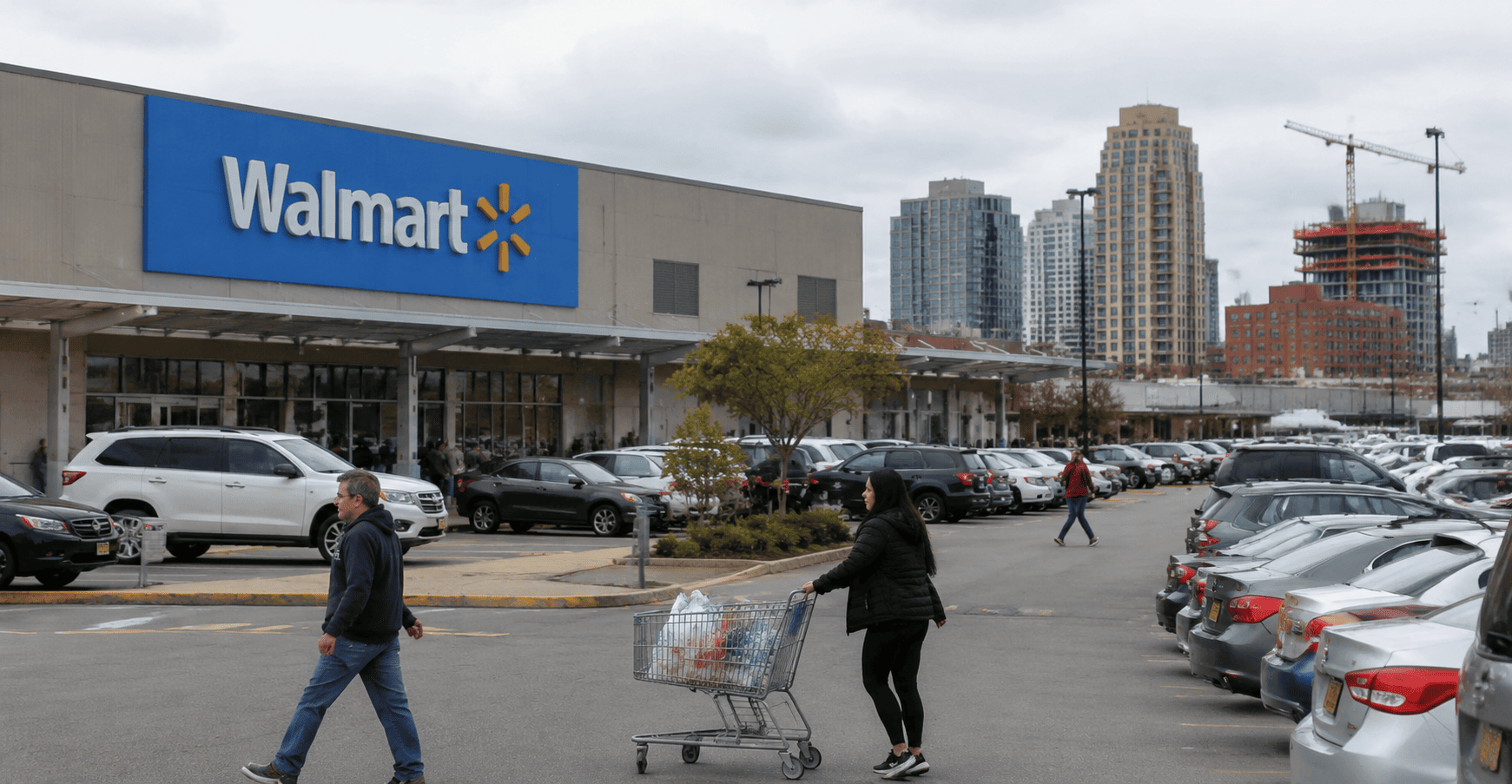
Walmart Inc. (WMT) shares traded higher on Wednesday, breaking a three-week losing streak, as analysts expressed confidence that the retailer's latest round of grocery price reductions is financially sustainable despite an increasingly competitive landscape.
Price Cuts Funded by Tariff Refunds, Existing Guidance
The company announced broad price reductions on grocery and seasonal items, following a social media post by President Donald Trump that preceded the official announcement. While the move has sparked concerns about a potential grocery price war, analysts at Bank of America and Mizuho argue that the discounts are well within Walmart's financial framework.
Bank of America analyst Christopher Nardone noted that the price cuts are being funded through spending already included in Walmart's earlier guidance, along with tariff-related refunds that have recently started flowing back to the retailer. According to Nardone, these resources allow Walmart to lower prices without altering its previously announced earnings outlook. He added that the move underscores Walmart's willingness to compete aggressively in grocery, where pricing remains a key driver of consumer decisions.
Mizuho maintained its Outperform rating on Walmart and reiterated a $137 price target, implying roughly 24% upside from the stock's prior close. Analyst David Bellinger highlighted multiple financial tailwinds offsetting the discounts, including more than $2 billion in expected tariff refunds and lower diesel prices, which have reduced transportation costs compared with earlier forecasts.
Grocery Competition Set to Intensify
Despite broad analyst support for Walmart's strategy, warnings emerged that grocery competition is likely to escalate in the second half of the year. Wolfe Research's Spencer Hanus noted that Kroger, Albertsons, Costco, and Dollar Tree have all been vocal about price investments, and Walmart's announcement will heighten concerns about a price war. Hanus pointed out that Walmart's price rollbacks had already increased about 20% during the first quarter and are expected to accelerate further.
Hanus also emphasized that Walmart's pricing advantage remains difficult for competitors to match. For every 1% pricing gap rivals attempt to close, he estimates they would need to spend as much as $1.5 billion, making it challenging for most retailers to fully compete. Instead, competitors are expected to focus price reductions on staple products like milk and eggs to improve consumers' perception of value.
Inflation Pressures Continue to Shape Consumer Behavior
The latest discounts come as consumers continue to grapple with elevated living costs. Inflation stood at 4.2% in May, well above the Federal Reserve's 2% target, while interest rates have remained unchanged. Mizuho's Bellinger noted that "above all, deflationary pricing seems very much needed for the consumer."
Despite the recent pullback in Walmart shares—down 17.5% from their May record high—some market observers remain constructive on the company's longer-term outlook. CNBC's Jim Cramer described the decline as an attractive buying opportunity, arguing that several of the company's key challenges are beginning to ease.
For broader market context, see our coverage of the Dow breaching 53,000 amid AI chip rally and European stocks hitting new highs.
This article is for informational purposes only and does not constitute financial advice.