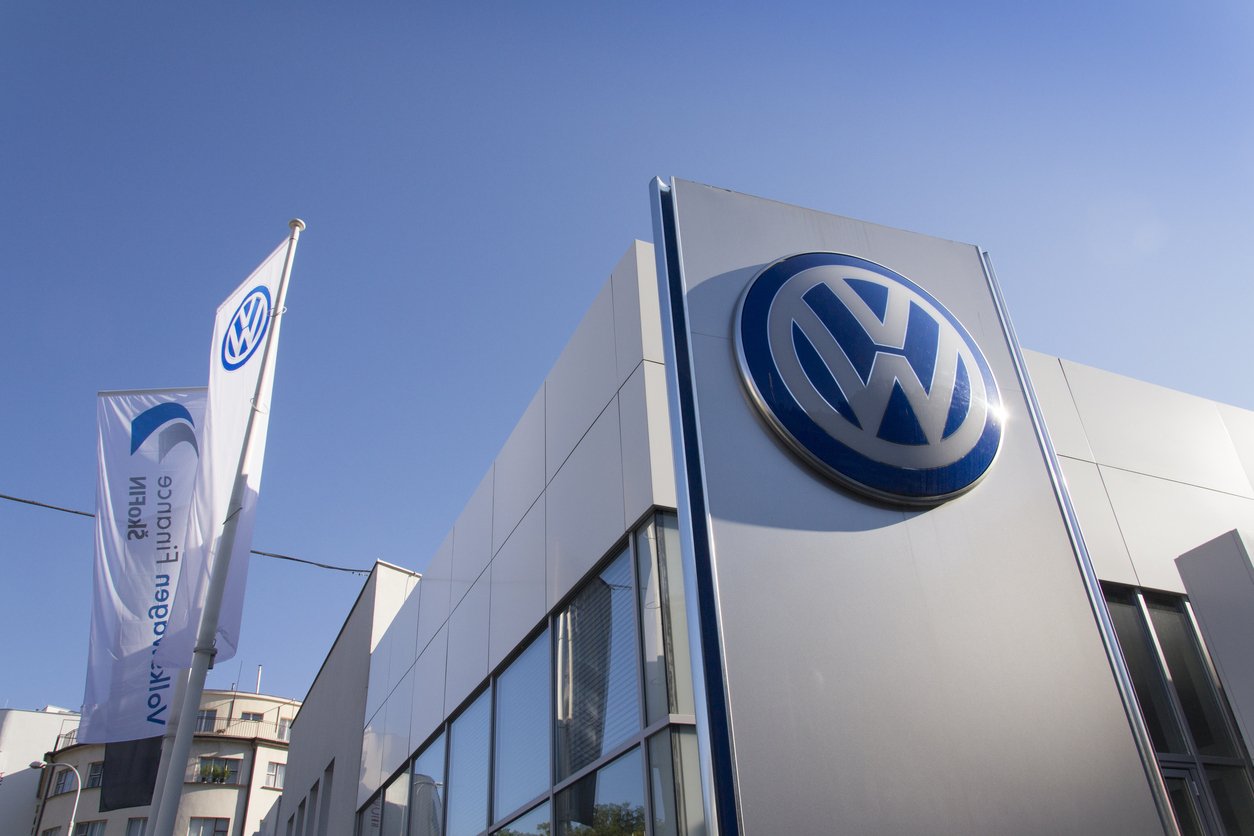
Volkswagen's stock surged about 7% in early Frankfurt trading on Friday after the company's supervisory board unanimously approved a sweeping restructuring plan, known as Future Plan 2030. The plan includes eliminating an additional 50,000 jobs by 2030, bringing total planned reductions to roughly 100,000, and cutting the model range by about half. Investors cheered the move, which they see as a long-overdue step toward improving profitability.
Why investors are optimistic
The market's positive reaction reflects years of demand from shareholders for Volkswagen to prioritize returns over scale. The company's governance structure, which gives significant influence to labor representatives and the state of Lower Saxony, has historically made restructuring difficult. The unanimous board vote removes a major source of uncertainty, signaling that management has secured the necessary political and labor backing.
RBC Capital Markets analyst Tom Narayan called the approval an “encouraging signal” and a “positive surprise,” according to finanzen.ch. RBC maintained an Outperform rating and a €120 price target. JPMorgan's Jose Asumendi described the agreement as a “positive step” that should strengthen Volkswagen's competitiveness, while keeping a Neutral rating and a €110 target.
What the plan entails
Future Plan 2030 targets roughly 50% fewer models and about 75% less product complexity by 2035. Production capacity will be aligned with around nine million annual vehicle sales, and management aims for a 9% operating margin by 2030. Four German plants—Emden, Zwickau, Hanover, and Neckarsulm—have no guaranteed production allocations beyond 2030, though no closures have been announced.
The economics are straightforward: fewer overlapping models mean fewer engineering programs, simpler factories, greater purchasing scale, and lower fixed costs per vehicle. This is why shrinking can be bullish for the stock—Volkswagen is effectively trading volume ambitions for better returns on capital.
Challenges remain
Despite the positive reception, the restructuring does not address all of Volkswagen's competitive pressures. Chinese automakers continue to challenge the group on pricing, software, and electric vehicles. European demand remains weak, and US tariffs are hurting profitability. Implementing cuts across politically sensitive German plants could take years.
Jefferies analyst Philippe Houchois captured the lingering uncertainty with a blunt question: “Drama ended or just paused?” according to finanzen.ch. Management also notes that European production capacity exceeds demand by more than 500,000 vehicles, highlighting the depth of the utilization problem.
Volkswagen has won approval for a painful reset, but approval is only the first step. Cutting 50,000 more jobs is very different from extracting the savings while investing enough in EVs, software, and China-specific products to remain competitive. As the company navigates these challenges, investors will be watching closely. For more on how automakers are adapting, see Tesla's robotaxi push and AI-driven demand signals.
This article is for informational purposes only and does not constitute financial advice.