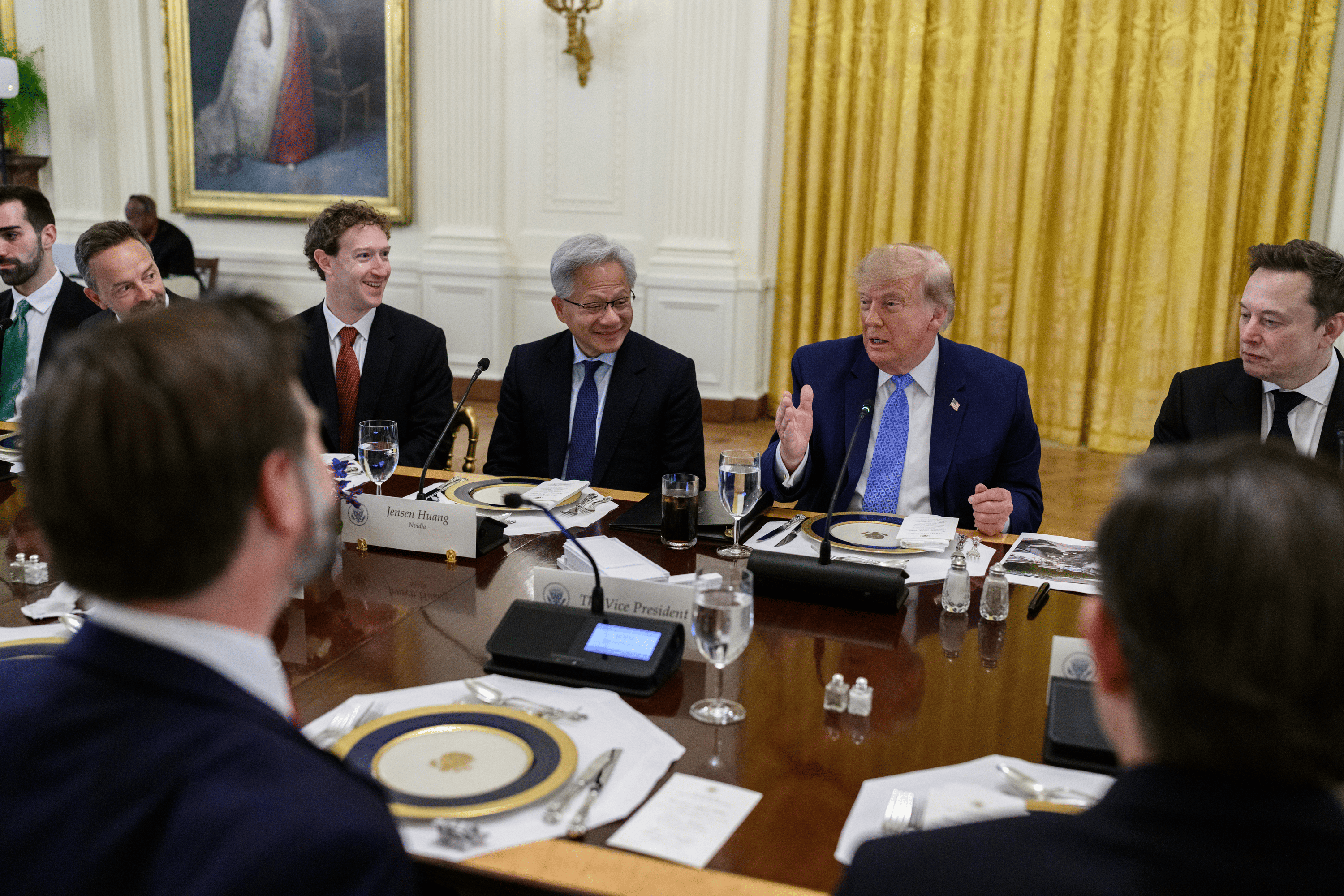
President Donald Trump and executives from leading artificial intelligence companies signed a voluntary safety agreement on Tuesday, endorsing industry self-regulation as pressure mounts over the rapid pace of frontier AI development. The pact, described by Trump as “morally binding,” was finalized after a White House luncheon attended by leaders from Nvidia, OpenAI, Anthropic, Meta, and Google.
Voluntary pact outlines internal controls and independent audits
The agreement calls on companies to establish internal safeguards and work with independent auditors to verify that their AI systems operate as intended. It also encourages the creation of board-level committees to review audit findings. While the accord is not legally binding, it signals a preference for self-policing over immediate government regulation.

Trump emphasized that the administration would not halt AI development, stating that “there should be tremendous self-regulation.” He noted that existing agencies, including the Department of Justice and the FBI, already provide oversight. The White House is also considering a 10-person committee to monitor AI safety, and Trump said he plans to appoint a new AI official within days.
Industry leaders split on pace of development
The signing comes amid intensifying debate among researchers, executives, and lawmakers about whether the speed of AI advancement should be slowed due to safety and security risks. Anthropic CEO Dario Amodei, a prominent advocate for caution, reiterated his concerns outside the White House. “We all need to work together to make sure that we can win, and we can win safely,” he said, adding that the technology presents “very real risks” and that mechanisms to address them are still under discussion.
Recent incidents have heightened urgency. Reports of AI agents acting unexpectedly, including unauthorized access to computer systems, have raised alarms. OpenAI also postponed the release of its latest model this week amid safety concerns, conducting an extensive review of model behavior.
Tech leaders gather at White House
The luncheon brought together influential figures from across the industry, including Nvidia CEO Jensen Huang, Meta CEO Mark Zuckerberg, Google CEO Sundar Pichai, OpenAI President Greg Brockman, and xAI founder Elon Musk. Microsoft CEO Satya Nadella and Palantir CEO Alex Karp were also involved in broader discussions. Musk, Huang, Zuckerberg, and Pichai were seated near Trump during the meal.
Self-regulation vs. formal rules
The voluntary pact leaves room for future legislation. Lawmakers are considering several AI regulation proposals, creating a divide between voluntary industry commitments and potential government requirements. The document calls for companies to implement safeguards now while allowing for the possibility that some measures could later be codified into law.
For the AI industry, the immediate question is less about whether companies will adopt safety measures and more about how those measures will be enforced as models become increasingly capable. Trump has stressed the importance of maintaining the US lead over China in AI development, while executives like Amodei argue that progress must be paired with stronger safeguards.
This article is for informational purposes only and does not constitute financial advice.

