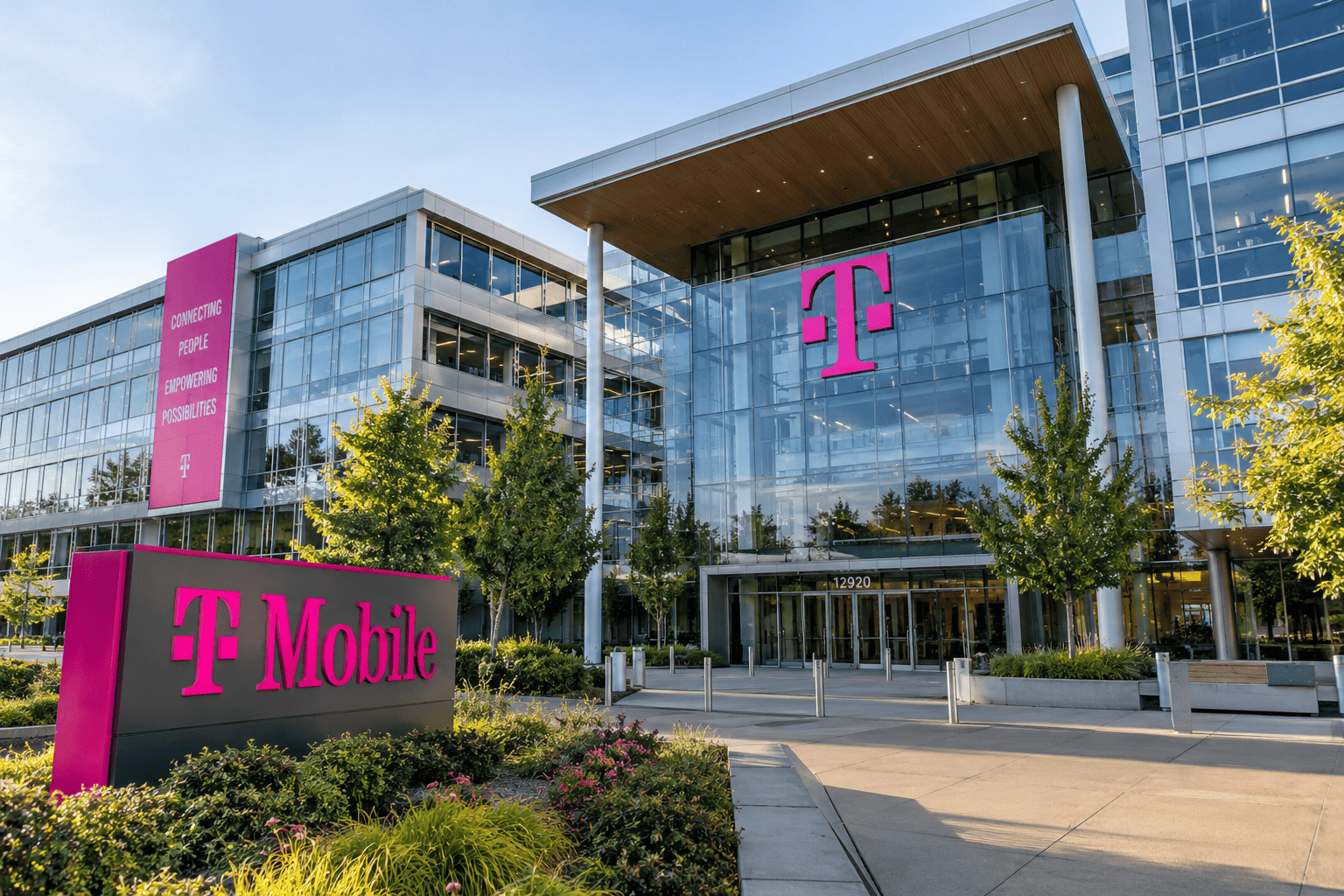
T-Mobile's stock extended its slide on Tuesday, touching $148—its lowest level since December 2023—as concerns over SpaceX's entry into the telecom space intensify. The shares have now fallen roughly 45% from their March 2025 peak of $268.90, accelerating a downtrend that began over a year ago.
SpaceX fears drive sell-off
Investors are reacting to SpaceX's recent acquisition of a spectrum license, which positions the satellite company as a more direct competitor to traditional carriers. The move comes as the SEC nears a vote that could benefit satellite operators like SpaceX and Amazon, and as SpaceX prepares to launch advanced Starlink satellites with faster download and upload speeds.

This pattern is familiar: markets often punish incumbents when a well-funded disruptor enters their space. Earlier, Amazon's expansion into retail sparked fears that crushed many brick-and-mortar stocks, yet companies like Walmart and Costco thrived. Similarly, software firms have been sold off on AI disruption worries—a phenomenon dubbed 'SaaSPocalypse.'
While the SpaceX threat is real, analysts note that a major impact on urban telecom markets is likely years away. Legacy carriers still hold significant infrastructure advantages, and satellite-based services face regulatory and technical hurdles before becoming mainstream alternatives.
Fundamentals remain solid
Despite the stock's decline, T-Mobile's operating performance has been resilient. In its latest quarter, service revenue rose 9% year-over-year to $19 billion, with postpaid revenue contributing $15.9 billion. Net income grew modestly to $3.2 billion, though management cited higher costs from the UScellular merger and depreciation.
The company returned $3.3 billion to shareholders through buybacks and dividends, part of a broader $54.6 billion capital return program. Analysts project annual revenue growth of 6.8% this year, reaching $98.5 billion next year.
Valuation metrics suggest the sell-off may have overshot. T-Mobile's forward price-to-earnings ratio now stands at 13.8, well below its five-year average of 28.6, indicating the market is pricing in significant disruption.
Technical outlook points lower before rebound
From a technical perspective, the stock has broken below the 61.8% Fibonacci retracement level and is approaching a 'death cross' as the 50-week moving average nears a crossover below the 200-week average. This pattern often signals further downside in the near term.
Support levels have been breached, and the next psychological level could be $100. However, historical patterns suggest that such oversold conditions frequently lead to a bounce as value investors step in.
Whether T-Mobile is a bargain or a value trap depends on how quickly SpaceX can scale its satellite service and whether T-Mobile can maintain its market share gains. The company has consistently outpaced rivals in subscriber growth, and its balance sheet remains strong.
This article is for informational purposes only and does not constitute financial advice.

