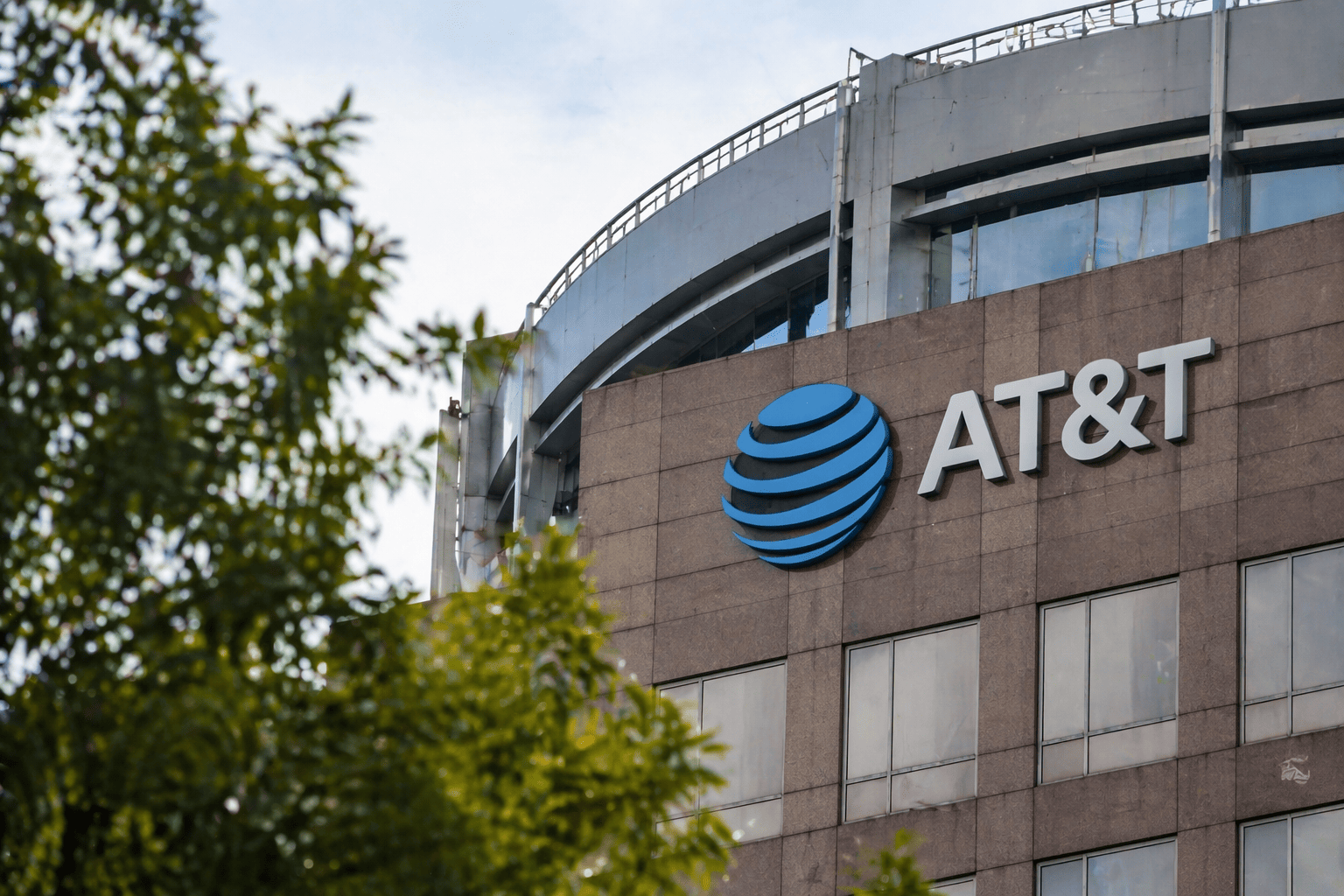
AT&T shares tumbled more than 7% in premarket trading on Tuesday after SpaceX announced an agreement to acquire a nationwide spectrum portfolio from Gain Management, a digital infrastructure specialist. The deal, which SpaceX said would help its Starlink Mobile service become a major U.S. mobile carrier, sparked fears of heightened competition in the telecom sector.
The sell-off dragged AT&T to around $23, down 13.3% from its September high of $26.64. Other telecom giants also fell, with Verizon dropping 5.1% and T-Mobile sliding 6.6%. The decline extended globally, as Deutsche Telekom, BT Group, and Vodafone each lost more than 3%.

SpaceX's Spectrum Move Raises Competitive Concerns
SpaceX's acquisition of low-band spectrum is aimed at addressing a key technical gap for its satellite-to-phone service. The company stated that this spectrum would help Starlink Mobile become a major mobile carrier in the U.S. However, history suggests that disruption fears in the telecom industry may be overstated. Past worries about Amazon disrupting traditional retailers or Tesla overtaking legacy automakers have not fully materialized, and incumbents have often adapted.
SpaceX faces significant hurdles in urban areas, where it would need to deploy ground towers to complement its satellite network. Additionally, the acquired spectrum is limited in scope. The market's reaction may be overblown, as the actual competitive threat to established carriers like AT&T remains uncertain.
AT&T's Fundamentals Remain Solid
Despite the recent volatility, AT&T's underlying business has shown resilience. In the second quarter, revenue rose 2.3% year-over-year to $31.6 billion, with operating income climbing to $7 billion. The company added over 1 million advanced connectivity customers, driven by growth in fiber, fixed wireless, and postpaid phone subscribers. Advanced connectivity services revenue reached $23.5 billion, up 5.1% from the prior year.
AT&T's guidance remains positive, with service revenue expected to grow in the low single digits. The company returned $4.1 billion to shareholders through dividends and buybacks in the quarter and plans to return $45 billion through 2028. Analysts remain bullish, with Scotiabank setting a target of $27.50, while Morgan Stanley, BNP Paribas, TD Cowen, and Argus see the stock reaching over $30.
Technical Outlook Suggests Potential Rebound
From a technical perspective, AT&T's weekly chart shows the stock has formed an inverted head-and-shoulders pattern, a classic bullish reversal signal. The shares are trading slightly below the 23.6% Fibonacci retracement level but have moved above the 100-week exponential moving average. This suggests that the sell-off may be overdone, and a rebound toward the key resistance level of $26.65 is possible as the SpaceX-related fears fade.
Investors will also be watching the FCC's upcoming vote on October 29 regarding a proposal to auction 25 megahertz of spectrum for satellite-to-device services. This could benefit SpaceX and Amazon, but the impact on traditional carriers remains to be seen.
This article is for informational purposes only and does not constitute financial advice.

