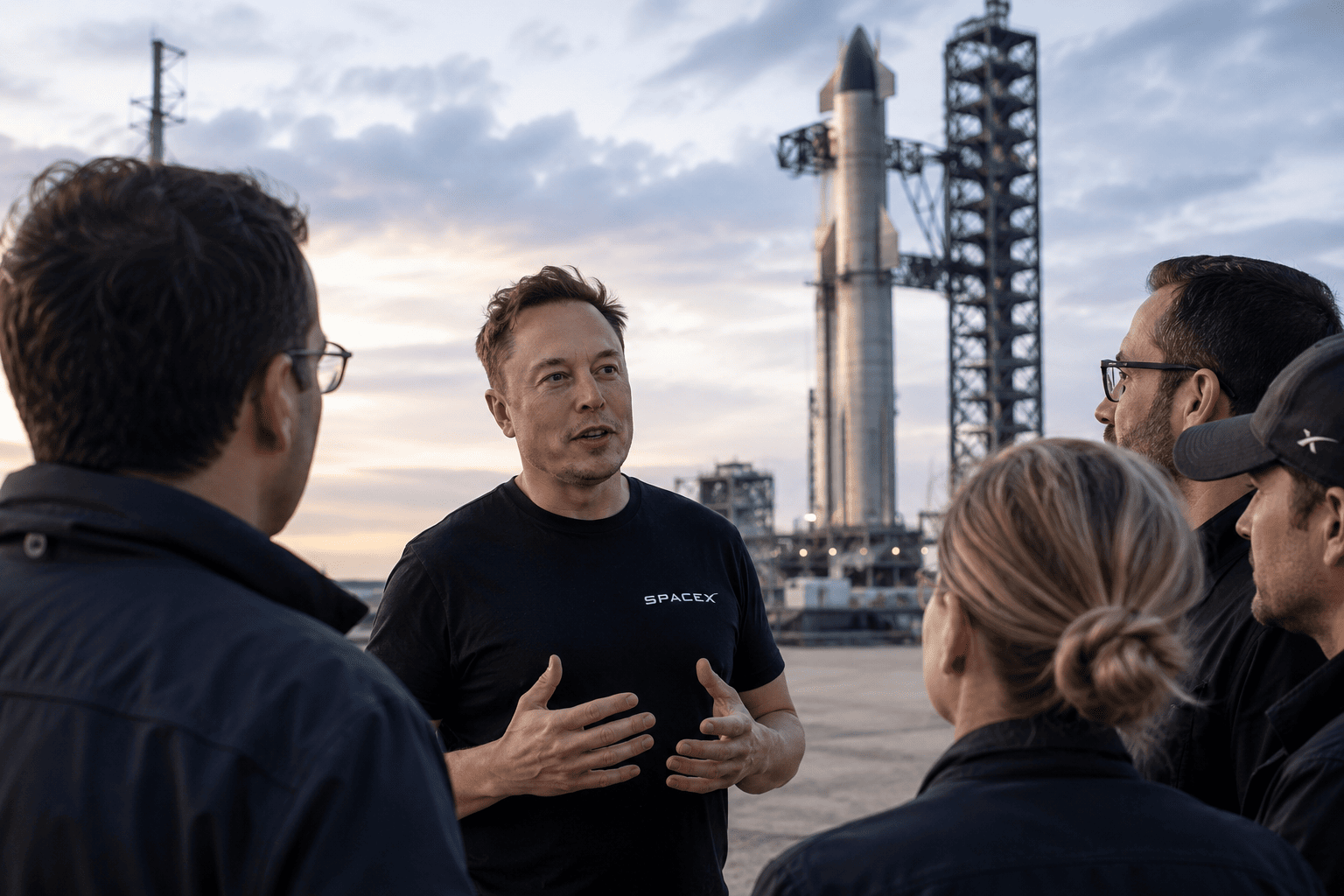
SpaceX shares declined 2.5% on Thursday, tracking broader market weakness as investors positioned for another significant lockup expiration. Up to 328.4 million shares are scheduled to become eligible for sale on October 9, potentially increasing the supply of tradable stock.
The move mirrored a cautious session on Wall Street, with the S&P 500 falling 0.4% and the Nasdaq Composite down 0.6%. The Dow Jones Industrial Average shed 201 points, or 0.4%, as Treasury yields and oil prices remained elevated.

October lockup adds selling pressure
This upcoming release is part of a staggered series of lockup expirations following SpaceX's June IPO. Instead of a single 180-day lockup, the company structured multiple dates for different shareholder groups to become eligible to sell. While this approach limits the volume of shares hitting the market at any one time, it also creates recurring uncertainty for investors.
Not all eligible shareholders will necessarily sell, but the prospect of additional supply can weigh on the stock as market participants gauge whether early investors will take profits after the recent rally from August lows.
Analysts remain bullish on AI prospects
Despite the near-term overhang, analysts continue to see strong growth potential in SpaceX's artificial intelligence business. Erste Group analyst Stephan Lingnau initiated coverage with a Hold rating, noting that the company's high EV/EBIT multiple already reflects robust expectations for its AI operations. He projects SpaceX will reach a $100 billion annualized revenue run rate by the end of 2026, with cloud agreements involving AI companies like Anthropic and Alphabet driving a significant portion of that growth.
Lingnau expects AI to become SpaceX's largest revenue contributor as early as this year, while the highly profitable Starlink segment should offset losses from aerospace and AI operations. He cautioned that the valuation assumes AI will reach breakeven in the near term, followed by a significant increase in operating margin.
Other analysts are more optimistic. Morgan Stanley's Adam Jonas reiterated a Buy rating with a $300 price target, arguing that SpaceX looks "cheap and getting cheaper" relative to its growth prospects. He noted that investor interest remains relatively quiet but believes the growth potential makes the stock attractive, with concerns about Grok and Starlink Mobile already reflected in the valuation.
Goldman Sachs' Eric Sheridan also raised his price target to $230 from $220, maintaining a Buy rating. Sheridan cited greater confidence in SpaceX's AI business, increasing his forecasts for AI capacity and revenue, and expects margins to improve as the business scales.
Trump discloses SpaceX debt investment
In a separate development, President Donald Trump disclosed an investment of $1 million to $5 million in SpaceX senior unsecured notes, according to a newly released financial disclosure. The notes carry a 5.35% interest rate and mature in July 2031. The disclosure showed that Trump made the investment two days before signing a policy memorandum aimed at expanding US commercial space transportation. The investment is in debt, not equity, so it does not directly increase his ownership stake in the publicly traded stock.
Starlink faces India delays
SpaceX is also dealing with uncertainty around Starlink's planned entry into India, a potentially significant market for satellite internet. Elon Musk has accused influential Indian telecommunications interests of obstructing Starlink's entry to protect their market positions, though Indian officials have rejected those claims and said the approval process is fair. Starlink has secured an initial license, but additional security clearances and spectrum allocation are still needed before commercial operations can begin. Further delays could postpone revenue opportunities in a market with a large population lacking reliable broadband access.
This article is for informational purposes only and does not constitute financial advice.

