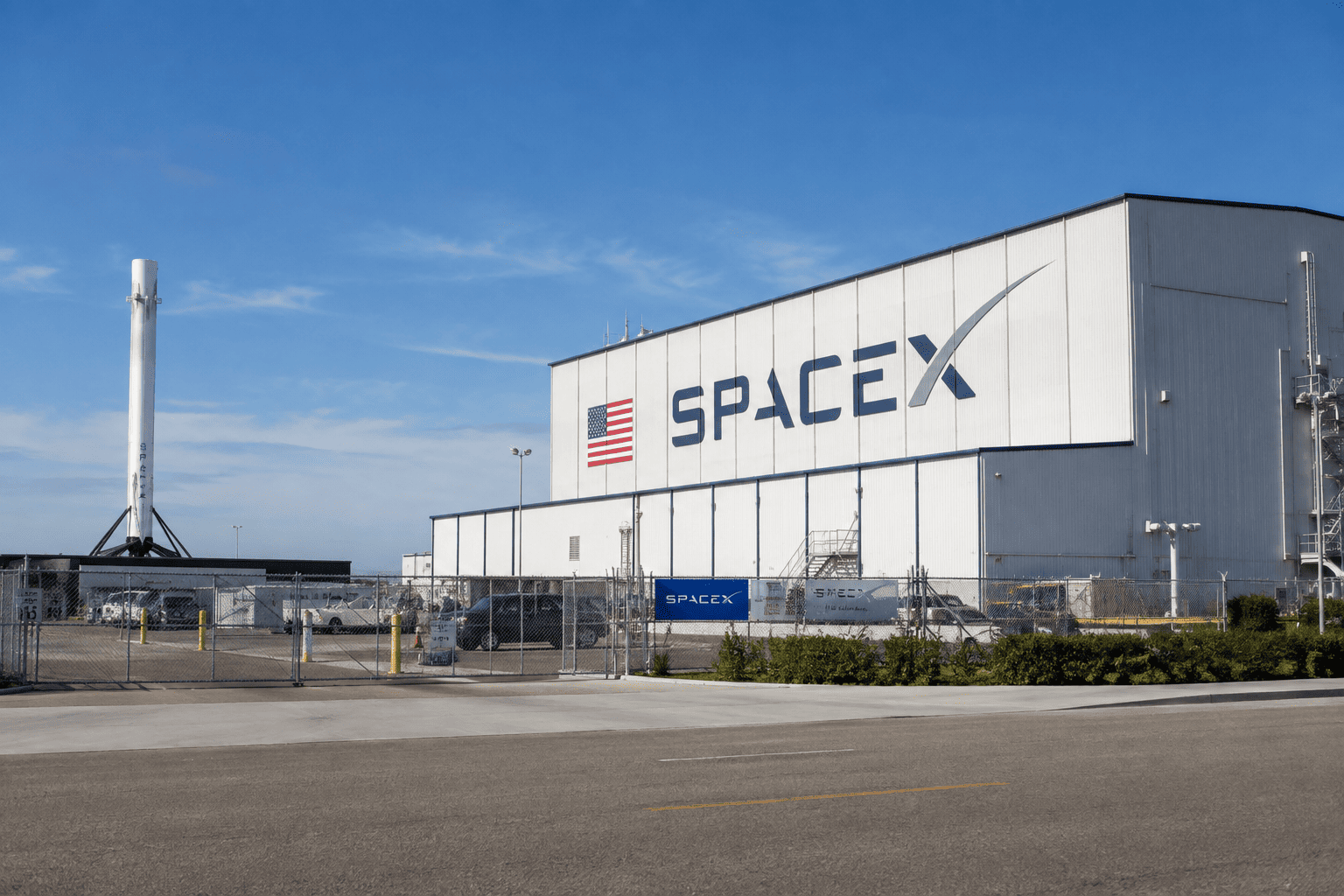
Shares of SpaceX advanced 1.7% on Tuesday after UBS issued a bullish preview of the company's third-quarter results, arguing that the rocket maker and satellite operator could surpass Wall Street's expectations on the strength of its artificial intelligence, Starlink connectivity, and commercial launch businesses.
The investment bank reiterated a Buy rating and a $210 price target on the stock, according to TheFly. That target implies upside of more than 71% from current trading levels, a gap that underscores how much of the bull case rests on businesses that barely existed at SpaceX a few years ago.

UBS sees AI as the largest revenue contributor
UBS projects third-quarter revenue of $13.8 billion, roughly 7% above the $12.9 billion consensus estimate. The firm also forecasts adjusted EBITDA of $7.5 billion, about 9% ahead of what analysts collectively expect.
Within that total, the AI segment is expected to be the single biggest contributor, generating $7.6 billion in revenue. UBS attributes much of that to the expansion of SpaceX's agreement with Anthropic, according to Investing.com. Connectivity revenue is forecast to rise 59% to $4.9 billion, while the Space segment is seen at $1.3 billion, lifted by a heavier commercial launch cadence during the year.
Analysts currently expect SpaceX to produce approximately $44.82 billion in full-year 2026 revenue, according to Fiscal.ai. UBS estimates capital expenditure of $19.3 billion in the third quarter alone as the company scales AI computing infrastructure, the Starlink network, and launch operations.
Broader analyst optimism on compute leasing
UBS is not alone in betting on the AI opportunity. TD Cowen initiated coverage on Monday with a Buy rating and a $200 target, pointing to growth across both AI and space. The firm expects AI compute leasing revenue to climb from $14 billion in 2026 to $66 billion in 2027 and $133 billion in 2028, a trajectory that would make compute leasing a dominant part of the business.
Starlink remains the other pillar of the growth story. The projected 59% jump in connectivity revenue reflects continued subscriber expansion, while the Space segment benefits from more commercial missions.
Starship milestone, but execution questions linger
The analyst enthusiasm follows the first orbital flight of SpaceX's Starship, which also deployed 26 next-generation Starlink V3 satellites during Flight 14. The mission was cut short after an engine shut down prematurely, though it still met its primary orbital and satellite-deployment objectives.
Morgan Stanley called the flight a major accomplishment but assigned it a B+ grade, citing recurring problems with the V3 propulsion system. The firm said Flight 15 could prove pivotal, with a successful Starship catch potentially acting as a significant catalyst after the company's IPO. Morgan Stanley maintained an Overweight rating and a $300 target.
RBC Capital reiterated an Outperform rating and a $225 target, calling Flight 14 a meaningful milestone for both launch capability and V3 deployment. Clear Street kept a Buy rating and a $217 target, noting the mission advanced SpaceX's ability to scale a higher-capacity constellation while cautioning that the engine issues highlight remaining execution risks. CLSA initiated coverage with an Accumulate rating and a $250 target.
With price targets spanning $200 to $300, the analyst community broadly expects continued growth across AI, connectivity, and launch operations, even as Starship's development path carries technical uncertainty.
This article is for informational purposes only and does not constitute financial advice.

