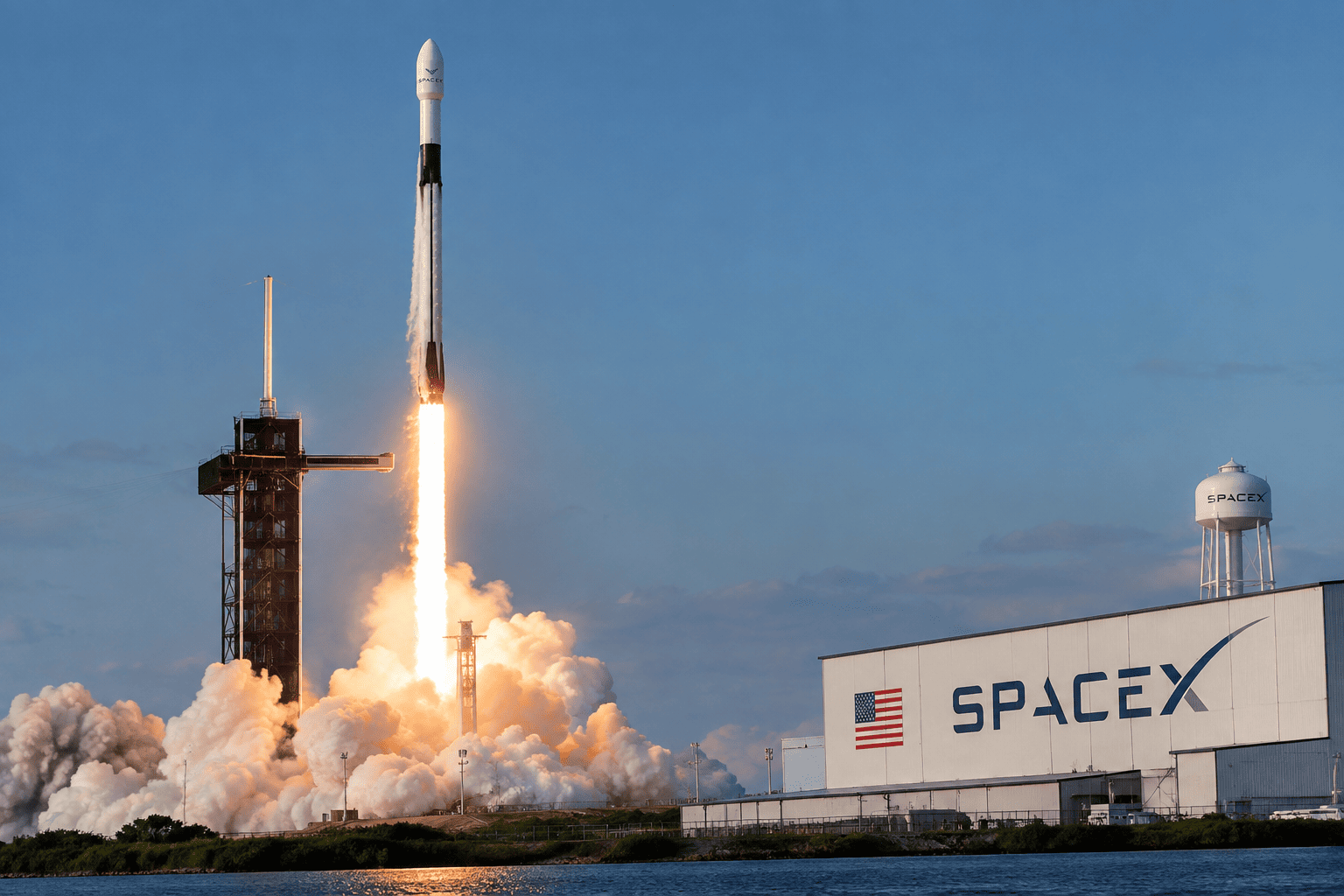
SpaceX's pivot toward renting out computing power to artificial-intelligence developers is drawing increasing attention from Wall Street, with several brokerages issuing bullish notes on Monday. The company, known primarily for its Starlink satellite internet and Starship rocket, is now seen as a significant player in the AI infrastructure space.
TD Cowen initiated coverage with a buy rating and a $200 price target, implying roughly 37% upside from Monday's close. The brokerage described compute leasing as the company's "biggest near-term driver" of revenue, citing a supply-demand imbalance in the AI industry. TD Cowen expects about 35% of SpaceX's 2026 sales to come from compute-related activities, potentially surpassing Starlink's contribution as early as the first quarter of 2027.

Deutsche Bank analyst Edison Yu estimates that the five signed customers for compute services represent a $54.5 billion revenue run rate, a measure that projects annualized revenue based on recent performance. Yu, who rates the stock a buy with a $235 price target, noted that with more capacity coming online, additional large deals are likely given industry constraints.
Evercore ISI's Kutgun Maral reiterated an Outperform rating and a $230 price target, highlighting the company's GPU build-out as a potential catalyst. Maral pointed to a recent post by CEO Elon Musk on X detailing GPU counts at the Colossus 1 and 2 sites, which suggests the Street may be underestimating second-half 2026 compute capacity and thus 2027 revenue and EBITDA.
SpaceX's AI revenue reached $2.6 billion in the quarter ended June 30, putting the business at an annualized run rate of roughly $10.2 billion. Wall Street projects that figure to climb sharply, with AI revenue expected to exceed $67 billion by 2027 and reach an estimated $275 billion by 2030.
The company has disclosed five customers for its compute services, but only three have been publicly identified: Anthropic, Google, and start-up Reflection AI. A fourth customer, revealed in July, has sparked speculation that it could be the US Defense Department. CFO Bret Johnsen also announced another deal earlier this month, set to begin in December.
SpaceX's Starship rocket reached orbit for the first time on Monday, marking a technical milestone. The vehicle's 14th test flight also deployed 26 Starlink V3 satellites, underscoring the company's rapid progress in its space operations.
Despite the optimism, some investors remain cautious, seeking more evidence on Starship's reusability, terrestrial compute build cadence, and pricing durability. Maral acknowledged these concerns but argued that the market is missing the bigger picture, saying, "we don't think execution across terrestrial compute is getting the credit it deserves."
SpaceX has set a target of $100 billion in annual recurring revenue by the end of 2026, with compute leasing expected to play a central role. As the AI boom continues, the company's ability to scale its data center operations will be closely watched by investors.
This article is for informational purposes only and does not constitute financial advice.

