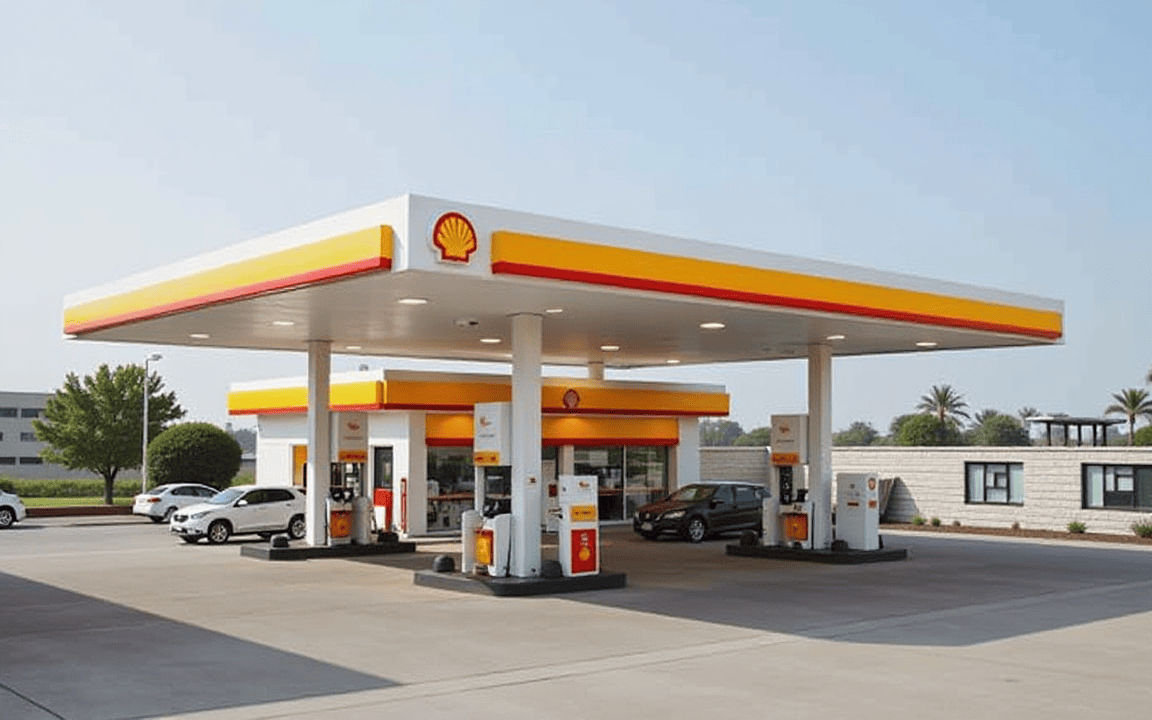
Shell (LON: SHEL) shares rose on Thursday after the energy giant reported its strongest quarterly profit since 2022, with adjusted earnings reaching $9.84 billion—well above the $8.92 billion analyst consensus and up from $6.92 billion in the first quarter. The beat was driven by higher commodity prices, improved refining margins, and robust trading gains, which together offset significant operational disruption in Qatar.
Operating cash flow came in at $21.4 billion, while free cash flow hit $17.5 billion. Shell also announced an additional $3 billion share buyback and will complete $1.2 billion in purchases deferred from its previous program. The company has now announced at least $3 billion in buybacks for 19 consecutive quarters, underscoring its commitment to shareholder returns.

Oil prices and trading power a major earnings beat
Shell's realized upstream liquids price rose to $89 per barrel from $72 in the prior quarter, while its indicative refining margin increased to $24 from $17. The chemicals margin nearly doubled to $270 per tonne from $139. The Chemicals and Products division posted adjusted earnings of $2.88 billion, up from $1.93 billion in Q1, benefiting from improved refining economics, higher chemicals profitability, and a larger contribution from trading and optimization.
Integrated Gas earnings also increased, as stronger realized prices and better trading offset lower volumes. Shell's global network allowed it to redirect supplies and capture price differences amid Middle East volatility, demonstrating the advantage of a diversified trading operation. Before the results, IG senior technical analyst Axel Rudolph noted that strong trading could support shares if Shell successfully captured volatility from the region, but warned that disappointing production or shareholder distributions could limit the reaction.
The same conflict exposed Shell's Qatar weakness
Despite the earnings beat, Shell's integrated gas production fell sharply to 631,000 barrels of oil equivalent per day from 909,000 in Q1—a decline of 31%. LNG sales volumes slipped to 18 million tonnes from 19.2 million tonnes. The reduction was largely due to disruption at the Pearl gas-to-liquids facility in Qatar.
Shell's third-quarter outlook points to integrated gas production of 570,000 to 630,000 barrels per day, excluding Qatar volumes, indicating that the operational impact will extend beyond one quarter. This creates a vulnerability if oil and gas prices fall or trading gains fade before output recovers. As Morningstar analyst Allen Good noted before the release, a strong trading quarter driven by war is “the opposite of a moat”—it represents optionality on volatility rather than a repeatable structural advantage. Morningstar retained its £35.80 fair-value estimate and no-moat rating.
Cash flow gives bulls a reason to look past the risks
Shell's cash generation provides the clearest case for treating the quarter as more than an accounting windfall. Net debt dropped to $41.8 billion from $52.6 billion, supported by earnings and a $3.4 billion working-capital inflow. Gearing fell to 19%. The company maintained its 2026 capital spending forecast of $24 billion to $26 billion, giving management room to fund projects, reduce leverage, and continue distributions.
The bullish case does not require $9.8 billion in earnings to become the quarterly norm. Continued free cash flow, lower debt, and disciplined investment could support shareholder returns even if oil prices and trading profits moderate. The bearish case, however, is that much of the beat came from forces Shell cannot control—commodity price swings and geopolitical volatility—while its core production base faces ongoing disruption.
For context, other major companies have also reported mixed results this earnings season. For instance, BMW's Q2 margin slump tested investor confidence, while Microsoft's Q4 beat was driven by strong Azure growth and AI adoption. Meanwhile, SoFi's stock dropped 9% despite an earnings beat and raised guidance, highlighting the market's focus on underlying trends beyond headline numbers.
This article is for informational purposes only and does not constitute financial advice.