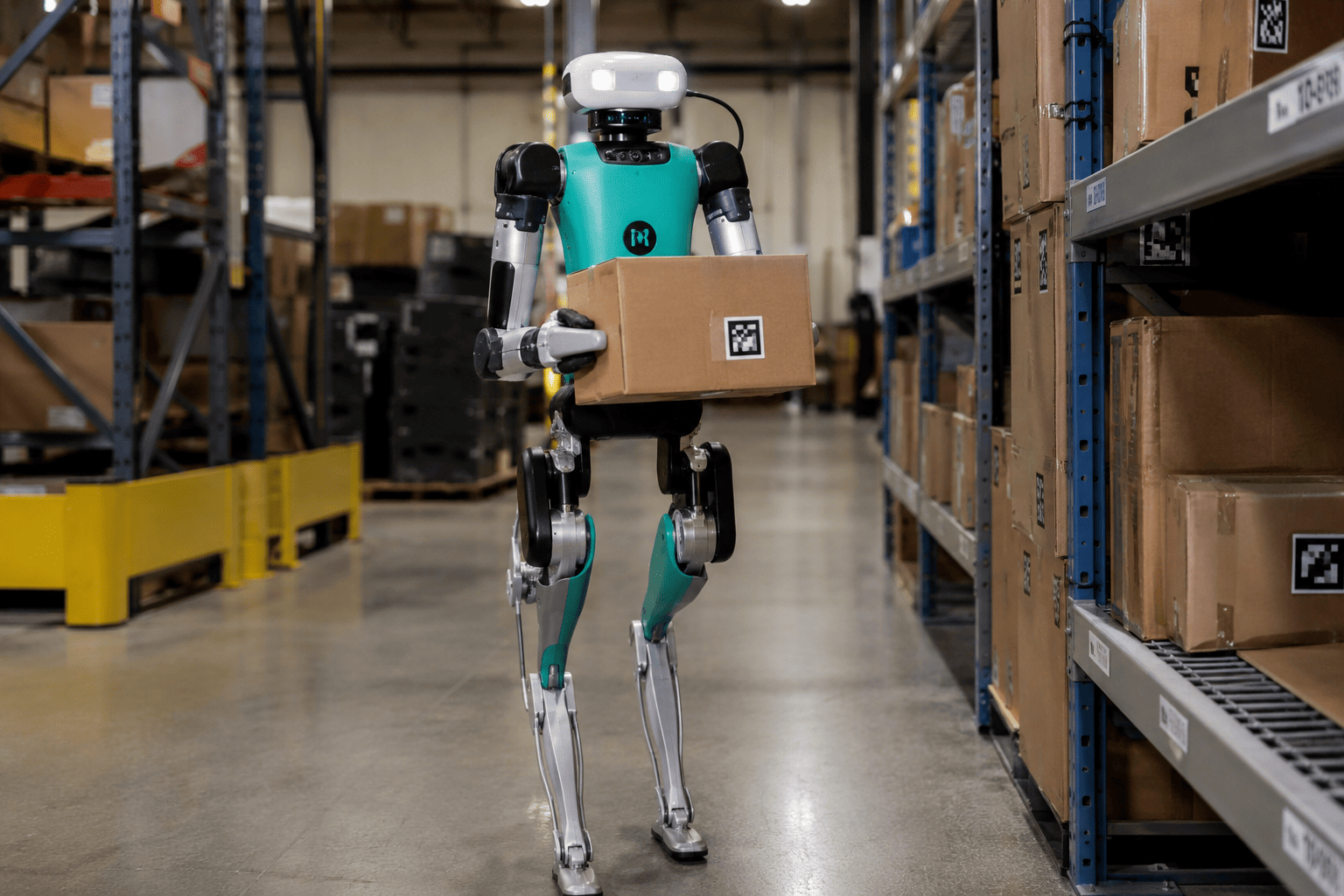
The artificial intelligence investment narrative is shifting beyond chatbots and data centers, with Wall Street increasingly focusing on physical AI—systems that interact with the real world through robotics, autonomous vehicles, and humanoid machines. Strategists at major firms, including J.P. Morgan and Barclays, argue this could be the next multitrillion-dollar opportunity, though public market exposure remains limited and valuations are rich.
Why Physical AI Is Gaining Traction
Generative AI has dominated markets for two years, but the next phase may involve machines that navigate physical environments. J.P. Morgan Asset Management global market strategist Raisah Rasid recently highlighted robotics and autonomous vehicles as key beneficiaries, noting that AI adoption is accelerating rapidly. SoftBank CEO Masayoshi Son has also predicted that a trillion-dollar company will emerge from physical AI and robotics.

Barclays' head of thematic FICC research, Zornitza Todorova, projects the humanoid robotics market could grow from $2–3 billion today to $200 billion by 2035. The bank expects a two-phase deployment: first in manufacturing, logistics, agriculture, and construction through 2030, then expanding into healthcare, elderly care, and hospitality after 2030 as costs decline.
Nvidia's Robotics Push
Nvidia CEO Jensen Huang has identified robotics as the company's second-largest long-term growth opportunity after AI, calling it a multitrillion-dollar market. During a visit to South Korea, he emphasized the country's manufacturing base as a natural fit for physical AI. Huang also noted that autonomous vehicles could be the first major commercial application of this technology.
Nvidia's DRIVE Hyperion platform is already enabling companies like Ouster, which makes digital lidar sensors for autonomous machines. Ouster's Rev8 OS sensor family recently qualified for Nvidia's platform, allowing developers to integrate it into vehicle development cycles. Ouster shares have surged over 90% this year to around $44.64, driven by record first-quarter product revenue of $48.23 million (up 55% year over year) and a gross margin of 43%. However, the company remains unprofitable and trades at more than 23 times sales, earning a consensus Hold rating from analysts.
Teradyne: Dual Exposure to AI and Robotics
Another stock gaining attention is Teradyne, which combines semiconductor testing for AI chips with a growing robotics division. Its Semiconductor Test unit generated $1.11 billion in first-quarter revenue, while its robotics business—including collaborative robots from Universal Robots and autonomous mobile robots from Mobile Industrial Robots—contributed $91 million. Teradyne shares have risen over 66% this year and more than 280% over the past 12 months.
Investors are also watching broader trends in chip stocks and industrial automation. For context on recent market movements, see our coverage of chip stocks rallying amid rotation warnings and Dow gains as chip stocks rebound.
China Dominates Industrial Robotics
Barclays highlights China's leading role in industrial robotics, with the country installing nearly 300,000 industrial robots annually—roughly half the global total—compared to about 34,000 in the U.S. Robot density in China has surged 600% since 2016 to nearly 500 robots per 10,000 workers. This underscores the scale of physical AI adoption, though most advanced humanoid robot developers remain private, limiting public equity opportunities.
For investors, the key takeaway is that physical AI represents a long-term growth theme with significant potential, but current valuations reflect high expectations. As with any emerging technology, due diligence is essential.
This article is for informational purposes only and does not constitute financial advice.