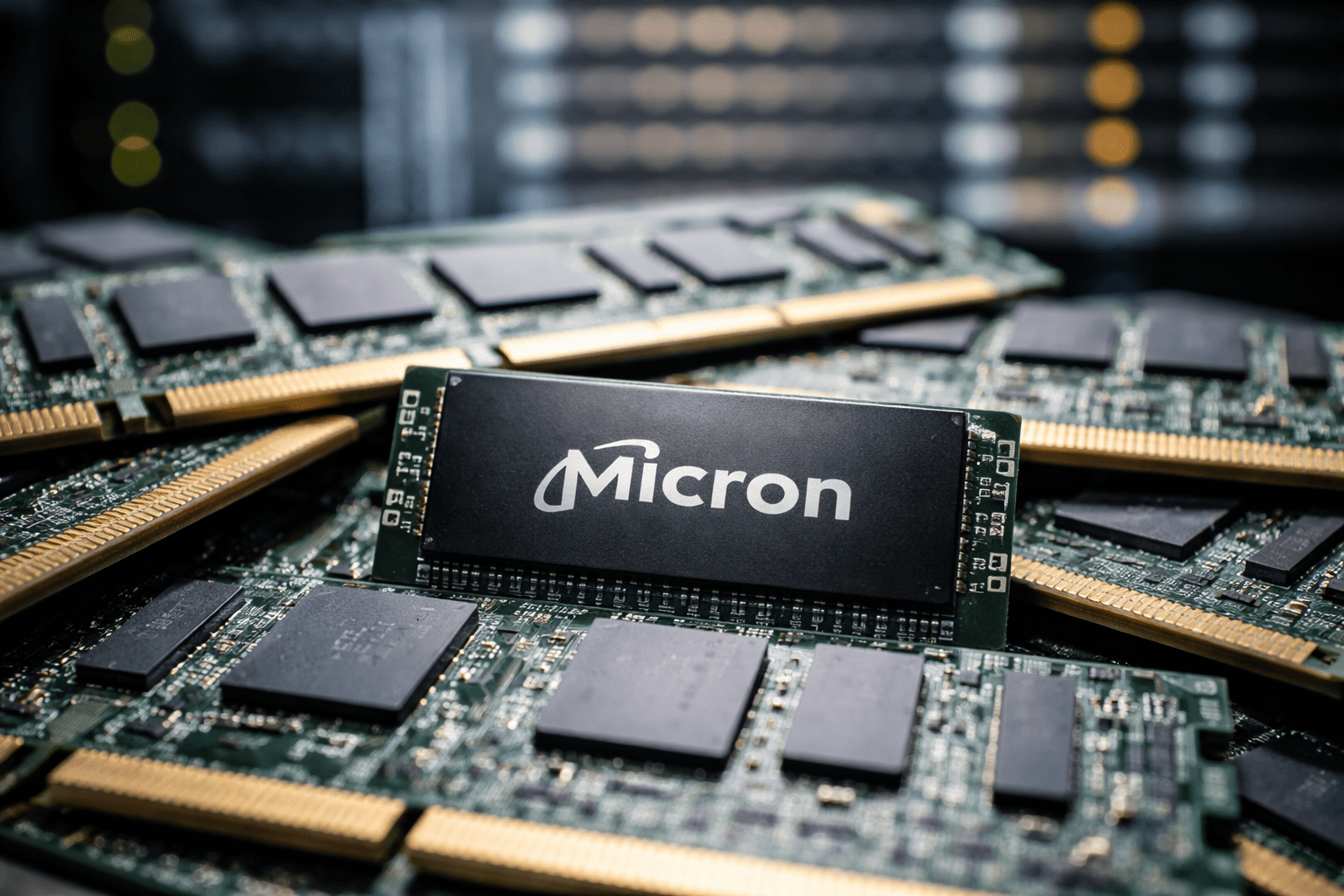
Micron Technology (NASDAQ:MU) has tumbled approximately 22% from its record high, sliding to around $985 after touching an all-time peak near $1,255. The sharp decline comes despite the memory-chip maker recently posting record quarterly results and upbeat guidance, shifting the conversation from earnings strength to valuation risk.
What Triggered the Selloff
The pullback appears to be part of a broader reset across the AI hardware trade rather than a Micron-specific blow-up. Meta's reported move to build a third-party AI compute business rattled investors, interpreted as a potential sign that some hyperscalers may eventually have excess capacity to sell. That sentiment hit chipmakers and AI infrastructure names broadly.

The selling also followed a massive run. Even after the drop, Micron remains up more than 250% year-to-date, making the 22% decline look more like profit-taking after a powerful AI-driven rally. Hedge-fund positioning may have amplified the move: according to Goldman Sachs, US hedge funds sold technology hardware stocks for a fourth straight week ahead of earnings season, reflecting caution after sharp semiconductor gains.
Wall Street's Bullish Case
Analysts remain broadly constructive, citing strong fundamentals. Micron reported record fiscal third-quarter revenue of $41.5 billion, up from $23.9 billion in the prior quarter and $9.3 billion a year earlier. Non-GAAP net income came in at $28.9 billion, or $25.11 per diluted share, while operating cash flow reached $25.4 billion.
Bank of America's Vivek Arya raised his Micron price target to $1,500 from $950 while keeping a Buy rating, arguing that AI infrastructure is shifting from a pure demand story to a physical bottleneck story where memory, chips, and power remain scarce. Citi's Atif Malik also raised his target to $1,200 in June, citing better-than-expected memory pricing, strong data-center demand, and constrained supply. UBS analyst Nicolas Gaudois viewed the latest dip as a buying opportunity, maintaining a $1,625 target and citing persistent memory-industry strength and tight supply.
The Case for Caution
However, the buying-window argument is not risk-free. Michael Burry has reportedly taken a short position against Micron, questioning whether the stock's surge reflects AI hype rather than sustainable value. There is also the classic memory-cycle risk: today's shortage can become tomorrow's glut if rivals add too much capacity. Samsung Electronics and SK Hynix plan a combined $2.1 trillion in long-term investment, a scale that could eventually pressure pricing if AI demand cools or supply arrives faster than expected.
For context, Micron's 700% surge from commodity chipmaker to AI bellwether has drawn both excitement and skepticism. The current selloff echoes broader tech weakness, as seen in the Dow sliding 207 points amid a tech selloff and Nasdaq futures dipping as chip stocks retreat.
This article is for informational purposes only and does not constitute financial advice.