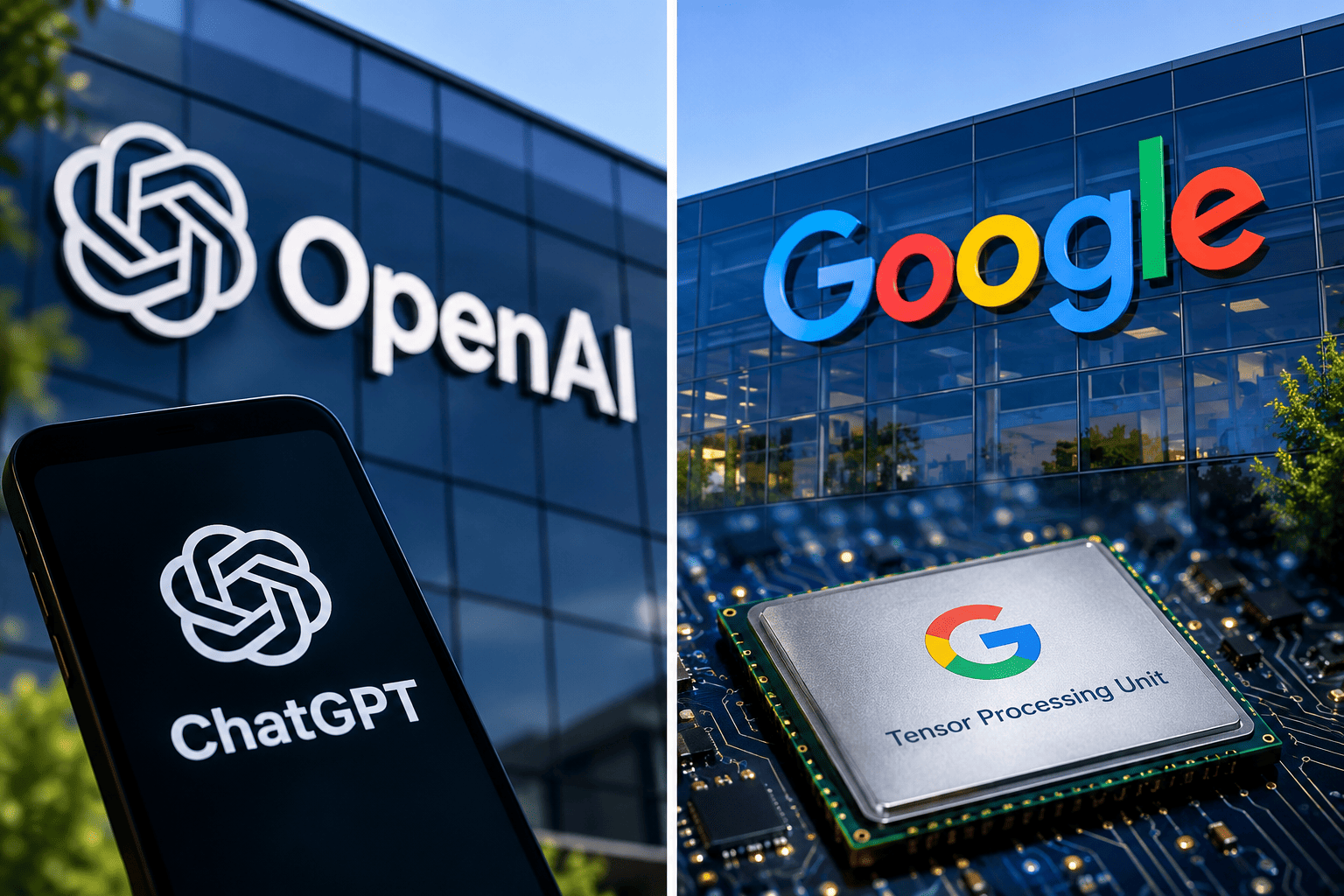
OpenAI is reportedly in discussions to acquire artificial intelligence chips from Alphabet's Google, according to a report from The Information late Tuesday. The potential agreement, which has not been officially confirmed by either company, would give the ChatGPT developer access to Google's tensor processing units (TPUs) as it seeks to expand its computing capacity and reduce its reliance on Nvidia's graphics processing units (GPUs).
The move comes amid surging demand for AI services and a broader industry push to secure diverse chip supplies. OpenAI has been one of Nvidia's largest customers for GPUs, which are essential for training and running large language models. However, Google's TPUs have emerged as a viable alternative, offering potential cost efficiencies and a different architecture that some firms find attractive.

Deepening ties between rivals
The reported chip deal would deepen the infrastructure relationship between two companies that compete in generative AI and search. It highlights how the race to build and deploy increasingly powerful AI models is driving partnerships that transcend traditional competitive boundaries. OpenAI already began renting Google TPUs through Google Cloud in 2025, establishing a commercial relationship that could expand under the new arrangement.
Google has been expanding access to its custom-designed chips for external customers this year, positioning its TPUs as a competitive option in the AI hardware market. The reported deal with OpenAI would further validate that strategy and could accelerate adoption of Google's cloud services.
OpenAI's broader chip strategy
In addition to potential purchases from Google, OpenAI is developing its own AI chips, code-named Jalapeno, in partnership with Broadcom. The company plans to deploy these chips later this year, according to announcements from the ChatGPT maker. The effort is reportedly led by executives with prior experience on Google's TPU program, underscoring the cross-pollination of talent in the AI hardware space.
This diversification reflects a wider trend among AI companies and cloud providers, which are investing in custom silicon to secure supply and potentially improve the economics of running AI workloads. By reducing dependence on a single supplier, OpenAI aims to mitigate risks associated with supply chain bottlenecks and pricing pressures.
Expanded commercial relationship
The reported chip arrangement follows a separate expansion of the companies' commercial ties. Last week, OpenAI and Google announced that OpenAI's frontier models, including GPT-6 Astra, GPT-6.1 Sol, and GPT-6 Luna, along with Codex agentic workflows, would become available through Google Cloud's Model Garden. Enterprise customers will be able to access these models through Google Cloud Marketplace and apply existing cloud spending commitments, with general availability expected in the coming weeks.
Microsoft remains OpenAI's primary cloud partner, but the Google arrangement gives both companies another route to reach enterprise customers. Additionally, Oracle announced Tuesday that Google TPUs will become available through its cloud platform starting in 2027, further expanding the chips' distribution beyond Google Cloud.
Alphabet earnings in focus
The developments come as Alphabet prepares to report third-quarter results after the market close on Wednesday. Investors will be watching Google Cloud growth, AI infrastructure spending, and management commentary on demand for its custom chips. Analysts expect Alphabet to report revenue of $128.18 billion, up from $102.35 billion a year earlier. The company has beaten revenue estimates for 14 consecutive quarters.
The reported OpenAI deal could add to investor interest in Google's AI infrastructure business as technology companies seek more computing capacity while managing the cost of the AI race. The outcome of the negotiations and Alphabet's earnings will likely provide further clarity on the trajectory of AI hardware demand and the competitive dynamics in the sector.
This article is for informational purposes only and does not constitute financial advice.