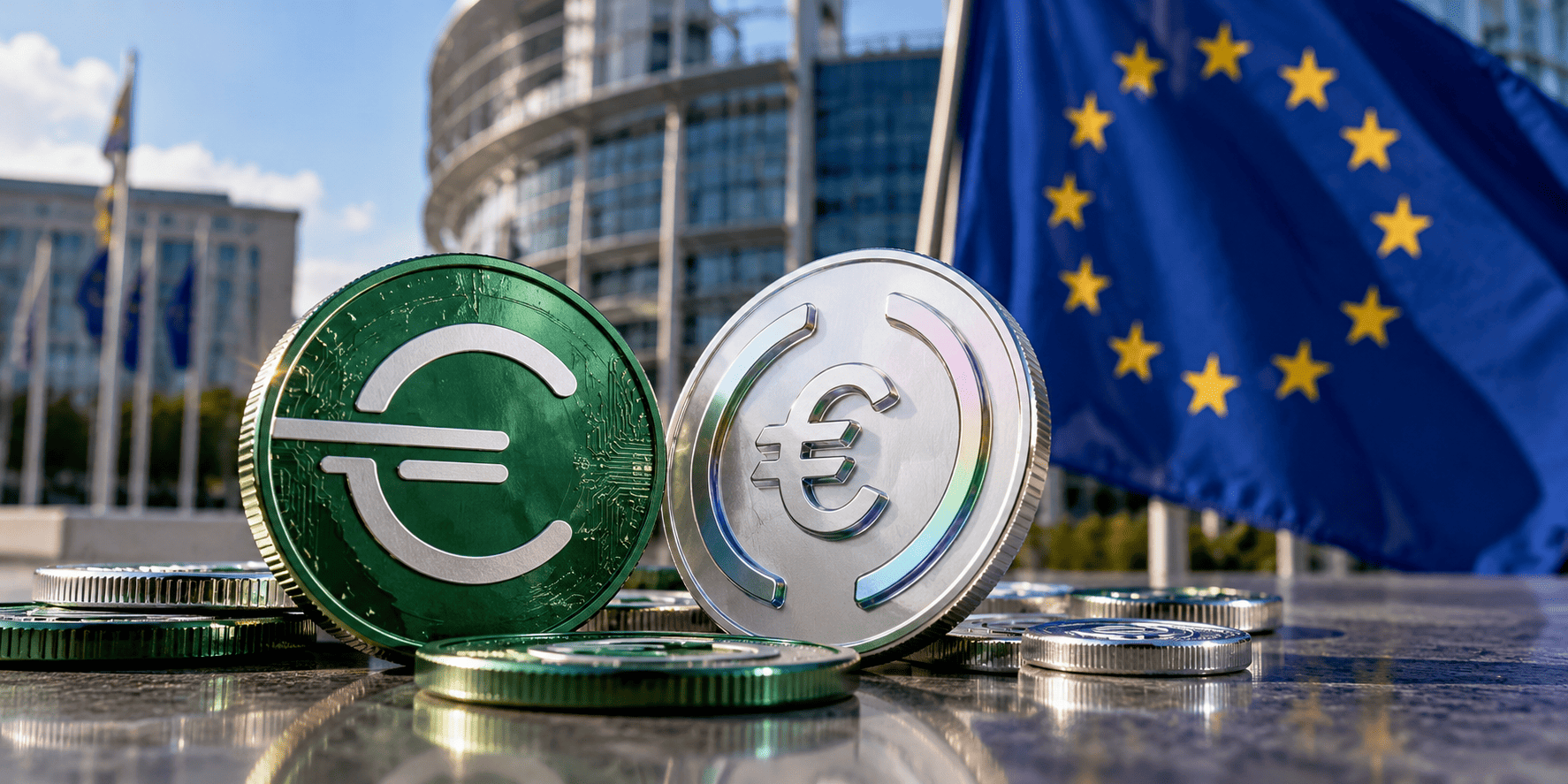
Stablecoins are increasingly positioned as a bridge between crypto and everyday payments, but Europe's path to adoption is shaped by regulation, dollar dominance, and the limits of existing payment systems. The EU's Markets in Crypto-Assets Regulation (MiCA) offers a common framework across multiple markets, yet compliance rules can also restrict access to widely used tokens.
Meanwhile, euro-backed stablecoins remain far smaller than their dollar-backed counterparts, raising questions about Europe's monetary autonomy and the competitiveness of its digital finance sector. In this interview, Erald Ghoos, CEO of OKX Europe, discusses how regulation is shaping the market, where stablecoins can offer advantages over traditional payments, and what genuine adoption should look like.
MiCA's Impact on Europe's Stablecoin Market
Ghoos highlighted that Europe has a structural advantage in that one set of regulations covers 30 markets with over 450 million people, and the rules are already in place rather than still being debated. This has the potential to make the European market an attractive proposition for businesses that can meet regulatory demands and offer a good product. However, he cautioned that Europe must ensure it remains globally relevant and not become a closed market stifled by over-regulation.
He noted that the world's biggest stablecoin isn't available in Europe, and with no current plans for it to seek a license, many new stablecoins have launched to fill that liquidity gap. Still, there is a long way to go for them to catch up. The challenge for regulators is finding the right balance between consumer protection, consumer choice, and giving businesses the opportunity to compete.
Why the Euro Lags in Stablecoin Adoption
Dollar-backed stablecoins have an incumbent advantage, as crypto prices have historically been quoted against the USD, leading to higher liquidity and making USD-backed stablecoins the de facto standard. Ghoos believes there is room for euro-backed alternatives, which could offer advantages for users who use the euro as their home currency, reducing friction in calculating exchange rates.
Stablecoins vs. Traditional Payments
Stablecoins earn their place where SEPA stops, Ghoos explained. While instant transfers work within Europe, cross-border payments to non-EU countries still involve correspondent banks, FX spreads, and settlement delays. Stablecoins settle in seconds, even on weekends. Additionally, for users whose financial lives increasingly sit on platforms like OKX, stablecoins remove the step of selling and withdrawing to a bank before spending.
Measuring Real Adoption
Ghoos emphasized that transaction volume and market capitalisation are useful but not sufficient metrics. The industry should focus on whether stablecoins are used to buy real goods and services, measured by merchant payment volumes, repeat active users, and transaction context. Real adoption means using stablecoins as a payment instrument, not just as trading liquidity.
OKX Card Adoption
Regarding OKX Card, Ghoos said adoption has faced surprisingly few obstacles, with usage growing quickly due to its simplicity and value proposition, including Pay Boost offering 3.5% on idle balances and cashback.
This article is for informational purposes only and does not constitute financial advice.