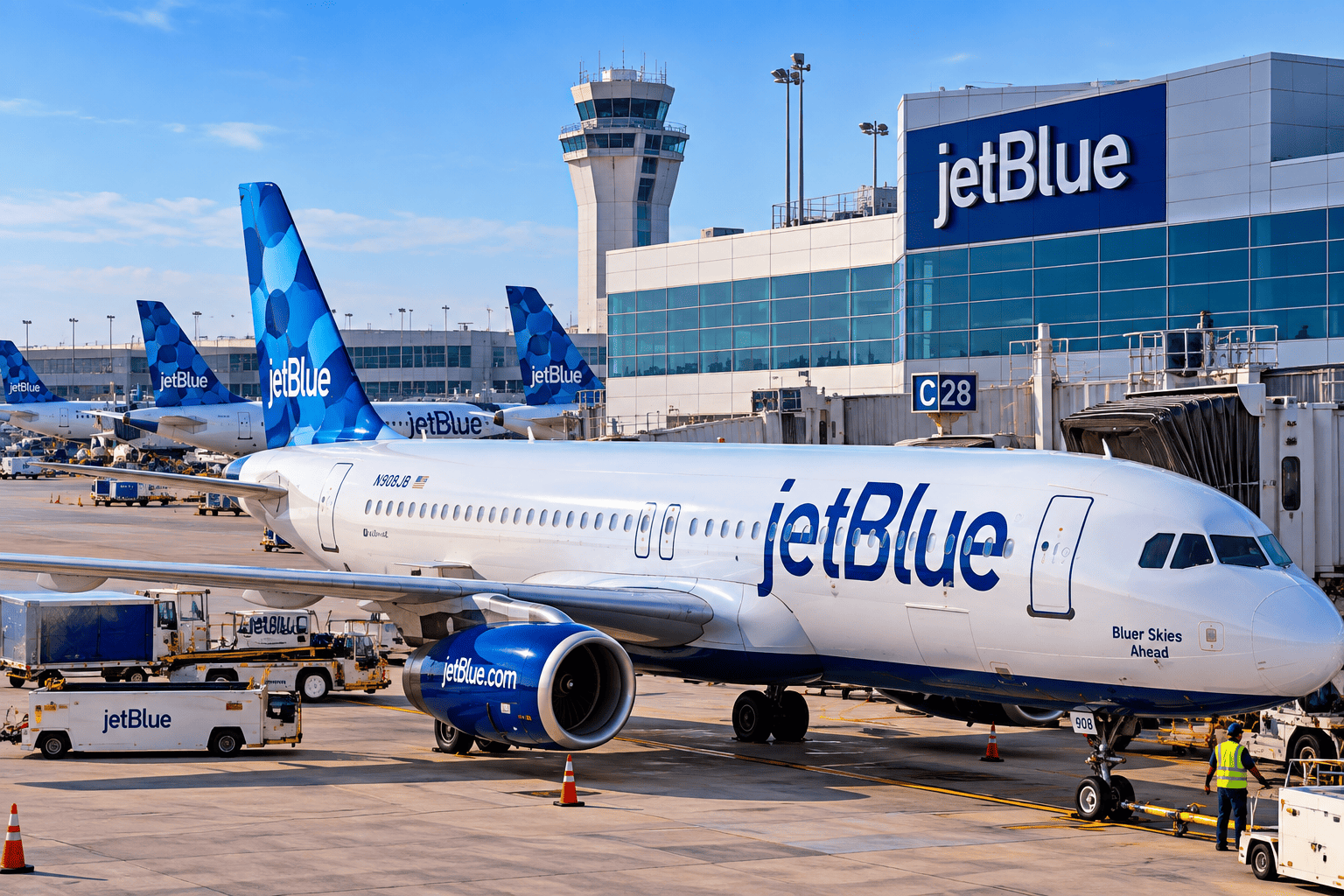
JetBlue Airways (JBLU) experienced a volatile trading session on Monday, with shares dropping 10% during regular hours before rebounding more than 7% in extended trading. The stock hit an all-time low of $2.33, representing a decline of over 64% from its year-to-date high. The company's market capitalization has fallen from over $2.4 billion to approximately $894 million.
The after-hours rally came as investors digested the company's mixed earnings report, which revealed a 21.1% increase in revenue to $2.8 billion. JetBlue has been raising ticket prices to offset rising jet fuel costs, which pushed operating expenses per available seat mile (CASM) up 19.4% year-over-year. The average fuel price during the quarter was $3.91 per gallon, a 57% increase from the same period last year.

Margin Expansion Forecast
Management expressed confidence in future margin improvement despite continued fuel price pressures. The CEO stated, "We expect further margin expansion in the fourth quarter despite fuel prices forecasted to be 85% higher than in the same period last year. This is a testament to the compounding benefits of our JetForward strategy, which is improving our revenues and costs as we head into 2027."
However, the company faces significant financial challenges. Its bonds are yielding over 30%, reflecting elevated borrowing costs, and some creditors have begun consulting advisors over concerns about debt repayment. JetBlue ended the quarter with over $15.9 billion in assets, $1.25 billion in cash and equivalents, and $8.393 billion in debt.
Technical and Market Sentiment
The stock's technical picture remains bearish. JBLU has fallen from a high of $6.50 in August to a low of $2.30, breaking below the key support level of $3.90, which had been the lowest point in June and October 2025. A death cross pattern formed on September 10, confirming the downtrend. The Relative Strength Index (RSI) has dropped to an oversold level of 13, suggesting a possible dead cat bounce to around $3 before the downtrend resumes.
Investor sentiment is cautious, with short interest at 25.9%, indicating that many traders expect further declines. The combination of high fuel costs, rising debt burden, and geopolitical risks—such as potential oil supply disruptions—continues to weigh on the airline's outlook.
While the margin expansion forecast provides some optimism, the broader risks remain substantial. The company's ability to navigate fuel price volatility and manage its debt load will be critical in the coming quarters.
This article is for informational purposes only and does not constitute financial advice.