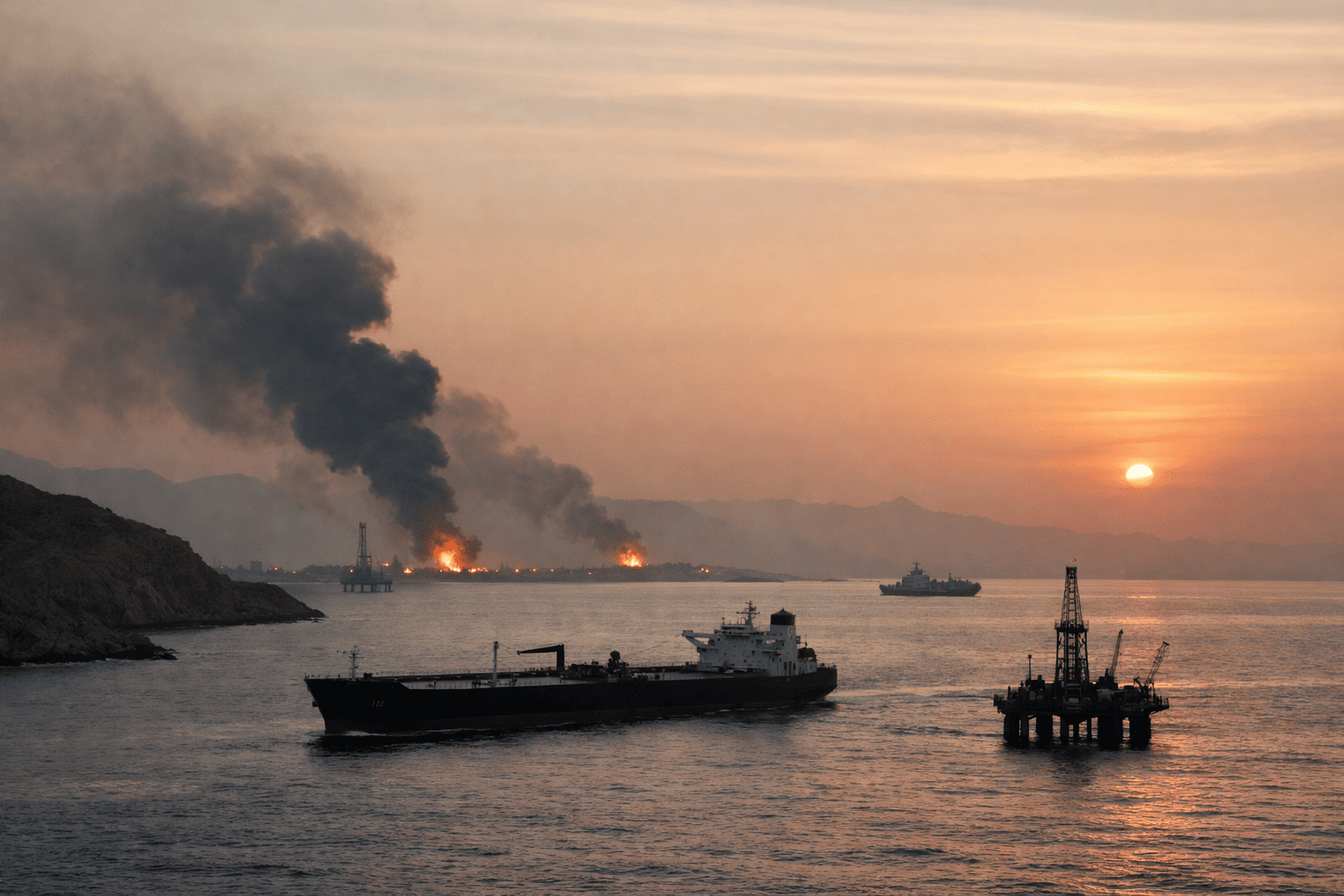
Oil prices surged more than 4% on Monday following a fresh round of US-Iran military strikes, reigniting concerns about potential disruptions to energy shipments through the Strait of Hormuz. However, the critical waterway has not been fully shut down, with vessel-tracking data showing continued—though significantly reduced—commercial traffic.
Brent crude climbed 4.1% to $79.11 per barrel during Asian trading, while West Texas Intermediate rose 4.1% to $74.37. The rally comes after Brent had recently fallen to $70.14 as traders grew more confident that Gulf production and shipping flows were recovering.
Escalation of Hostilities
The US military reported striking approximately 140 Iranian targets over the weekend, including missile sites, drone facilities, ammunition depots, communications equipment, and naval infrastructure. This operation was considerably larger than the previous two rounds of US strikes within the past week. Iran retaliated with missile and drone attacks aimed at US-linked facilities across Bahrain, Kuwait, Qatar, Jordan, Oman, and the United Arab Emirates.
The latest exchange followed an attack on the Cyprus-flagged container ship GFS Galaxy, which was disabled while transiting the strait near Oman. This escalation further weakened the memorandum of understanding signed by Washington and Tehran on June 17, which had extended a ceasefire for 60 days and aimed to restore shipping while creating room for negotiations over Iran's nuclear program and sanctions. The truce began unraveling in early July after commercial ships were attacked and the US Treasury revoked a temporary waiver permitting Iranian oil sales.
IG Australia analyst Tony Sycamore noted that the agreement was "deliberately vague" on who would control the strait and manage shipping traffic, leaving room for continued tensions.
Market Implications Beyond Oil
The impact of the oil price jump extended beyond energy markets. Two-year US Treasury yields rose to 4.2393%, their highest since early 2025, while the dollar strengthened. Futures markets increased the amount of Federal Reserve tightening expected by the end of the year, suggesting investors are worried about renewed inflation rather than just a temporary spike in fuel prices.
More expensive crude raises transport and manufacturing costs, potentially complicating the outlook for central banks as US inflation figures and Federal Reserve Chair Kevin Warsh's congressional testimony approach. For more on the broader market reaction, see our Evening Digest: US-Iran Strikes Escalate, SK Hynix Nears Record $26.5B US IPO.
Analyst Outlook
Saul Kavonic, head of energy research at MST Financial, warned that prices are likely to remain elevated while conditions in the strait remain hazardous and releases from emergency oil reserves begin winding down. Kavonic cautioned that Iran is seeking to cement its influence over the waterway, potentially keeping traffic below half of pre-war levels for months and producing periodic flare-ups.
For further context on the ongoing disruptions, read our analysis on Brent Crude on Track for 6% Weekly Gain as Hormuz Disruptions Keep Supply Risk Elevated and Oil Spikes on US-Iran Strikes, But Analyst Forecasts Signal Caution Ahead.
This article is for informational purposes only and does not constitute financial advice.