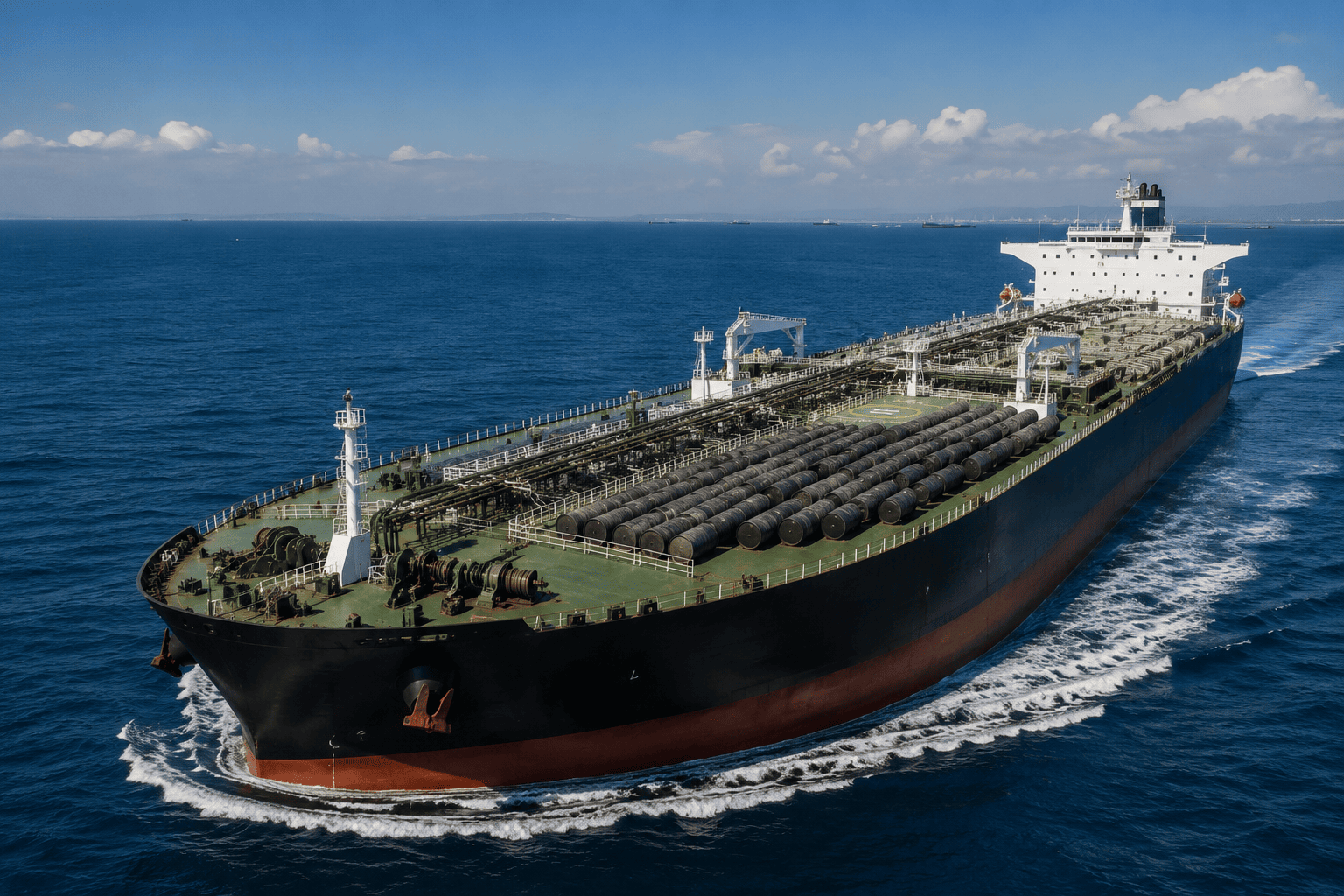
West Texas Intermediate (WTI) and Brent crude oil benchmarks posted modest gains on Hyperliquid over the weekend as geopolitical tensions between the United States and Iran escalated sharply. WTI rose to $73, with 24-hour volume and open interest climbing to $113 million and $222 million, respectively. Brent advanced to $78, supported by $63 million in trading volume.
Iran closes Strait of Hormuz, US responds with strikes
Iranian officials announced on Saturday that they had closed the Strait of Hormuz, accusing the US of violating a ceasefire agreement. In a statement from Turkey, President Trump declared the ceasefire “over.” The US military, via CENTCOM, confirmed it had launched a third wave of strikes against Iranian targets overnight. Iranian authorities vowed retaliation, following earlier attacks on US military sites in Kuwait and Bahrain.
At 7:15 p.m. ET, U.S. Central Command forces began launching the third round of strikes this week against Iran after Islamic Revolutionary Guard Corps forces blatantly attacked M/V GFS Galaxy, a Cyprus-flagged container ship transiting the Strait of Hormuz. A civilian crew…— U.S. Central Command (@CENTCOM) July 11, 2026
Recent data indicates a sharp decline in tanker traffic through the Strait of Hormuz, as vessels avoid the risk of attack and insurers hesitate to cover transits. These developments follow Trump’s warning that Iran would be “destroyed” if it attempted to assassinate him, after US intelligence suggested Iran was considering such a move. Iran’s Mojtaba Khamenei stated that Iran would retaliate for the killing of his father and other Iranians, including school girls in Minab.
The risk of renewed kinetic activity between the US and Iran threatens to disrupt oil supplies at a time when global inventories are already declining. For more context, see Oil Surges 5.7% as Trump Declares US-Iran Ceasefire Collapsed, Strait of Hormuz at Risk.
Russia-Ukraine conflict adds supply pressure
Crude oil prices are also reacting to ongoing developments in the Russia-Ukraine war. Ukraine has continued to attack Russian oil and gas infrastructure, including major refineries and oil tankers at sea, leading to domestic shortages. These disruptions raise the risk that Russian oil supplies to global markets will be curtailed in the near term, potentially delaying the oil glut some analysts had anticipated.
Brent crude technical analysis
The daily chart shows Brent crude oil bottomed at $70.20 earlier this month as markets digested the US-Iran situation. It rebounded to $79.5 after strikes resumed, then pulled back to $75.22 before rising to $78 on Hyperliquid on Sunday. The price is now attempting to break above the key resistance level of $79.5, which it reached last week.
Brent remains slightly below the 61.8% Fibonacci Retracement level and the 50-day Exponential Moving Average (EMA). The Supertrend indicator is still red, suggesting bears retain control. For further analysis, see Brent Crude on Track for 6% Weekly Gain as Hormuz Disruptions Keep Supply Risk Elevated.
Given the escalating situation, oil prices are likely to remain highly volatile. An escalation could push Brent above $80 in the near term, while any de-escalation might trigger a pullback. For broader market impacts, see Evening Digest: Samsung Drags Chip Stocks; Oil Surges on Hormuz Attacks.
This article is for informational purposes only and does not constitute financial advice.