
Oil prices climbed again on Thursday, with Brent crude rising approximately 1% to $78.80 per barrel and West Texas Intermediate (WTI) reaching $74.26, as fresh US military strikes against Iran reignited fears of supply disruptions around the critical Strait of Hormuz. The move follows a sharp rally earlier in the week after renewed tanker attacks and Washington's retaliation dashed hopes for a sustained US-Iran truce.
Geopolitical Tensions Drive Immediate Price Action
The immediate catalyst is the latest round of US strikes, which the Pentagon stated were intended to keep the Strait of Hormuz open to maritime traffic. Reports indicate that a Qatari LNG carrier, the Al Rekayyat, was stranded off Oman after being hit by a projectile, causing an engine room fire. While the cargo remained intact and crew were evacuated, this marks the first time a Qatari LNG vessel has been struck in the current conflict. Additionally, a Saudi crude tanker and a Liberia-flagged supertanker sustained damage, prompting maritime authorities to raise the threat level for vessels transiting Hormuz to "severe."
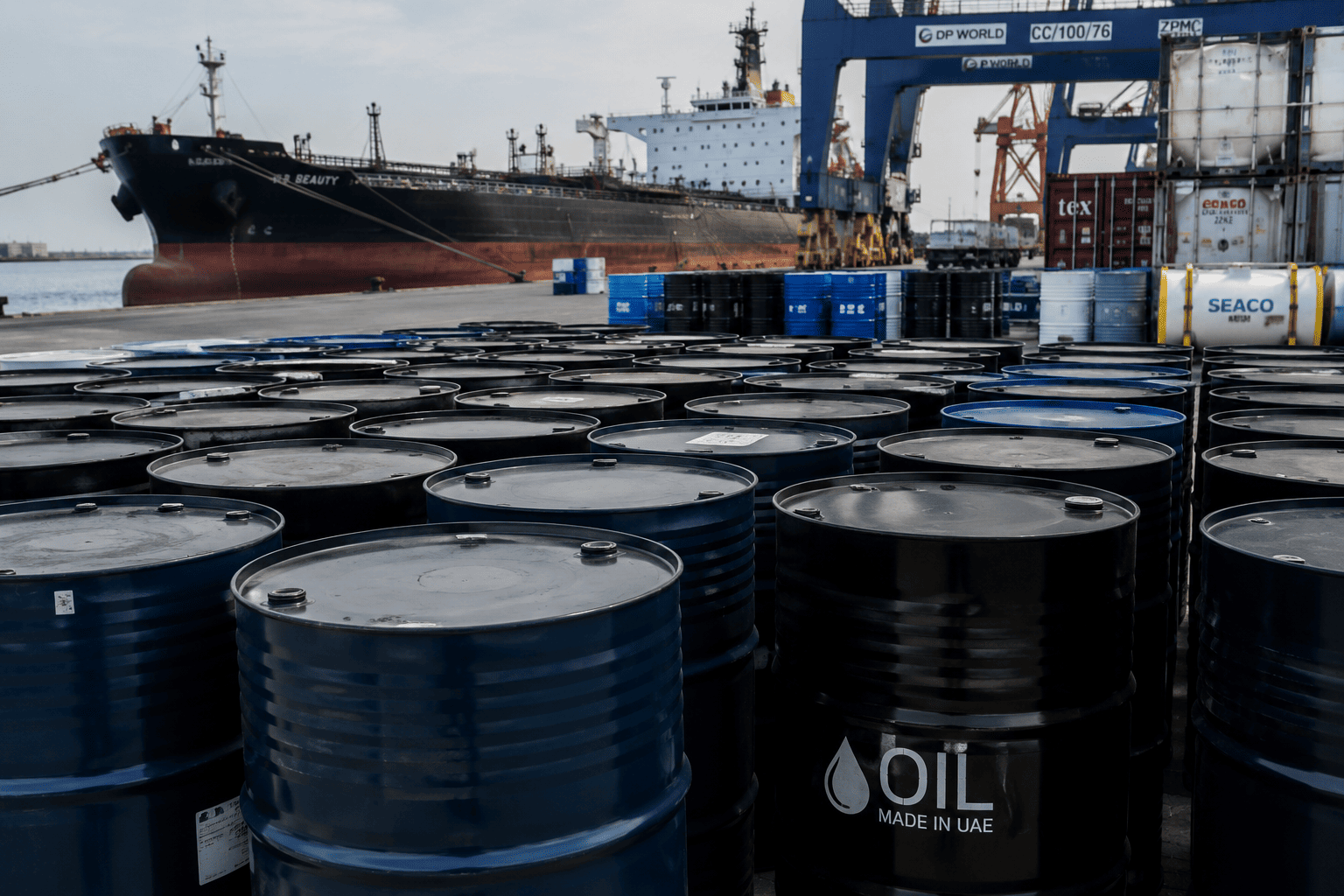
Despite these developments, the price response has been relatively contained. Traders are adding back some war premium, but not enough to fully reverse the bearish shift that had been forming in the market. This suggests that while geopolitical risk remains elevated, other factors are tempering enthusiasm.
The Signal Traders Might Be Overlooking
Beneath the surface of the price spike, a quieter but significant signal is emerging. A Reuters poll of 31 economists and analysts, published on June 30, cut the 2026 Brent forecast to $84.50 per barrel from $90.44 a month earlier. This marks the first downward revision since the Iran war began, following five consecutive monthly increases. The same poll reduced the WTI forecast to $79.49 from $84.63.
This shift matters because it indicates that smart money was leaning bearish before the latest military headlines hit. The rationale is not that geopolitical risk has vanished, but that the physical market is slowly healing as Hormuz flows recover and fears of the worst supply disruptions ease. For context, similar dynamics have played out in other markets; for instance, gold's recent breakout above $4,000 also saw traders holding back ahead of key data, reflecting a broader cautious sentiment.
Analyst Views Point to Limited Upside
UniCredit analyst Tobias Keller noted that much of the geopolitical risk premium in oil has already faded, with the return of Middle East supply flows and softer demand likely to limit further gains. LBBW's Frank Schallenberger echoed this view, arguing that if traffic through the Strait of Hormuz normalizes, the market could shift back into surplus, keeping pressure on prices through the second half of 2026.
BNP Paribas's Aldo Spanjer framed the recent move less as panic buying and more as a stock-rebuilding phase. According to recent market commentary, importers are likely to step back in as lower prices encourage them to replenish depleted inventories. Spanjer expects Brent to end the year near $80 and trade broadly between $75 and $85 into 2027. This range-bound outlook aligns with broader market trends, such as the Nvidia-led AI rally that has seen industrial suppliers lead, but with cautious undertones.
What This Means for Investors
For investors, the key takeaway is that while geopolitical headlines can drive short-term spikes, the underlying fundamentals—including recovering supply flows and softer demand—may cap further upside. The analyst community's downward revision to 2026 forecasts serves as a reminder that the market's medium-term trajectory could be more subdued than the current price action suggests. As always, staying attuned to both headline risks and quieter signals is crucial for navigating volatile markets.
This article is for informational purposes only and does not constitute financial advice.