Nvidia's shares gave back most of their early gains on Thursday, trading roughly 0.6% higher after opening up as much as 2.5%. The volatile move followed the company's announcement that it had agreed to acquire Hugging Face, a leading open-source AI platform, for $12.9 billion.
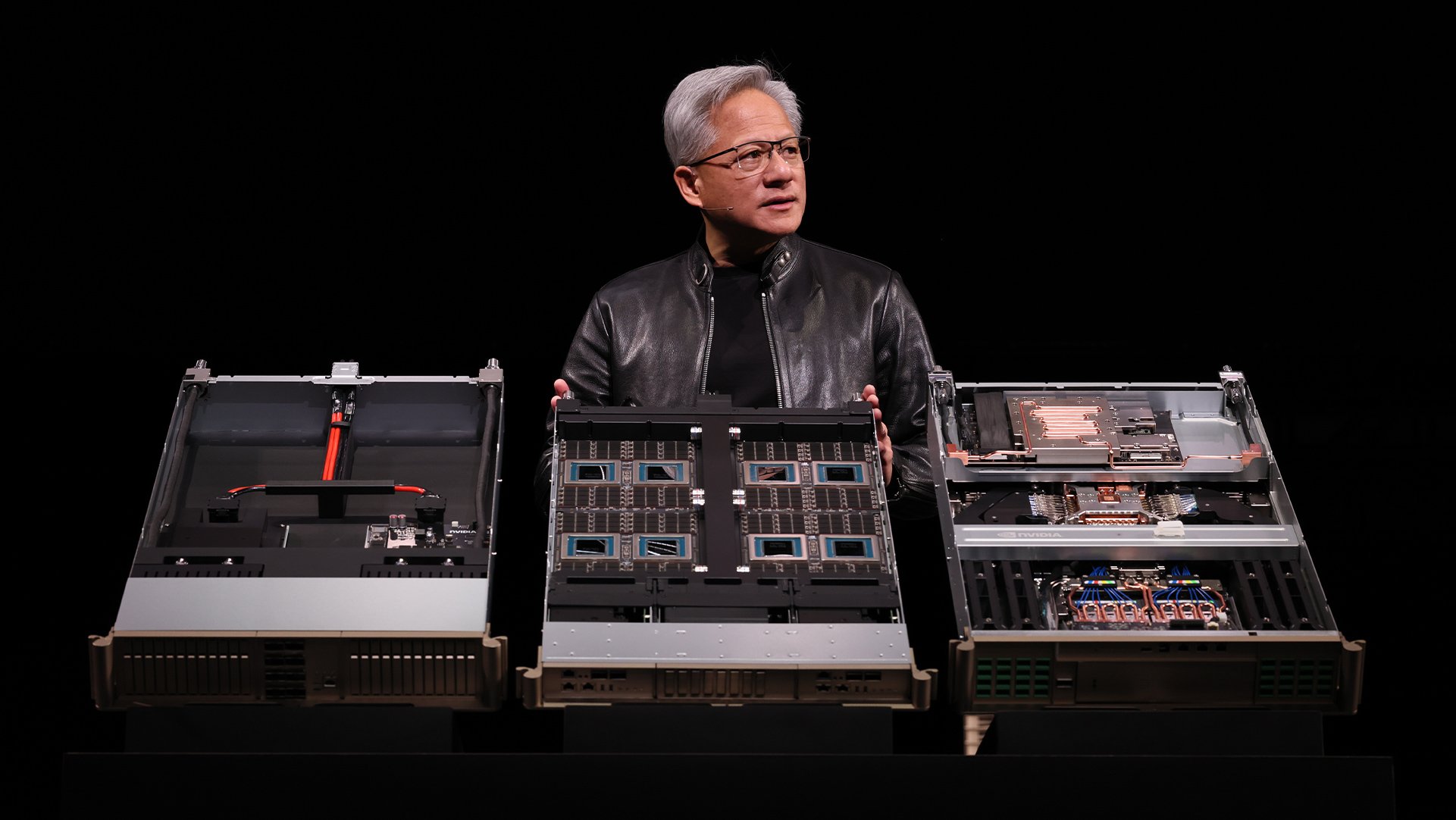
The acquisition, which was widely anticipated after reports last week, marks Nvidia's second-largest deal on record. It adds a popular AI development hub to Nvidia's expanding portfolio, which already includes chips, software, and infrastructure. CEO Jensen Huang emphasized that Hugging Face would remain an open platform, stating, "Together, we will scale Hugging Face's platform, strengthen its infrastructure and expand access to AI for developers and institutions worldwide."
Beyond chips: building an AI ecosystem
The deal underscores Nvidia's strategy to capture value beyond its dominant GPU business. As the world's most valuable company, Nvidia has benefited immensely from the generative AI boom, but the Hugging Face acquisition signals a move to solidify its position across the entire AI stack. Hugging Face provides tools and infrastructure for developers and institutions to build, share, and deploy AI models, making it a key piece of Nvidia's ecosystem play.
This is Nvidia's largest acquisition since its $20 billion purchase of assets from chipmaker Groq in December. Prior to that, its biggest deal was the nearly $7 billion acquisition of Mellanox in 2019. The company's aggressive M&A activity reflects its ambition to lead not just in hardware but in the broader AI landscape.
Morningstar raises fair value on strong earnings
The acquisition comes on the heels of Nvidia's better-than-expected fiscal second-quarter results. Morningstar subsequently raised its fair value estimate for the stock to $310 from $280, implying roughly 30% upside from the current price of around $226. The research firm highlighted Nvidia's fiscal 2028 outlook as the most significant part of the report.
Nvidia reported $96 billion in fiscal Q2 revenue, up 106% year over year and above its $91 billion guidance. The company forecast October-quarter revenue of $108 billion, also ahead of the $105 billion consensus. For fiscal 2028, Nvidia expects 70% revenue growth, implying nearly $700 billion in total revenue, compared with Morningstar and FactSet estimates of roughly $570 billion.
Morningstar noted that Nvidia described the forecast as supply-constrained, meaning revenue could be even higher if suppliers expand capacity faster than expected. The firm also pointed to Nvidia's track record of beating and raising guidance, suggesting the 70% growth forecast may be conservative. This optimism is echoed by other analysts, who see sustained demand for AI infrastructure, as highlighted in recent Dell server backlog signals.
Margin pressure from memory costs
The main weakness in Nvidia's latest results was its gross-margin outlook. Nvidia reported a 75% gross margin in the July quarter but expects that to fall to 74% in October, 71.5% in January, and 72.5% in fiscal 2028. Morningstar attributed the pressure to sharply higher memory prices, a critical component of Nvidia's AI systems.
Despite the margin headwinds, Morningstar believes demand for Nvidia's AI infrastructure will remain "stronger for longer" and maintains that the stock appears undervalued even after recent gains. The Hugging Face acquisition adds another dimension to that thesis, as Nvidia is no longer relying solely on AI accelerators but is building an ecosystem spanning chips, infrastructure, software, and development tools.
Investors will be watching how the integration progresses and whether the deal can help Nvidia maintain its growth trajectory. With analysts seeing over 30% upside, the market's reaction to the acquisition and upcoming earnings will be crucial. For more context on AI-driven market movements, see Oracle's recent AI spending debate and Micron's AI demand outlook.
This article is for informational purposes only and does not constitute financial advice.