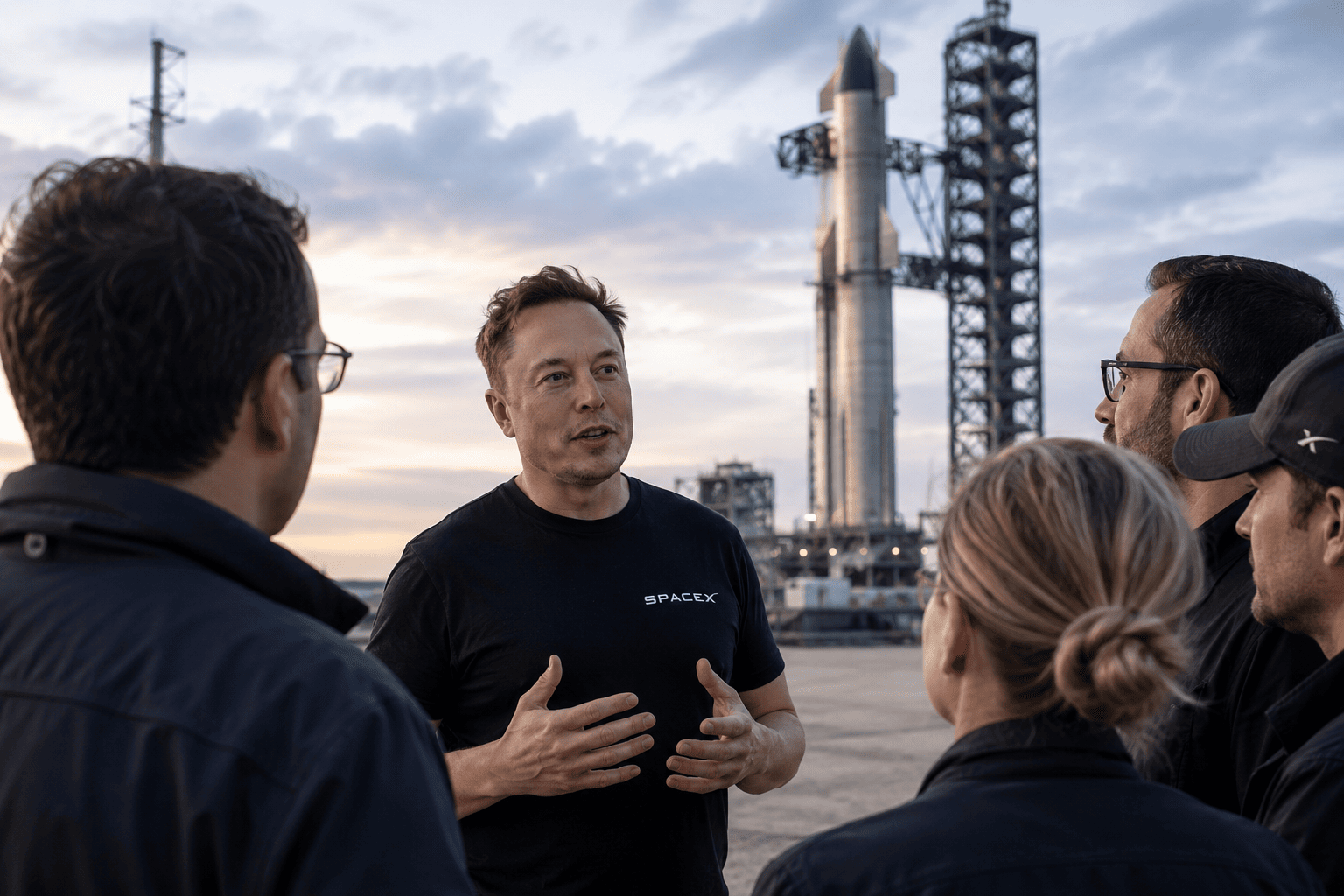
SpaceX (SPCX) shares surged more than 5% on Thursday, trading near $148, after ending the prior two sessions lower. The rebound was fueled by optimistic analyst projections for the company's artificial intelligence business, which is increasingly seen as a core growth driver beyond its traditional rocket and satellite operations.
Bernstein's bullish AI forecast
Bernstein SocGen Group reiterated its Outperform rating on SpaceX and maintained a $248 price target. Analyst Douglas Harned expects SpaceX's AI revenue to nearly quintuple to $115.1 billion in 2027, up from $24.6 billion in 2026. If realized, AI would become the company's largest revenue stream.

The brokerage projects total revenue to climb from $46.4 billion in 2026 to $150.4 billion in 2027, with AI accounting for the bulk of the increase. The forecast underscores how SpaceX's growth narrative is expanding beyond launch services and satellite internet toward AI infrastructure and computing. Bernstein's valuation also factors in the potential for orbital data centers, adding another avenue for future expansion.
Oppenheimer raises price target
Oppenheimer also struck a bullish tone, raising its price target on SpaceX to $280 from $250 on Tuesday while maintaining an Outperform rating. That revised target implies roughly 100% upside from the stock's recent level around $139.
Oppenheimer highlighted SpaceX's vertically integrated AI platform as a key differentiator, citing its combination of proprietary data, capital, access to GPUs through its partnership with Nvidia, and the ability to rapidly build infrastructure. The firm also pointed to SpaceX's acquisition of Cursor as a catalyst, which has strengthened its agentic coding data and logic, with benefits expected across its AI offerings, including Grok Bot and Grok 4.6, and further improvements anticipated with Grok 5.0.
According to Oppenheimer, AI productivity and usage are running ahead of expectations for both SpaceX and the broader industry, though infrastructure remains a bottleneck. The brokerage raised its long-term revenue estimates by about 10% on stronger AI compute pricing, with higher capital spending potentially boosting that uplift to roughly 20%.
Lockup expiries remain a key overhang
Despite the optimistic AI outlook, the steady release of newly unlocked shares continues to weigh on SpaceX stock. Unlike a typical single lockup period, SpaceX has adopted a staggered structure, with shares becoming tradable at multiple intervals.
About 912 million shares became available on August 6, followed by another 319 million scheduled to unlock on August 20. Approximately 600 million shares are expected to become available in September, with over 630 million more slated for October. By the end of 2026, roughly 4.9 billion SpaceX shares will have been unlocked, representing about 70% of shares not held by Elon Musk.
This growing supply has been a significant factor in the stock's early performance. Investors have been cautious about buying ahead of potential profit-taking by early shareholders, which helped push SpaceX below $105 in July, well beneath its $135 IPO price. The stock's ability to sustain its rebound may depend on whether growing confidence in the AI opportunity can outweigh the continued supply from upcoming lockup expirations.
For more context on the challenges facing SpaceX, see this analysis of technical and unlock risks. Also, analysts see doubling potential as AI forecasts surge, and Bernstein backs its $248 target despite mobile risks.
This article is for informational purposes only and does not constitute financial advice.