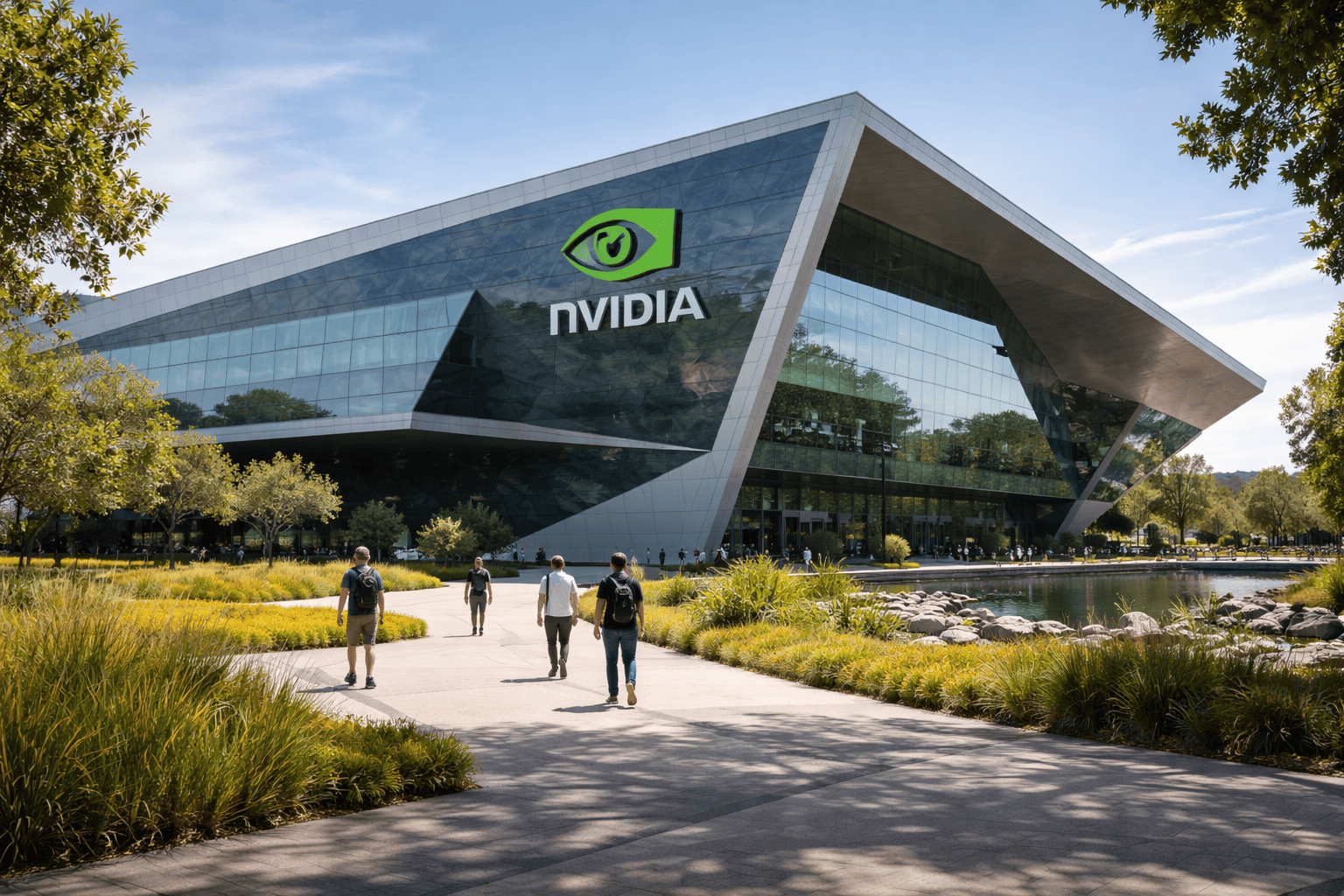
Nvidia (NASDAQ: NVDA) shares advanced 3% on Monday, extending a recent rally as investors bet on sustained demand for AI infrastructure. The chipmaker remains at the center of a massive data-center buildout, with cloud providers ramping up spending on its latest liquid-cooled Blackwell systems. Reports of manufacturing yield improvements also buoyed sentiment, suggesting Nvidia could ease prior supply constraints and ship more units in the current fiscal period.
AI infrastructure spending remains the key growth driver
Nvidia's dominant position in the AI accelerator market continues to underpin its growth story. Analysts point to robust demand from hyperscale cloud providers and emerging enterprise workloads, while sovereign AI initiatives across Europe and Asia are opening new avenues for advanced computing hardware. Governments are investing in domestic AI infrastructure, potentially expanding the total addressable market beyond traditional data centers.

Macro conditions have also turned more favorable for high-growth tech names. Cooling inflation and expectations that the Federal Reserve could stabilize or eventually ease monetary policy have improved sentiment, as lower discount rates make future earnings more valuable. This backdrop has helped Nvidia and other AI leaders despite lingering geopolitical trade uncertainties affecting parts of the semiconductor industry. Nvidia's diversified supply chain and software ecosystem have provided some insulation from broader sector pressures.
AI investment comes with rising capital demands
While enthusiasm for AI spending remains strong, some market observers caution that the industry's rapid infrastructure expansion is increasing financing requirements. Stephen Coltman, head of macro at 21shares, noted in a research report that companies once known for massive cash generation are now becoming large borrowers to fund AI buildouts. Even Nvidia, with its industry-leading profit margins, is reportedly offering vendor financing and credit guarantees worth hundreds of billions to customers, which has widened its credit spread.
This dynamic underscores the financial strain that accompanies the AI boom, even as demand for advanced chips stays robust. Investors are closely watching how technology firms fund these capital-intensive projects, as balance-sheet leverage could become a point of scrutiny.
Analysts remain bullish ahead of earnings
Looking ahead, Nvidia's earnings report scheduled for Aug. 26 could serve as a major catalyst. According to FactSet, the average Wall Street price target stands at $314.29, implying significant upside from Friday's close of $200.75. Bernstein reiterated its Buy rating with a $315 target, suggesting a 56% potential gain.
Recent industry data points to accelerating AI infrastructure spending, with cloud service providers prioritizing Nvidia's next-generation systems. The shift from pilot projects to large-scale deployment of generative AI applications is driving demand for high-performance computing, a trend that could persist through the year.
Beyond data centers, Nvidia is exploring opportunities in AI materials and other adjacent areas, as highlighted in a quiet catalyst beyond data centers. Meanwhile, the company's role in the broader AI ecosystem remains a focal point for investors, especially as peers like Amazon boosts AI spending, easing demand concerns.
With AI infrastructure spending expanding and new demand sources emerging, the market's attention is firmly on whether Nvidia can sustain its growth trajectory when it reports quarterly results later this month. The stock's recent performance reflects optimism, but the upcoming earnings will be a critical test of whether the AI trade can maintain its momentum.
This article is for informational purposes only and does not constitute financial advice.