Nvidia's stock rebounded sharply on Tuesday, climbing more than 3% and snapping a four-session losing streak, as the broader semiconductor sector recovered from a recent selloff. The bounce came after the chipmaker had shed over 11% in the past month, weighed down by concerns that the massive AI investment cycle might be losing momentum.
By mid-morning trading, Nvidia shares were up about 3.1%, trading near $208.40. The Philadelphia Semiconductor Index also advanced roughly 3%, with several major chipmakers joining the recovery. AMD gained 5.9% ahead of its quarterly earnings, Intel rose 3.1%, Micron added nearly 3.7%, and Broadcom climbed about 4%.
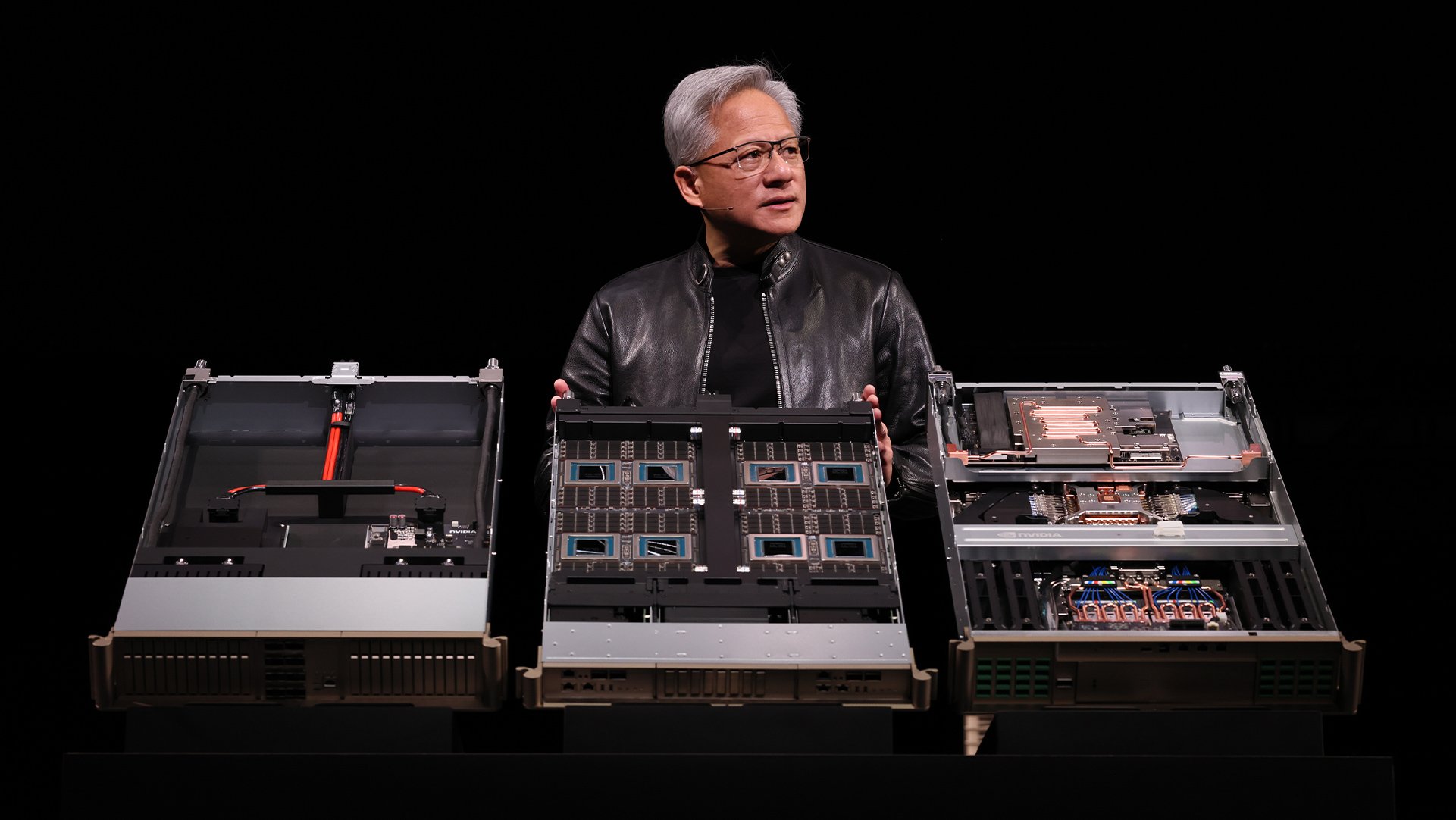
One notable development drawing investor attention was the reported involvement of Nvidia CEO Jensen Huang in Marvell Technology's $115 billion acquisition of Lumentum Holdings. According to Bloomberg, Marvell's CEO Matthew Murphy and Lumentum's CEO Michael Hurlston consulted Huang during a phone call before finalizing the all-stock deal. The transaction, one of the largest tech deals this year, underscores Nvidia's expanding influence across the AI infrastructure supply chain, particularly in optical networking and high-speed data-center connectivity. Nvidia had previously invested $2 billion in each of the two companies earlier this year, highlighting its financial ties to key suppliers.
Support for Nvidia's growth outlook also came from reports that Anthropic plans to nearly double its computing capacity next year. The AI company expects to have more than 3.5 gigawatts of computing capacity by the end of 2026 and aims to reach around 7 gigawatts in 2027, according to a New York Times report. This expansion reflects the enormous computing requirements for training and operating advanced AI models, with Nvidia among the key chip suppliers.
In addition, Samsung Electronics reportedly plans to manufacture base dies for high-bandwidth memory (HBM) chips destined for Nvidia and AMD at its second foundry facility in Taylor, Texas. South Korean media reports indicate that construction is expected to begin this month, with mass production targeted for 2030. This move could help secure a stable supply of critical memory components for AI accelerators.
On the regulatory front, Nvidia has reportedly instructed its data-center partners to ensure that at least 51% of their services go to non-Chinese customers. The Financial Times reported that the guidance applies to future contracts and was communicated verbally through Nvidia's sales teams. The company defended the global expansion of American-built AI infrastructure, stating that data centers and cloud platforms using US chips are essential for American AI companies to compete worldwide.
Analyst sentiment remains broadly supportive despite recent volatility. Melius Research maintained its Buy rating on Nvidia but cut its price target to $315 from $420, citing concerns about the enormous volume of securities that major technology companies may need to issue to finance AI investments. "The amount of paper is so large it has become the primary risk," the firm said, according to CNBC.
Investors are now looking ahead to Nvidia's fiscal third-quarter earnings report, scheduled for November 17, as the next major catalyst for the stock. The company's ability to sustain growth amid rising competition and regulatory scrutiny will be closely watched.
This article is for informational purposes only and does not constitute financial advice.