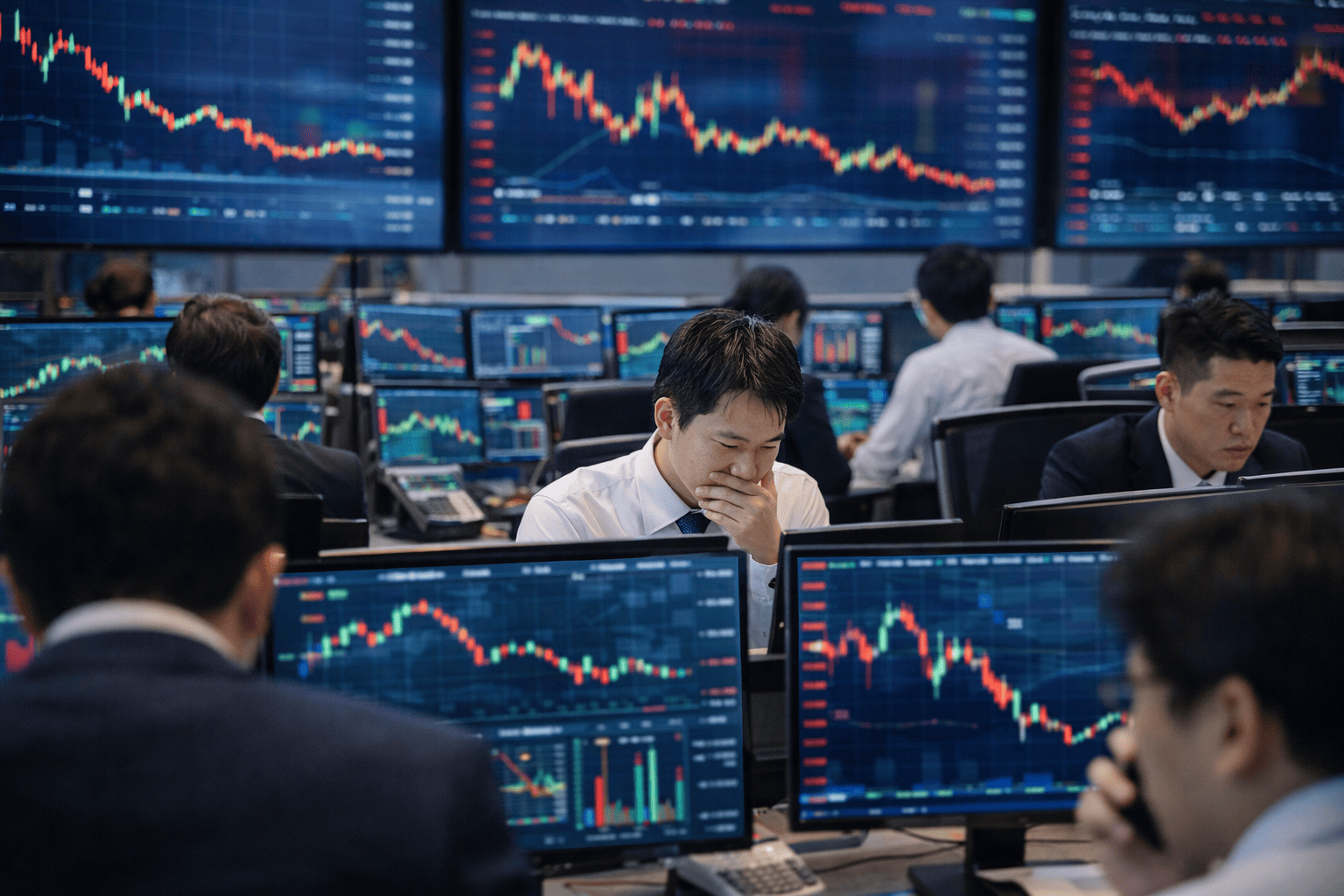
Japanese equities staged a partial recovery on Tuesday as investors returned from a long weekend and snapped up shares following last week's steep technology-led sell-off. The Nikkei 225 rose 1.25% to 64,945.96 in early trading, recouping only a fraction of its 6.4% weekly decline—the sharpest in over a year. The broader Topix index climbed 1.33% to 3,971.20, with the cash-equity market closed Monday for Marine Day.
Bargain Hunting Drives Broad-Based Gains
The rebound was notably broad, with 196 Nikkei members advancing versus 28 declining, signaling that investors were buying across sectors rather than concentrating on a few heavyweights. Kioxia Holdings led the benchmark with a 5.89% surge as memory-chip shares recovered from heavy selling. Shiseido rose 5.78%, and industrial group IHI advanced 4.14%. On the downside, Nintendo fell 3.91%, chip-materials supplier Sumco lost 3.45%, and Nikon declined 2.18%.

The breadth of the rally offered some reassurance after the Nikkei entered correction territory on Friday, closing more than 11% below its June record high. However, the early bounce appeared more like position rebuilding than a decisive return to risk appetite.
AI Earnings Set the Tone
Technology results from the U.S. now carry outsized weight for Japan, given that semiconductors and AI-linked companies drove much of the market's earlier surge. Alphabet and Tesla are due to report on Wednesday, followed by Intel after Thursday's close. Tesla has already disclosed second-quarter deliveries of 480,126 vehicles and energy-storage deployments of 13.5 gigawatt-hours, but investors will focus on margins, AI investment, and the cost of expanding newer businesses. Intel's report will test demand for data-center products and progress on its manufacturing turnaround.
Nomura strategist Wataru Akiyama characterized Tuesday's move as a technical recovery with limited momentum. In his view, major earnings releases in Japan and the U.S. should determine whether weakness in AI-related shares begins to ease.
Rebound Lacks Conviction
Wall Street provided only a cautious lead. The S&P 500 slipped 0.2% on Monday, the Dow fell 0.6%, and the Nasdaq ended almost unchanged as stabilizing chip shares were offset by higher Treasury yields and oil prices. That backdrop leaves the Nikkei vulnerable to another reversal if technology guidance disappoints or geopolitical tensions push energy costs higher.
Japan's market remains unusually dependent on a small group of expensive exporters and semiconductor names. Tuesday's breadth shows buyers are willing to step in after sharp losses, but whether they stay will depend less on bargain prices and more on whether this week's earnings can restore confidence in the AI investment cycle. For context, the Dow gained 140 points as chip stocks rebounded ahead of big tech earnings, reflecting similar sentiment in the U.S.
This article is for informational purposes only and does not constitute financial advice.