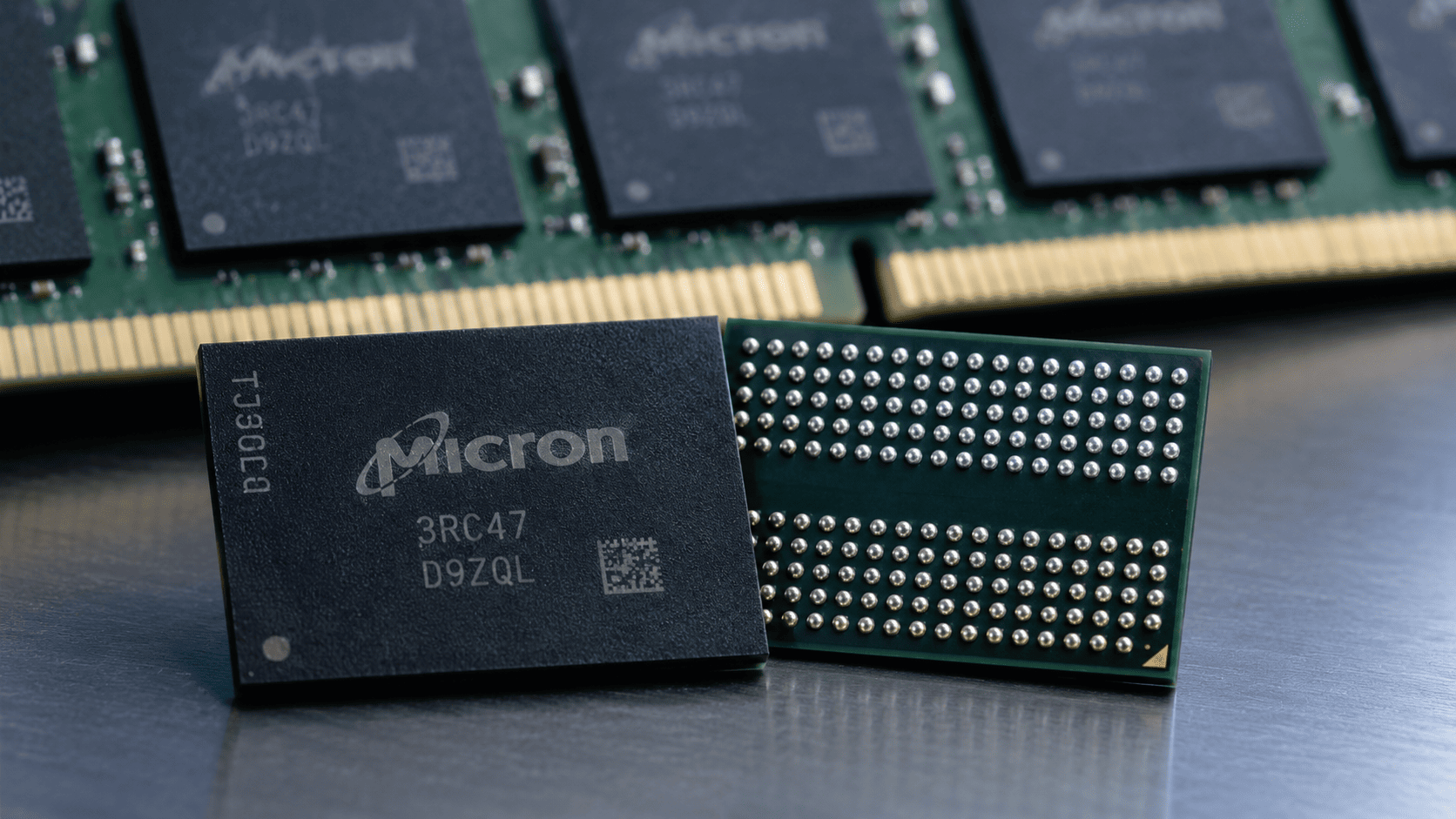
Micron Technology (NASDAQ:MU) has delivered a stunning 226% gain this year, propelled by explosive earnings growth as AI-driven demand for memory chips pushes prices higher. But the next leg of the rally may hinge less on further earnings expansion and more on whether investors are willing to pay a richer valuation for each dollar of profit.
Despite the strong performance, the stock remains unusually cheap. Micron trades at roughly 5.77 times estimated earnings for the next calendar year, making it the fifth-lowest valued S&P 500 component by that measure, according to Dow Jones Market Data. That valuation gap has caught the attention of TD Cowen analyst Krish Sankar, who believes a rerating could be on the horizon.

Potential rerating to 9x 2027 earnings
Sankar argues that Micron shares could undergo a “rerating” as investors gain confidence that the current memory-chip cycle can remain durable even if profit margins stop expanding at their recent pace. His $1,600 price target is based on a price-to-earnings multiple of 9 times his 2027 earnings estimates. That compares with Micron’s current multiple of 5.77 times and sits about 73% above Wednesday’s close.
The outlook comes as investors increasingly question how much further Micron’s margins can expand after an extraordinary period of earnings growth. Sankar estimates the company is roughly 80% through its typical 18-month margin-expansion cycle, which could mean near-term earnings estimates may not rise as rapidly as they have recently.
Micron’s latest results underscore the power of the current cycle. With memory-chip prices elevated, earnings per share jumped 1,215% in its most recently reported quarter.
AI demand reshapes the memory cycle
Sankar sees a potential scenario where earnings decline from peak levels while “the stock keeps grinding higher.” His reasoning: investors will become increasingly confident that the memory cycle is “more durable than the margin path implies.” Demand for dynamic-random-access memory (DRAM), used extensively in AI systems, has surged as companies invest heavily in data-center infrastructure.
That demand profile differs from previous memory cycles, when consumer electronics played a larger role. In downturns such as 2019 and 2022, “supply moved ahead of demand,” Sankar noted. This time, sustained AI-related demand could help prevent the same imbalance and provide greater visibility for memory manufacturers.
Sankar compared Micron’s potential valuation shift to steelmaker Nucor, whose multiple expanded significantly after 2022. In that case, the driver was not simply earnings growth but “greater confidence in cycle durability and US policy support.”
US manufacturing adds another tailwind
Micron could also benefit from its position as the “only major US DRAM manufacturer,” according to Sankar. He estimates that Micron’s US wafer production could account for roughly half of the industry’s total US capacity by the end of 2030. That domestic manufacturing footprint could further strengthen investor confidence in the company’s longer-term demand outlook as Washington encourages semiconductor production within the United States.
The next earnings report is scheduled for September 30. Sankar expects shareholder returns to be a major focus of the call and believes Micron could authorize a share-buyback program in the low-$20 billion range. However, the company would likely not begin repurchasing shares before December.
For investors tracking the broader semiconductor landscape, the AI-driven memory cycle has also lifted other names. Bank of America sees semis hitting $3.2T by 2030, with Micron among the leaders. Meanwhile, debate continues over whether Micron's low multiple is a value trap or a sign of durability. In the broader AI infrastructure space, Dell shares jumped 5% on a Goldman forecast lift, and SK Hynix denied a confirmed Intel deal but rallied on talks.
This article is for informational purposes only and does not constitute financial advice.

