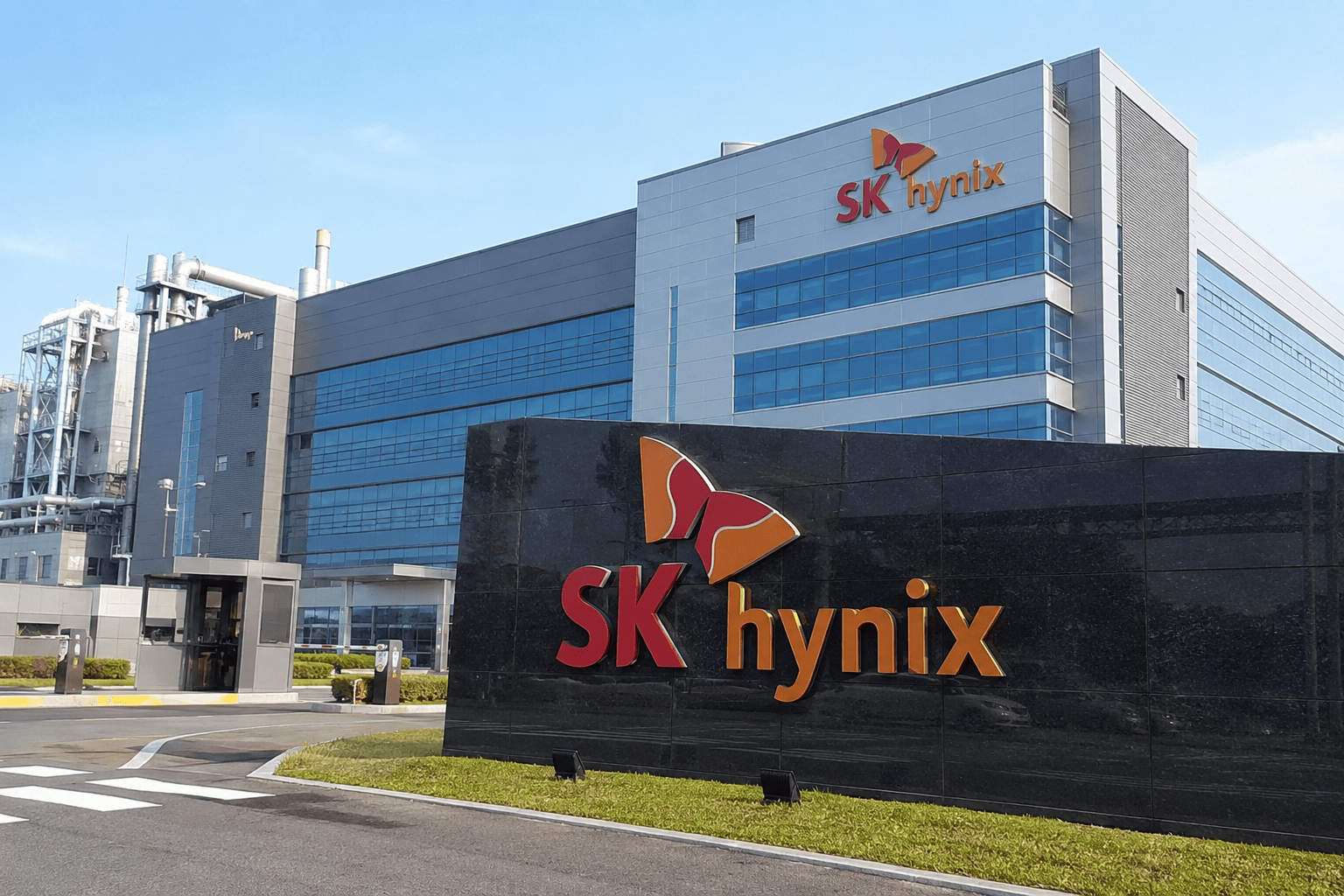
SK Hynix has clarified that no definitive agreement has been reached with Intel regarding a potential US memory chip partnership, following a Reuters report that the two companies were in discussions. The South Korean memory giant stated on Wednesday that “no decisions have been made” regarding the scenarios outlined in the report, which included leasing part of Intel’s Ohio facility or forming a joint venture with major cloud providers.
Deal scenarios under discussion
According to Reuters, citing three sources familiar with the matter, the talks involve two possible structures. The first would see SK Hynix lease a portion of Intel’s long-delayed semiconductor plant in Ohio, marking the first time SK Hynix would produce memory chips on US soil. The second scenario envisions a joint venture involving SK Hynix, Intel, and large cloud companies seeking to secure dedicated memory supplies.

Intel has committed to developing its Ohio site, but construction delays have pushed the expected production start to 2030 and 2031. A partnership with SK Hynix could help alleviate some of Intel’s financial strain, as the company continues to invest heavily in manufacturing capacity while facing competitive pressures.
Market reaction
Despite SK Hynix’s denial, both stocks moved higher in premarket trading. Intel shares rose 2.82%, while SK Hynix’s US-listed shares gained 3.43%. In Korea, SK Hynix’s stock ended the prior session approximately 4% higher, outperforming the broader KOSPI index. The market’s positive response suggests investors see strategic value in the potential collaboration, even if details remain unconfirmed.
Regulatory and strategic considerations
Any move to produce advanced memory such as HBM or DRAM in the US could attract scrutiny from South Korean authorities, as these technologies are considered sensitive. South Korea’s trade ministry told Reuters that the decision ultimately rests with SK Hynix, but noted that projects involving nationally important technology could be subject to review under the Industrial Technology Protection Act.
The reported talks come amid Washington’s push to expand domestic semiconductor manufacturing, driven by a memory-chip shortage fueled by AI and data center demand. SK Hynix already has a chip-packaging facility under construction in Indiana and recently completed a secondary Nasdaq listing. Chairman Chey Tae-won said in July that the company needed to build a factory in the US if possible, indicating broader ambitions remain alive even as specifics of this report are not confirmed.
For Intel, the timing is critical. The company has struggled to keep pace with rivals in advanced chipmaking and has leaned on government and industry partnerships to fund expansion. Bringing in SK Hynix, one of the world’s largest memory chip makers alongside Samsung, would provide a way to fill capacity at its delayed Ohio site while tapping into surging global demand for AI-related memory chips, a segment currently dominated by South Korean and US suppliers.
Investors have been closely watching developments in the semiconductor sector, with recent reports of Intel shares surging on SK Hynix talks and broader trends in semiconductor market growth. The potential deal also comes amid concerns about AI-driven demand and its impact on chip stocks.
As of now, neither company has provided further details, and Intel has not responded to requests for comment. The situation remains fluid, and investors should monitor official announcements for clarity.
This article is for informational purposes only and does not constitute financial advice.

