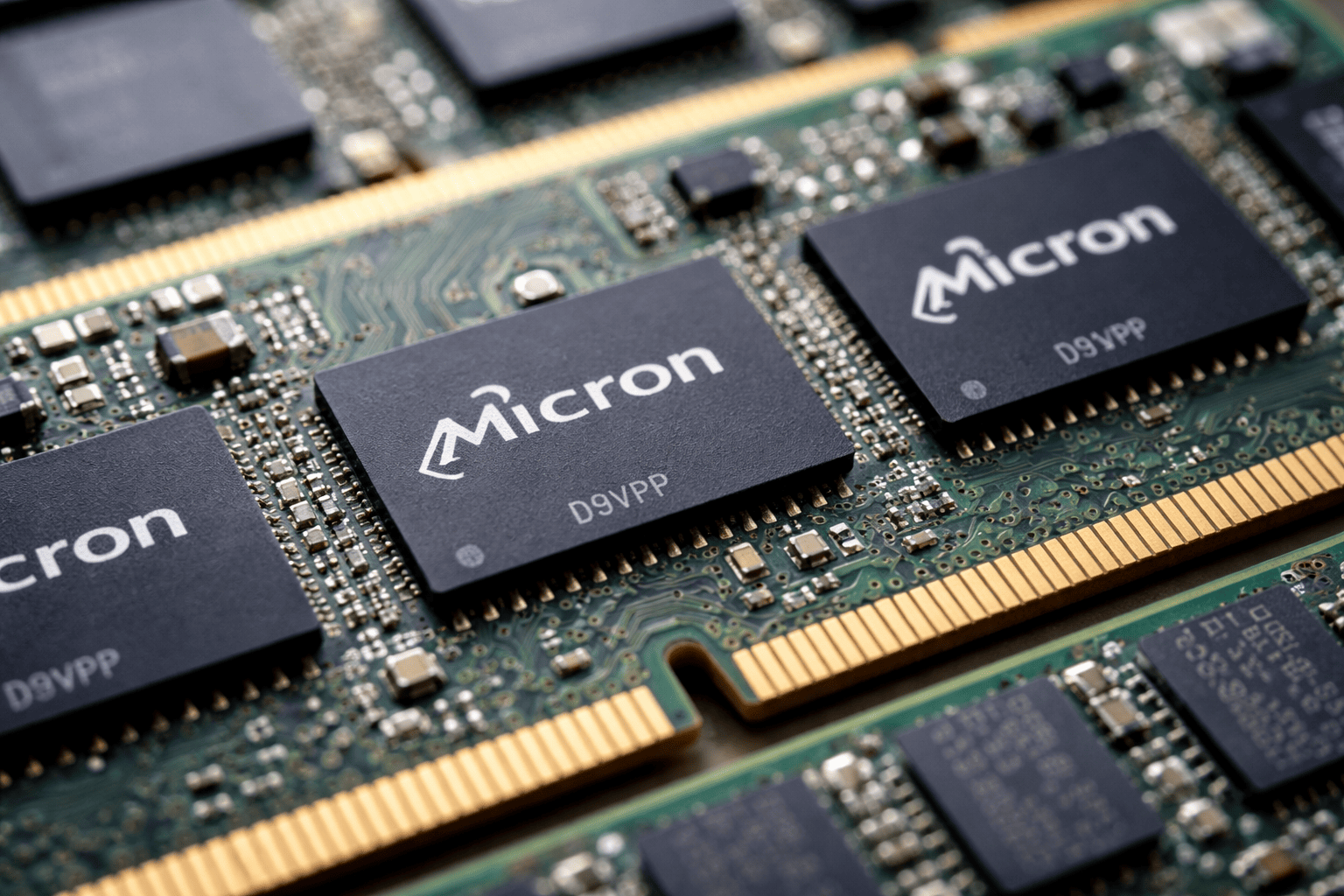
Micron Technology (NASDAQ: MU) has surged 224% in 2026, yet its valuation remains strikingly low relative to the broader market. The stock trades at roughly 6.3 times forward earnings, compared with about 19 times for the S&P 500. This unusual discount persists even as analysts expect another strong quarterly report on September 30.
The market's skepticism centers on whether the current memory upcycle, fueled by AI demand, can outlast historical patterns. In past cycles, high prices attracted new capacity, eventually overwhelming demand and crushing margins. Investors are questioning whether AI has fundamentally changed that dynamic.

Why Micron looks cheap
Goldman Sachs analyst James Schneider forecasts fiscal fourth-quarter revenue of $51.9 billion and earnings per share of $32.54, both above consensus. Yet Goldman maintains a Neutral rating with a $1,100 price target, reflecting caution about future supply additions, particularly from Chinese competitors.
Micron's low multiple is not a sign that Wall Street has missed the AI boom. Rather, it indicates that investors doubt today's exceptional profitability can persist. The market accepts the current shortage but is wary of how quickly supply could catch up.
AI may be stretching the cycle
Bulls argue this cycle is different. Susquehanna analyst Mehdi Hosseini told MarketWatch that memory has become the "king" of semiconductors, with its "reign here to stay." Memory now accounts for 50% to 55% of semiconductor industry revenue, up from a historical 20% to 30% range.
Hosseini expects DRAM prices to rise about 50% sequentially this quarter and NAND prices around 60%, with further increases ahead. High-bandwidth memory (HBM), used in AI accelerators, consumes significantly more wafer capacity than conventional DRAM. Micron has noted a roughly three-to-one trade ratio for HBM versus DDR5, and newer HBM generations require even more capacity.
The company has warned that industry supply will only improve gradually in 2028, suggesting the shortage could persist longer than typical cycles. If that holds, investors may be applying an outdated cyclical framework to a structurally changed market.
Earnings as a durability test
Mizuho analyst Vijay Rakesh argues that "agentic AI is driving memory demand higher," according to Investing.com. He projects Micron's fiscal 2027 revenue and EPS to grow about 66% and 80%, respectively. That is the core bull case: earnings could keep rising fast enough that even a stock up more than 200% remains inexpensive on future profits.
September 30 will be less about a beat-or-miss and more about durability. Investors will scrutinize DRAM and NAND pricing, HBM customer commitments, gross margins, and any signs that supply tightness can extend through 2027 and into 2028. Goldman expects Micron to guide to low-teens sequential revenue growth for fiscal Q1 2027, making forward guidance central to the valuation debate.
Related coverage: memory prices forecast to surge and Micron's pre-earnings momentum.
For investors, the key question is whether Micron's low multiple represents a value opportunity or a warning sign. The answer hinges on whether AI-driven demand can sustain pricing power longer than history suggests. As always, the market will vote with its dollars on September 30.
This article is for informational purposes only and does not constitute financial advice.

