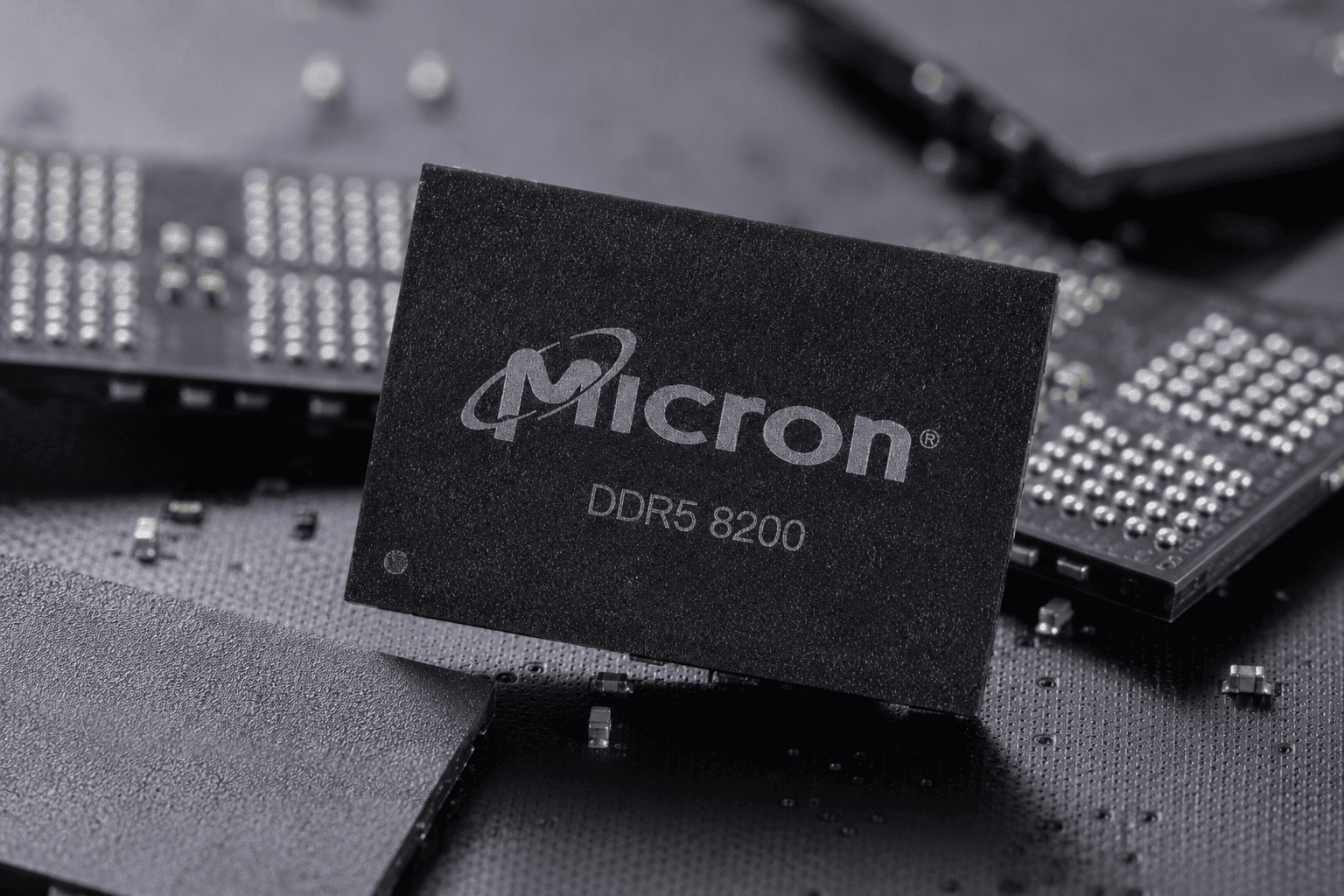
Memory-chip and storage stocks are gaining ground in premarket trading Monday, with Micron Technology approaching the $1,000 mark as investors weigh fresh catalysts ranging from US policy signals to bullish analyst calls.
Micron shares were up about 3% before the bell, putting the stock on track to cross the $1,000 threshold if gains hold. The stock closed at $971.66 on Aug. 14 and has risen roughly 13% over the past five sessions. SK Hynix advanced more than 4%, while SanDisk climbed about 6% in premarket action.

The recent rally follows a volatile period for the sector. Micron fell below $1,000 on July 2 after hitting a record high in June, as investors questioned whether massive AI infrastructure spending by tech giants would generate sufficient returns. The broader semiconductor selloff in July was fueled by concerns over competition from Chinese chipmakers and the potential for AI-related capital expenditure to slow.
US policy on Chinese memory chips
A fresh catalyst emerged from US Commerce Secretary Howard Lutnick, who said the Trump administration does not want Apple to use memory chips manufactured in China. In an interview after touring an Apple facility in Houston, Lutnick said there must be “other solutions to the memory issue,” according to The Wall Street Journal. He added that it’s “not great American companies using Chinese memory.”
Micron has lobbied the administration against Apple using Chinese memory chips, arguing it could undermine US semiconductor production and conflict with efforts to bring more chip manufacturing onshore. The company’s substantial US investment commitments have strengthened its position in policy discussions, placing it at the center of the debate over Apple’s supply chain.
Apple has been testing memory chips from Chinese manufacturers CXMT and Yangtze Memory Technologies, potentially opening the door for their use in devices sold in China. While US rules require American companies to obtain a license before sharing product information with these firms, Apple can purchase off-the-shelf chips without the same level of cooperation. Apple COO Sabih Khan declined to confirm testing but said, “we have to look at all options” amid a supply shortage.
For Micron, restrictions on Chinese memory could support pricing and demand while protecting its position in one of the world’s largest technology supply chains. This policy backdrop adds to the bullish narrative, as AI demand offsets NAND share loss.
New Street sees major upside
Adding to the momentum, New Street upgraded Micron to Buy from Neutral last week, setting a $1,250 price target—implying roughly 29% upside. The brokerage argues that AI could transform Micron into a $2 trillion to $3 trillion company by the end of the decade. New Street expects AI applications to become the dominant source of memory demand, accounting for about two-thirds of total demand in coming years, and forecasts annual memory demand growth of around 15% beyond 2030, versus a historical average of roughly 10%.
The firm also believes high-bandwidth memory (HBM) deserves a premium over commodity DRAM, given that demand is increasingly driven by long-term AI infrastructure investment rather than traditional semiconductor cycles. New Street projects Micron could generate more than $150 billion in annual free cash flow by 2030 and accumulate over $600 billion in cash at peak levels. This bullish outlook aligns with New Street's $3T AI memory opportunity.
SanDisk joins the rally
SanDisk has also been in focus since late last week. The stock jumped more than 7% on Friday after the company presented its long-term outlook at an investor day. Management forecast annual revenue growth in the mid-to-high double-digit range between fiscal 2028 and fiscal 2030, targeting non-GAAP gross margins of approximately 80% and adjusted free cash flow margins of around 50%.
The company cited $93.9 billion in contracts associated with its newer business models, providing greater visibility into future demand. JPMorgan initiated coverage with an Overweight rating and a $2,250 price target. Analyst Harlan Sur said SanDisk is “uniquely positioned to capture the ongoing structural inflection in NAND demand driven by rapid growth in AI inference,” highlighting the potential for AI workloads to reshape the NAND market. This follows SanDisk's 15% jump on AI-driven targets.
As the memory sector continues to ride the AI wave, investors are closely watching policy developments and supply-demand dynamics. The combination of strong earnings potential, strategic positioning, and supportive government policies could keep the rally going, though risks remain from competition and potential capex slowdowns.
This article is for informational purposes only and does not constitute financial advice.