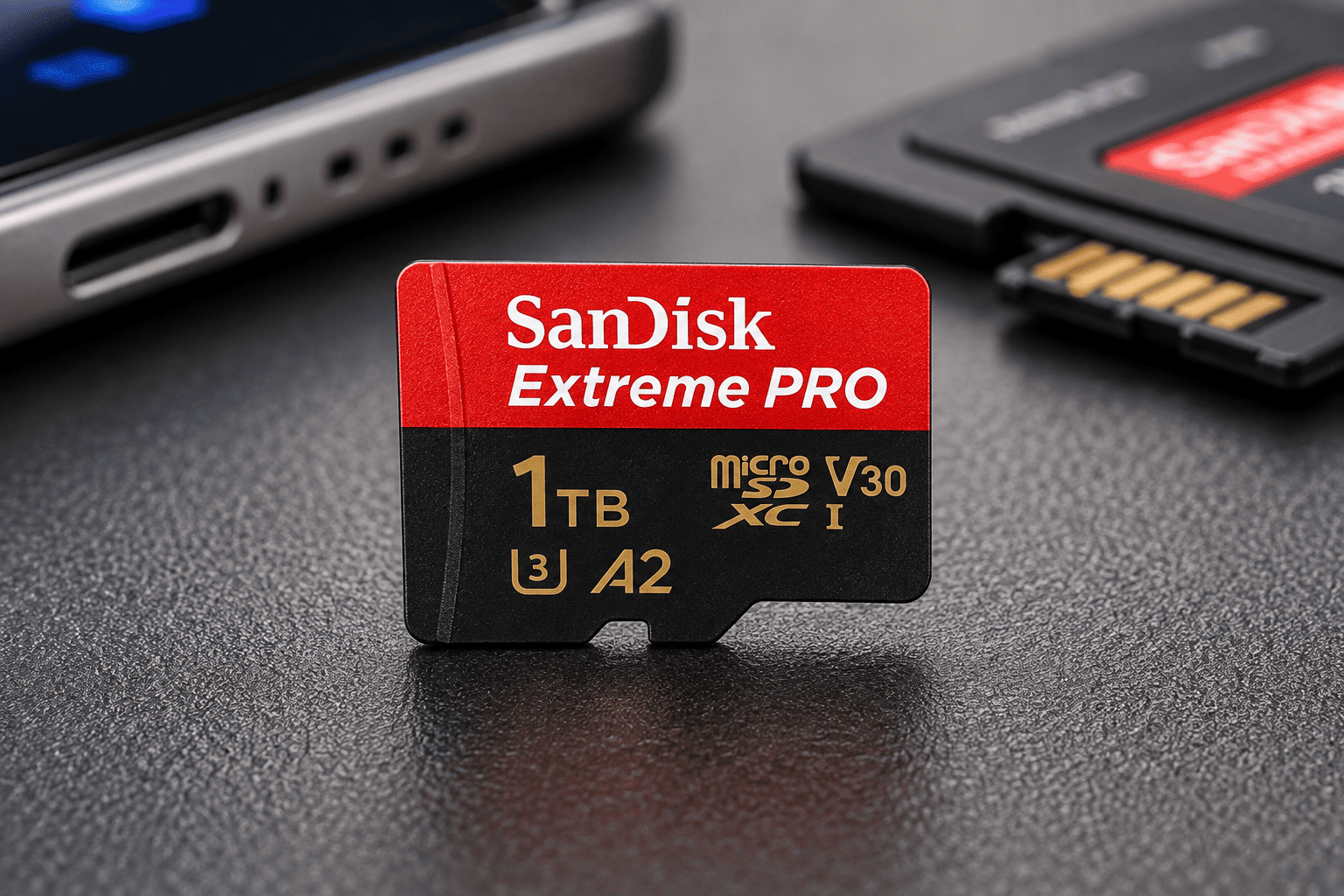
SanDisk (SNDK) shares surged approximately 15% on Thursday following the company's 2026 Investor Day, where management laid out ambitious long-term financial targets and sought to reassure investors about the durability of AI-driven memory demand. The rally made SanDisk one of the best-performing stocks in the S&P 500, and also lifted peers such as Micron Technology and Western Digital.
Long-term growth targets
At its Investor Day, SanDisk projected annual revenue growth in the mid-to-high teens between fiscal 2028 and fiscal 2030. The company also forecast adjusted gross margins of roughly 80% during that period, alongside adjusted free cash flow margins of about 50%. Chief Financial Officer Luis Visoso said SanDisk plans to return all excess cash to shareholders after investing in the business.
The company's optimism comes despite lingering concerns about the memory industry's historical cyclicality. SanDisk's management argued that multi-year customer agreements and AI-driven demand should support growth and profitability for years to come. Adjusted gross margins reached 84.6% last quarter, up from 26.4% a year earlier, benefiting from tight supply in AI-related memory markets.
Multi-year agreements provide visibility
Rather than relying on short-term demand cycles, SanDisk said it is increasingly securing multi-year business model agreements (NBMs) with customers. These agreements cover about half of its memory capacity in fiscal 2027 and roughly two-thirds in fiscal 2028. Visoso attributed management's confidence to these long-term relationships, stating, "Our confidence in the sustainability of the model comes from our multi-year NBMs that are based on intimate relationships with our customers and grounded in innovation and collaboration."
Analysts have noted that these agreements could provide earnings resilience even if memory prices weaken. Evercore ISI analyst Amit Daryanani said SanDisk "expects the agreements to generate highly attractive returns even at floor pricing," suggesting the contracts could buffer against downside scenarios.
AI demand underpins memory strategy
SanDisk believes artificial intelligence will continue to create new sources of demand beyond conventional storage applications. The company highlighted its latest NAND flash technologies, including BiCS9 QLC and BiCS10 QLC. According to SanDisk, BiCS10 can store 60% more bits within the same physical space than the previous generation. It is also developing High Bandwidth Flash (HBF), a technology designed for AI inference workloads, which aims to help data centers process the growing volumes of information required as AI models generate responses.
Management estimates the enterprise data center flash market could expand to 1.2 zettabytes by 2030 as AI adoption accelerates, reinforcing its long-term outlook for memory demand. This projection aligns with the broader trend of AI infrastructure spending, which has been a key driver for semiconductor and storage companies. For context, SanDisk's rebound case has been building on AI memory demand, and the company's recent guidance has been closely watched by investors.
Market context and analyst views
The upbeat outlook comes as investors have increasingly questioned whether the current memory boom can withstand the industry's traditionally cyclical nature. SanDisk's latest projections indicate management expects AI-driven demand, disciplined supply, and long-term customer commitments to support sustained revenue growth and high profitability through the rest of the decade. The stock's surge on Thursday also helped lift other memory and storage names, reflecting a broader optimism in the sector.
However, some caution remains. The memory industry has historically experienced boom-and-bust cycles, and a potential oversupply could pressure pricing. Yet SanDisk's focus on long-term contracts and its technological advancements may provide a buffer. As options pricing suggests, the market still sees significant volatility ahead, but the company's strategic moves are being viewed positively.
Investors will be watching to see if SanDisk can deliver on these ambitious targets. The company's ability to secure multi-year agreements and its continued innovation in NAND and HBF technologies will be key factors in sustaining its growth trajectory. With AI demand expected to remain robust, SanDisk appears well-positioned to capitalize on the secular trend.
This article is for informational purposes only and does not constitute financial advice.

