For cryptocurrency investors practicing self-custody, the hardware wallet is only half the equation. The recovery seed phrase—the 12 to 24 words that can restore access to funds—remains the ultimate safety net. Yet paper backups are vulnerable to fire, water, and simple wear, while digital copies introduce hacking risks. This has driven a growing market for metal seed backups designed to withstand the elements and the passage of time.
The Core Challenge: Durability vs. Accessibility
BIP39, the standard behind most recovery phrases, uses an ordered list of 2,048 words. A backup must remain legible and intact for years, possibly decades, without being so exposed that a thief could easily use it. Paper is simple but fragile; cloud storage is durable but creates a digital attack surface; relying solely on the hardware wallet is a single point of failure. Metal backups aim to bridge this gap, offering physical resilience while allowing owners to control how much information is visible.

Metal Designs: Trade-Offs in Every Choice
Stainless steel and titanium resist water, heat, and corrosion far better than paper. However, no single design optimizes everything. Cassette systems like the Billfodl use engraved stainless-steel tiles inserted into a chassis, making them readable but with many small parts. Punched tablets, such as the Keystone Tablet Punch, use 304 stainless steel and an automatic center punch, offering a permanent record but requiring precise setup. Capsule designs like Cryptosteel's Capsule hide contents inside a cylindrical shell, adding privacy but complicating recovery.
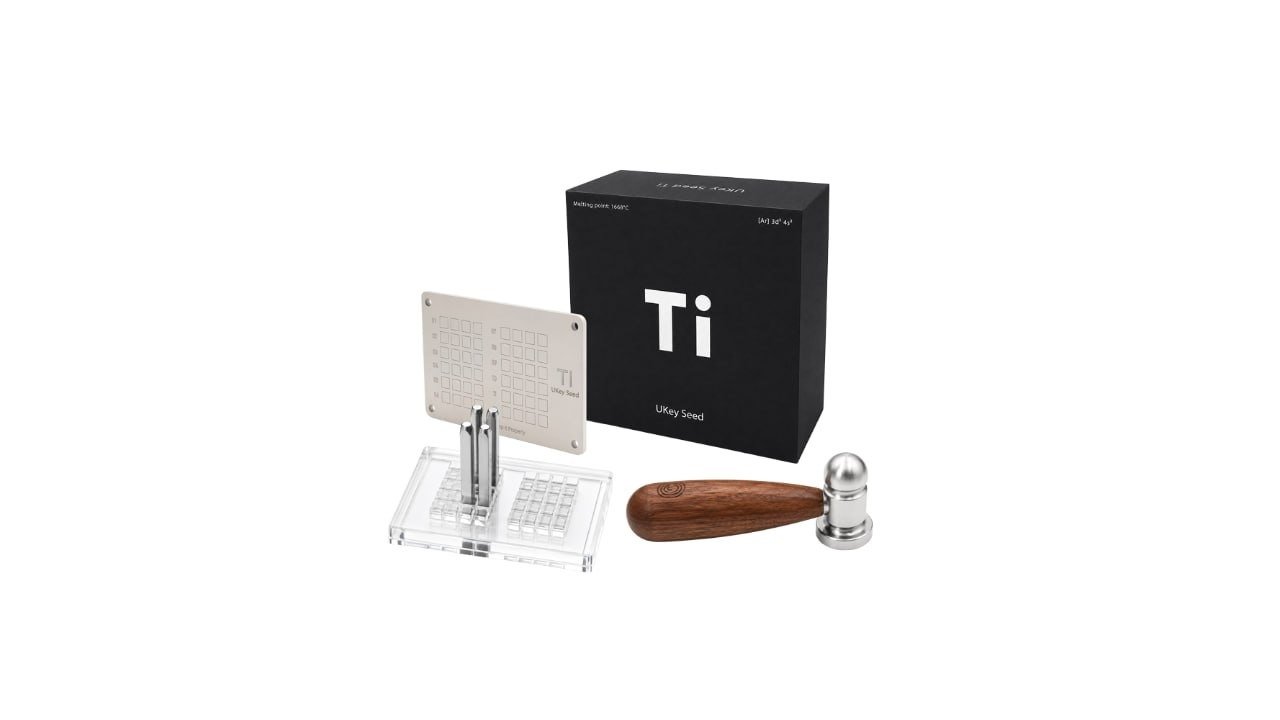
Some products, like the Cryptotag Zeus, store BIP39 numerical indexes instead of the words themselves. This reduces immediate recognizability but still requires careful documentation. The UKey Seed Ti follows a similar index-based approach, using a TC4 titanium plate measuring 107.47 x 68.41 mm, 3 mm thick, and weighing 98 g. It can record up to 24 seed words and two passphrases, with a serial-number mechanism to preserve order. Its manufacturer emphasizes resistance to heat, water, and corrosion.
Evaluating Recovery Systems
Temperature resistance alone is not enough. A cassette may be easier to read but has more components that could be lost. A punched tablet is robust but unforgiving if a letter is misplaced. A capsule obscures contents but adds assembly complexity. Index-based systems like UKey Seed Ti make the backup less obvious to a finder, but they also make recovery more dependent on correct documentation and the user's understanding of the indexing system.
Investors should also consider the broader context of self-custody. A metal backup is not a hardware wallet; it is a recovery tool. It should be stored separately from the primary wallet to avoid a single point of failure. As noted in wearable NFC devices and card wallets without seed phrases, the industry is exploring alternatives, but metal backups remain a reliable fallback.
Market Context and Practical Considerations
The demand for metal backups reflects a broader trend toward robust self-custody solutions. As crypto adoption grows, so does the need for recovery methods that can survive house fires, floods, and the test of time. However, no backup is foolproof. Theft, user error, and overly complex recovery procedures are still risks. Investors must weigh durability against readability and privacy against convenience, and always test their recovery process before relying on it.
For those considering a metal backup, it's essential to follow the manufacturer's instructions precisely and store the backup in a secure, separate location. As with any security measure, the goal is to balance protection with usability. The right choice depends on individual needs, but the underlying principle remains: a backup must be both resilient and recoverable.
This article is for informational purposes only and does not constitute financial advice.