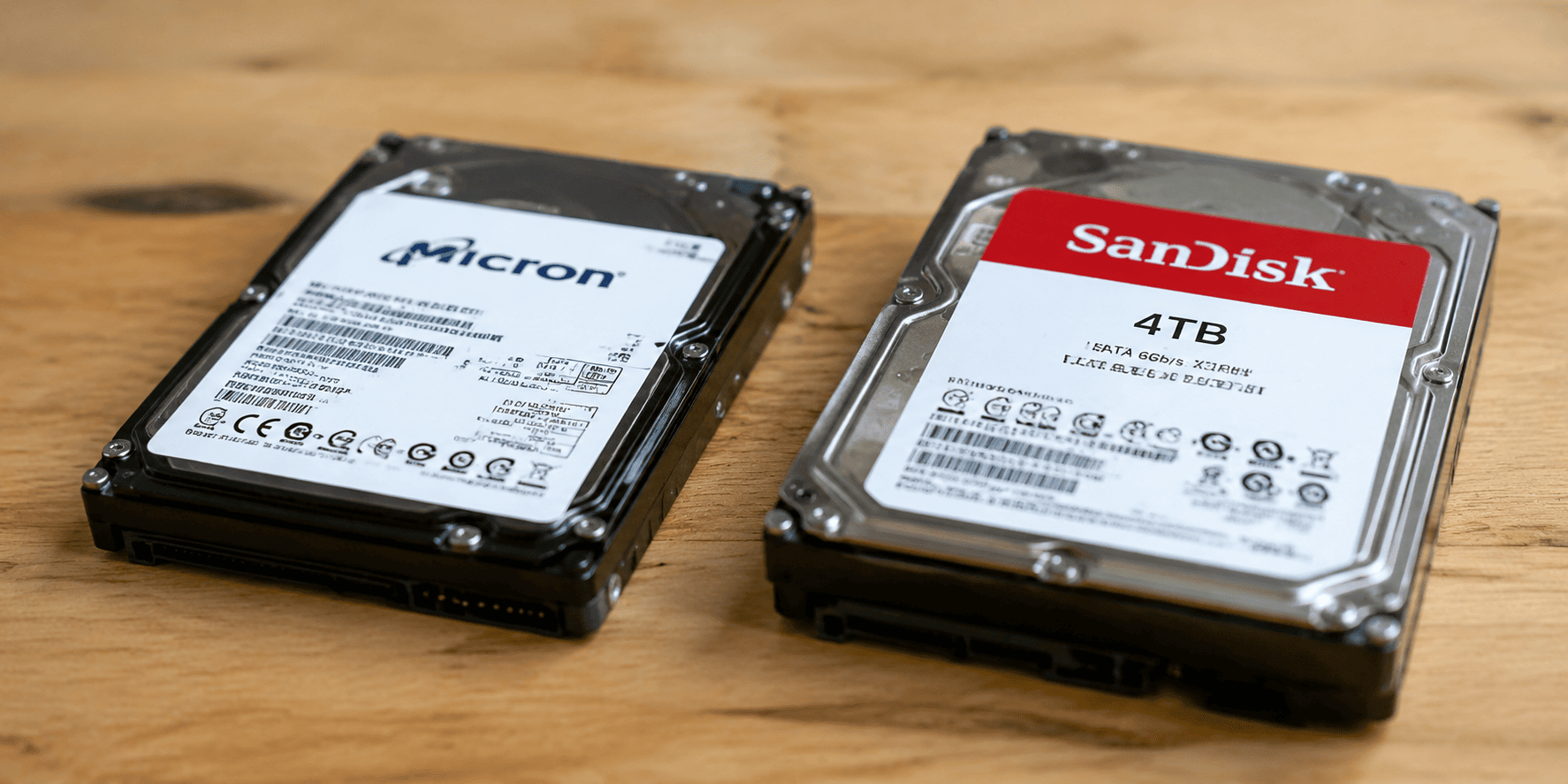
Memory chip stocks experienced a notable decline on Wednesday, with Micron Technology, SK Hynix, and SanDisk all posting significant losses. The sell-off came as investors weighed the potential impact of Democratic gains in the U.S. midterm elections, particularly a victory in Texas that could slow the pace of data center construction, a key driver of AI infrastructure demand.
Micron shares fell more than 6.7%, while SK Hynix dropped nearly 5.4% and SanDisk declined over 8%. This weakness stood in contrast to a broader rally in U.S. equities, with the S&P 500 rising 1.8%, the Dow Jones Industrial Average gaining over 2%, and the Nasdaq Composite advancing 2.5%.
Texas Election Raises Data Center Concerns
Investors had largely anticipated Democratic control of the House and possibly the Senate, but the Democratic victory in the Texas gubernatorial race emerged as a major concern for technology investors. Democrat Gina Hinojosa defeated incumbent Republican Governor Greg Abbott after campaigning for an immediate moratorium on new data centers in the state. Texas is central to the U.S. data center expansion, accounting for about 27% of planned capacity, according to Wells Fargo.
Dan Ives, partner at Yorkville Ives & Co., noted that the election results could create significant hurdles for AI and tech legislation over the next two years. He described the Texas outcome as the "biggest worry" of the night for technology investors, given the state's potential to host around 25%-30% of planned data center gigawatts and capacity. Goldman Sachs economists also warned that Democratic wins at the state and local level could lead to short-term data center moratoria, potentially affecting about 45% of planned U.S. data center capacity expansion.
A slowdown in data center construction could eventually temper demand for memory chips, which are essential components in AI servers, potentially easing pricing pressure for manufacturers.
Market Reaction Seen as Valuation Reset
StoneX's Cody Acree told MarketWatch that the Texas AI buildout remains intact and exceptionally large, even if political headwinds are shifting toward more uncertainty regarding planned project approval. He described Wednesday's market reaction as a valuation "reset" across the technology sector, rather than a sign that data center demand or construction plans for 2027 had suddenly weakened. However, he warned that policy uncertainty could pose a bigger long-term risk if investors begin to believe that regulatory hurdles, project approvals, or rising costs could constrain AI infrastructure expansion.
The decline came a day after memory stocks had gained ground following comments from Apple CEO John Ternus, who described the current memory-pricing environment as "unprecedented." Apple warned that rising memory costs would pressure gross margins and said the increase was likely to persist beyond the December quarter. Yardeni Research has also said memory manufacturers are sold out into 2029, reflecting strong demand from AI infrastructure developers and constrained supply.
Chinese Competition Adds to Uncertainty
The longer-term outlook for memory makers also faces increasing competition from China's CXMT, which is pursuing an alternative chip architecture that Micron has chosen to bypass. The Hefei-based company plans to send customers samples of its first server-grade dynamic random-access memory (DRAM) product using the 4F² architecture by the end of this year, according to a summary of its latest earnings briefing released on Saturday.
Morningstar equity analyst Jing Jie Yu said CXMT's announcement had disrupted investor expectations around technology development timelines and heightened concerns about the accelerating pace of lower-cost Chinese technologies that could disrupt leading AI firms. BofA Securities noted that the 4F² architecture offers an alternative route to higher memory density without requiring extreme ultraviolet (EUV) lithography tools, but warned that successful volume manufacturing carries higher costs and execution risks.
For investors, the combination of potential delays to AI infrastructure projects and emerging Chinese competition adds fresh uncertainty to a memory market that has been a focal point of the AI trade.
This article is for informational purposes only and does not constitute financial advice.