Market Retreat Driven by Geopolitical and Economic Pressures
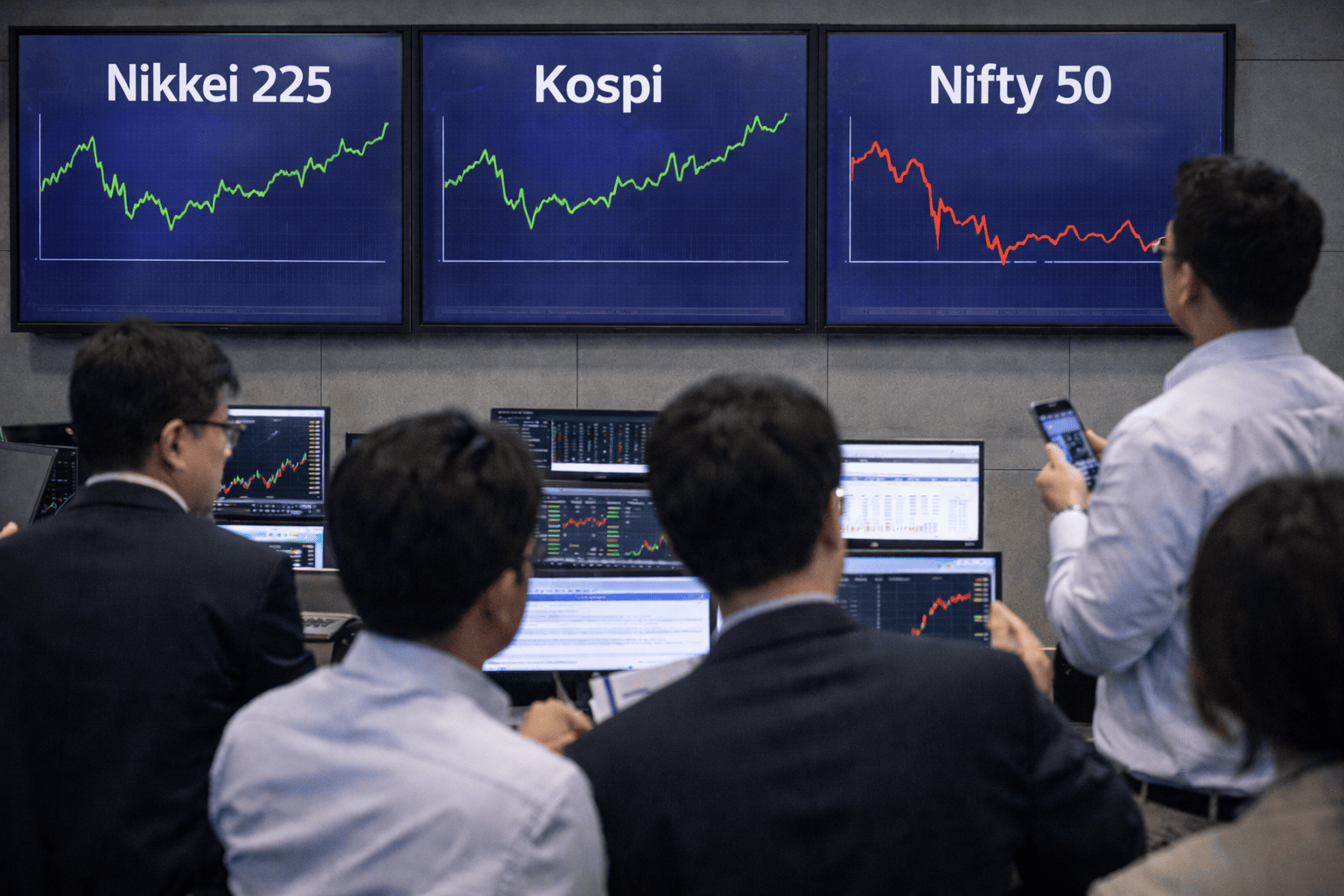
South Korea's primary equity benchmark, the Kospi Composite Index, has entered a technical bear market, declining more than 20% from its highest level this year. This significant downturn coincides with a sharp depreciation of the South Korean won, which has reached its weakest valuation against the US dollar in approximately fifteen years. The simultaneous pressure on both the stock market and the national currency highlights substantial investor concern regarding the nation's economic exposure to external shocks.
Currency Depreciation and Export Dynamics
The USD/KRW currency pair recently reached a level of 1,533, a high not seen since the global financial crisis. This sustained weakening, occurring over five consecutive weeks, is largely attributed to the financial market fallout from heightened military conflict in the Middle East. While a depreciating currency presents challenges for import costs and inflation, it may concurrently bolster the competitiveness of South Korean exports. Recent economic surveys suggest the country's exports could have grown nearly 45% year-over-year this month, marking a potential decade-high growth rate and extending a positive trend into a tenth consecutive month.
Sector-Specific Vulnerabilities and Inflation Concerns
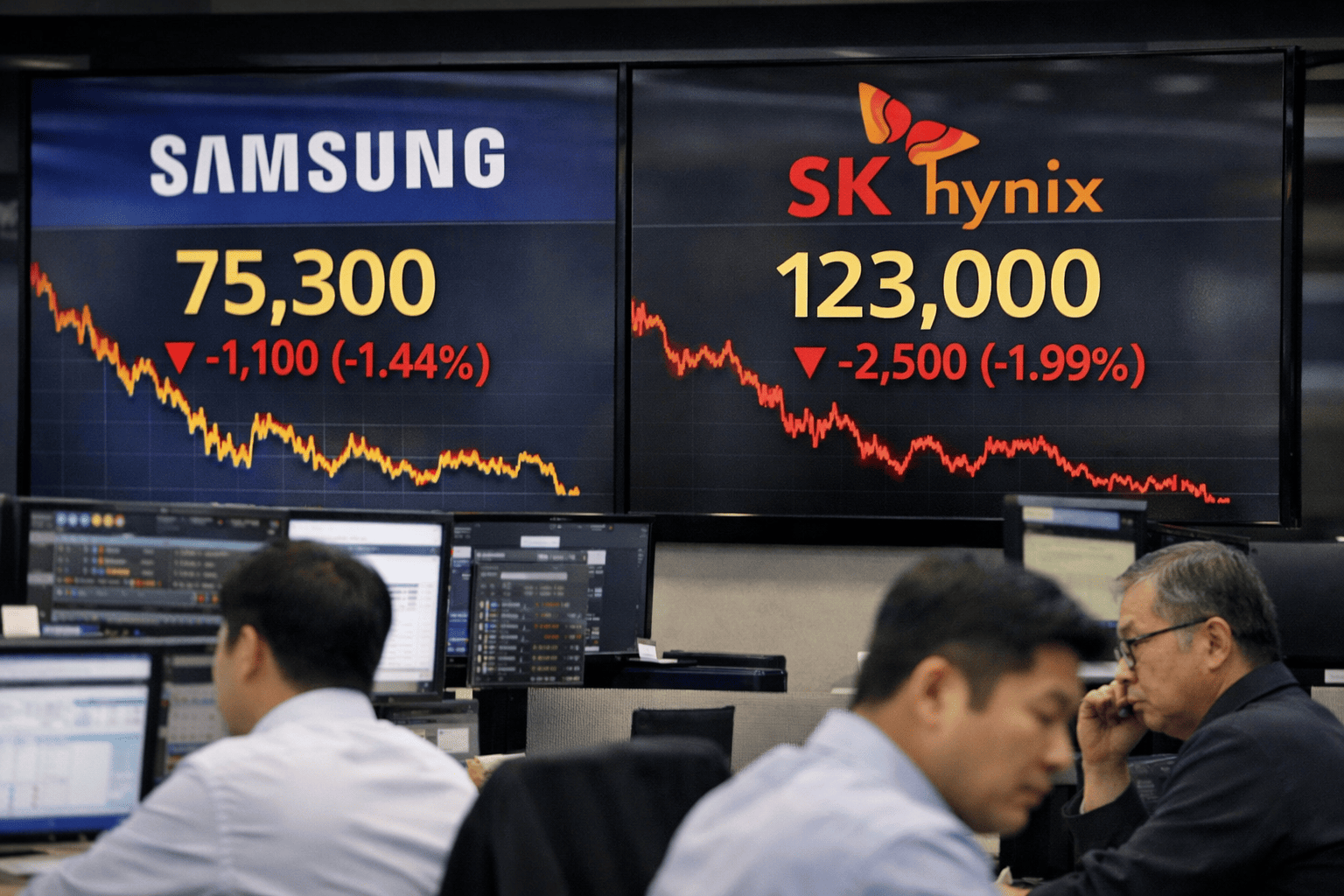
The equity sell-off has been broad but particularly acute in sectors with direct ties to the geopolitical strife. The nation's critical semiconductor industry, led by giants like Samsung Electronics and SK Hynix, faces operational pressures due to potential helium supply disruptions originating from the Middle East. Shares of these firms experienced single-day declines exceeding 4% and 6%, respectively. Furthermore, as a major importer of crude oil from the region, South Korea is highly susceptible to rising energy prices, which fuel broader inflationary pressures and increase production costs across the economy.
This inflationary environment is reflected in the sovereign bond market, where yields have climbed steadily. The yield on the ten-year government bond recently approached 3.95%, reaching its highest point in several months. The rising yield curve signals market expectations for potential monetary policy tightening by the Bank of Korea later this year to combat persistent price increases.
Broad-Based Equity Weakness
The market decline extends beyond large-cap technology and automotive names. A range of companies across various industries have seen severe corrections year-to-date. For instance, major firms like Hyundai Motor have posted double-digit percentage losses, while several smaller-cap stocks have fallen more than 40% since the onset of recent geopolitical tensions. This widespread weakness underscores the pervasive risk-off sentiment among investors regarding South Korean assets.
For broader context on how currency markets are reacting to shifting geopolitical risks, readers may explore analysis on the South African rand's recent movement. Conversely, the current stress contrasts with periods of market strength, such as when global equities rallied on easing geopolitical fears.
Technical Market Perspective
From a chart analysis standpoint, the Kospi's decline appears consistent with a defined distribution phase following a prolonged advance. Key momentum indicators, including the Percentage Price Oscillator (PPO), have generated bearish crossover signals. Meanwhile, the Relative Strength Index (RSI) has retreated significantly from overbought territory observed earlier in the year, though it remains above oversold levels. This technical setup suggests the potential for further testing of lower price supports, with a notable level observed around the 4,500 index point mark. Market technicians often monitor such levels for signs of either consolidation or a future reversal, which could materialize if geopolitical conditions stabilize.
This article is for informational purposes only and does not constitute financial advice.