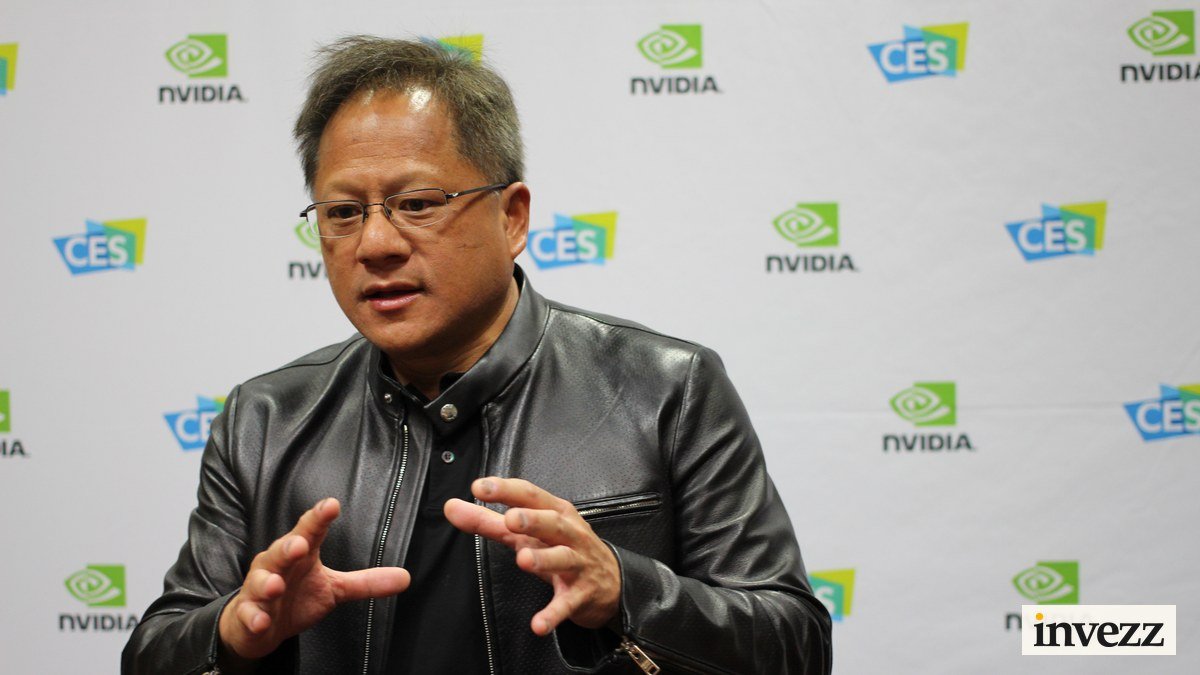
Jensen Huang has stepped down as chief executive of Nvidia, bringing to a close a 33-year tenure that took the company from a sketch on a Denny's napkin to the center of the artificial intelligence revolution. The board accepted his resignation on November 11, according to an 8-K filing, and chief financial officer Colette Kress has been named interim CEO. She is set to present third-quarter results on November 17.
Huang's departure comes amid a personal scandal. He told staff on November 8 that he had been unfaithful to his wife, and the board acted three days later. The news has added to the pressure on Nvidia's stock, which closed Thursday at $166.19, down 30.5% from its record close of $239.24 on October 6. At that close, the company was worth about $4 trillion, based on 24.1 billion shares outstanding. In pre-market trading Friday, shares were up 2.5% at $170.34.
From dishwasher to chip pioneer
Huang was born in Taiwan in 1963 and moved to the US at age nine. He attended the Oneida Baptist Institute in Kentucky before settling in Oregon, where he worked at a Denny's as a teenager. "I washed the living daylights out of those dishes," he recalled in a 2024 Stanford interview. He earned an electrical engineering degree from Oregon State in 1984, worked at AMD and LSI Logic, and completed a master's at Stanford.
In April 1993, at age 30, he co-founded Nvidia with Chris Malachowsky and Curtis Priem, two Sun Microsystems engineers. The plan was hatched over meetings at a San Jose Denny's. The company's first product, the NV1, nearly sank it in 1995, but a $5 million investment from Sega kept it alive. The RIVA 128, launched in 1997, turned things around, and Nvidia went public on January 22, 1999, at $12 per share, raising $42 million. The stock closed its first day at $19.69, valuing the company at $626 million.
The CUDA bet and the AI inflection
Huang's defining move came in 2006 with the launch of CUDA, software that allowed Nvidia's graphics chips to handle general computing. The payoff took years, but the 2012 AlexNet breakthrough, which used two Nvidia GPUs to win the ImageNet contest, made Nvidia the default platform for deep learning. In 2016, Huang personally delivered the first DGX-1 AI system to OpenAI, then a non-profit lab.
Nvidia's data center business has since exploded. In fiscal 2016, data center revenue was $339 million, just 7% of total sales. By fiscal 2023, it had overtaken gaming, and in fiscal 2026, data centers accounted for nearly 90% of the company's $215.9 billion in revenue. The launch of ChatGPT in November 2022 sent demand for Nvidia's H100 chips soaring, and the company briefly touched a $1 trillion valuation in May 2023.
Stock performance and splits
Nvidia has split its stock six times since the IPO, meaning one original share is now 480 shares. The $12 listing price works out to 2.5 cents on a split-adjusted basis. At Thursday's close, that represents a gain of roughly 6,650 times, or about 37% annually, before dividends.
Huang's exit leaves Nvidia at a critical juncture. The company's next earnings report, due November 17, will be the first without him at the helm. Kress, who has been CFO since 2013, faces the challenge of maintaining investor confidence amid the leadership vacuum and the ongoing AI boom.
This article is for informational purposes only and does not constitute financial advice.