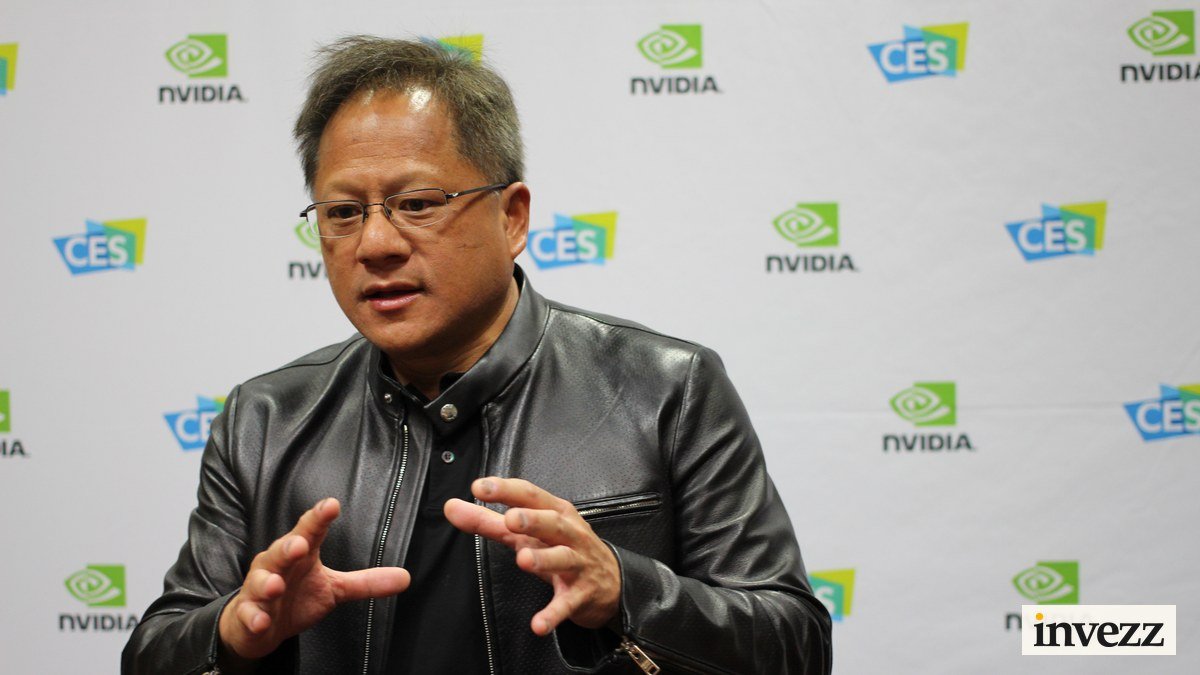
Nvidia is set to release its fiscal third-quarter results on November 17, marking the first earnings report since Jensen Huang's abrupt resignation as CEO. The presentation will be led by Colette Kress, who has stepped in as interim chief executive while retaining her role as CFO. Kress faces the dual challenge of defending the financial targets she helped set and reassuring investors about the company's direction without its founder.
Guidance and Consensus
For the quarter ended October 25, Nvidia has guided revenue of $108.0 billion, plus or minus 2%, implying a range of $105.8 billion to $110.2 billion. This midpoint would represent an 89% increase from the $57.0 billion reported a year earlier and a 12% sequential gain from the record $96.2 billion in the second quarter. Analysts are slightly more optimistic, with LSEG consensus pegging revenue at approximately $109.2 billion and adjusted earnings per share at $2.48, according to IG. Zacks estimates are similar at $108.99 billion and $2.49.

Margin Pressure and Q4 Outlook
Gross margin is expected to soften, with Nvidia guiding to 74.0%, plus or minus half a point, down from 75.0% in the prior quarter. Kress previously attributed this to "extreme pricing conditions in memory" and indicated that margins should bottom in the fourth quarter at 71% to 72% before recovering to 72% to 73% in fiscal 2028. Investors will be watching whether the preliminary forecast of about 70% revenue growth for fiscal 2028 remains intact under the new leadership.
Key Watch Points
Beyond the headline numbers, four areas are likely to dominate investor attention. First, the fourth-quarter revenue outlook, with Kress having previously stated that hyperscale growth should re-accelerate as supply of the Vera Rubin platform increases. Second, supply constraints, which Nvidia has said will persist at least through the end of fiscal 2028. Third, customer capital spending trends; Evercore ISI noted that the four largest cloud companies raised their 2026 capex forecasts by just 1% this earnings season, the smallest increase in at least 12 quarters. Fourth, China, where data center revenue is near zero and lawmakers are pushing for stricter export controls following the Huang reports.
Kress's Credibility and Leadership Challenges
Kress's first test is credibility. As both CFO and interim CEO, she must defend guidance she set while also signaling whether the caretaker team is adopting a more cautious stance. Michael Feldman of ClearBridge Investments told the Guardian that a new chief executive would likely "want to establish credibility by setting a more conservative bar." Bernstein's Stacy Rasgon, who downgraded the stock, questioned whether any successor could "truly fill Jensen's shoes," given Huang's tight management of relationships with customers, suppliers, and staff. Kress has already been making calls to reassure key stakeholders, according to Reuters.
Governance and Washington Scrutiny
The board has appointed Harvey C. Jones as its first-ever chair, and an independent review into whether Huang was targeted by foreign intelligence has not yet published findings. House committee chairs have requested a closed-door interview with Huang on December 1, and Kress herself could face congressional questions about oversight of chip sales. The search for a permanent CEO is ongoing, with no timetable set, raising concerns about "leadership limbo" as Evercore's Mark Lipacis noted the lack of a visible number two.
Market Reaction
Nvidia shares closed at $166.19 on Thursday, down 4.3%, after falling as much as 14% during the session. The stock remains more than 30% below its October high, reflecting heightened uncertainty around the leadership transition and its potential impact on the company's trajectory.
This article is for informational purposes only and does not constitute financial advice.