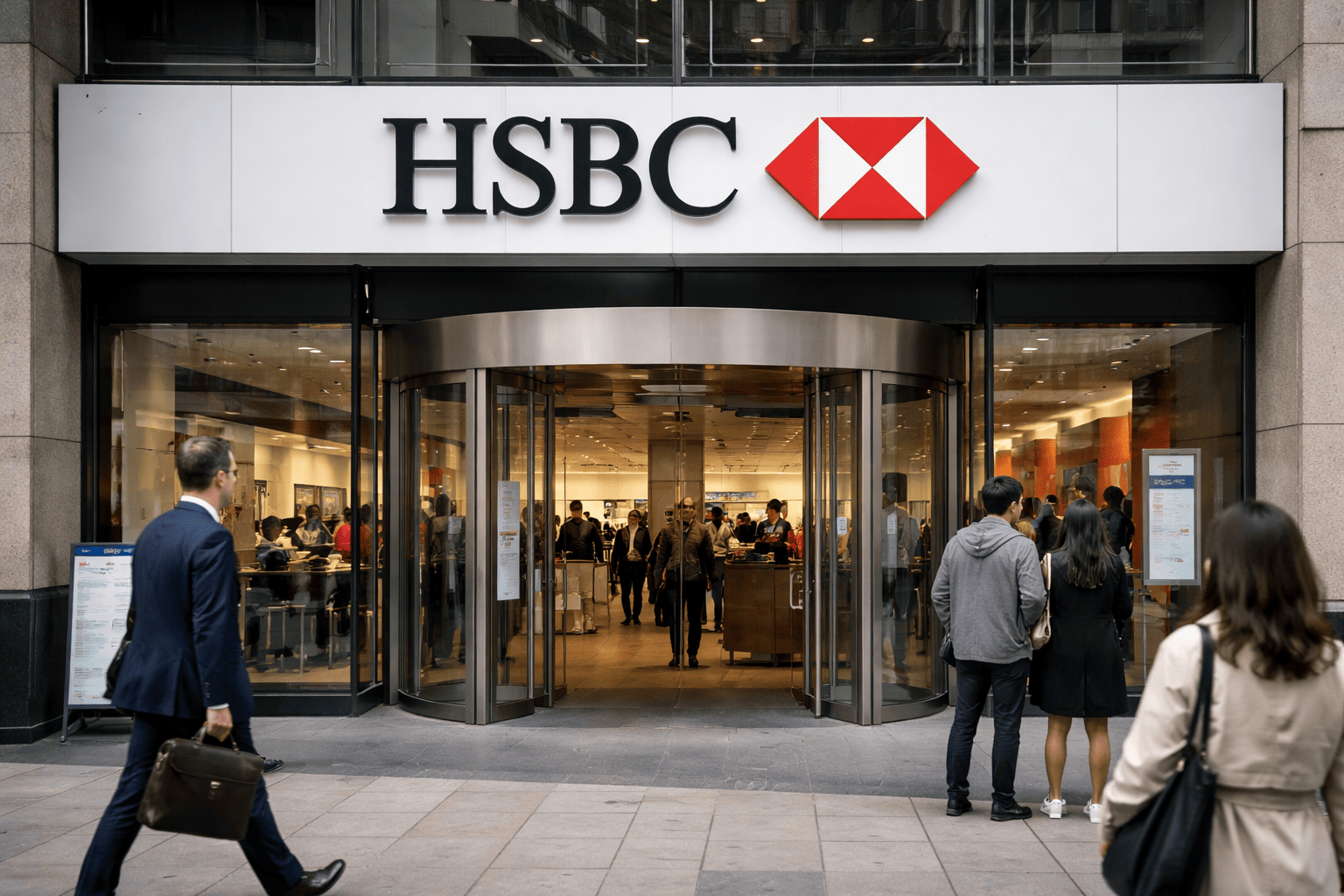
HSBC Holdings (LON: HSBA) saw its shares edge lower on Friday, trading around 1,575p, just below the week's high of 1,608p, after the bank released a robust set of second-quarter results. The stock has climbed 31% so far this year, comfortably outpacing the FTSE 100 and the Invesco KBW Bank ETF (KBWB).
Strong quarterly performance
The London-listed banking giant reported a 60% year-on-year increase in pre-tax profit for Q2, reaching $10.1 billion, while revenue advanced to $19.1 billion. The results were buoyed by higher interest rates and favorable foreign exchange movements, which lifted the net interest margin to 1.61%. Operating expenses rose just 2%, reflecting the bank's ongoing cost discipline.

CEO Georges Elhedery highlighted the bank's strategic progress, stating that HSBC is becoming a stronger institution by executing its priorities with pace and precision. The bank's four business segments are focusing on core strengths, improving collaboration, and deepening customer relationships, he added.
Capital returns and balance sheet
Customer lending expanded by $34 billion during the quarter, while the common equity tier 1 (CET1) ratio came in at 14.1%, down 80 basis points from December. Despite the slight dip, the board declared a dividend of $0.10 per share and authorized a share buyback of up to $1 billion—the first since the acquisition of Hang Seng Bank last year.
The buyback underscores management's confidence in the bank's capital position and earnings outlook. HSBC has also been streamlining its global footprint, exiting markets such as Canada, France, Argentina, New Zealand, and South Africa, while launching a significant cost-cutting program that includes layoffs and division mergers.
Focus on China and wealth management
A key strategic priority is the Chinese market, where HSBC aims to compete with UBS and Standard Chartered in the wealth management sector. The bank leverages its strength in cross-border wealth transfer, and total assets in its wealth business surpassed $1 trillion in the last quarter, with net new money rising 32%.
This focus positions HSBC to benefit from the growing wealth of Asia's high-net-worth individuals, a trend that has also boosted other financial institutions. For context, Lloyds shares recently hit a 2008 high on strong earnings and rate hike expectations, highlighting the favorable environment for European banks.
Technical outlook
From a technical perspective, HSBC's stock remains in a strong uptrend. The weekly chart shows the price consistently above the 50-period exponential moving average (EMA) at 1,258p since April last year. The Relative Strength Index (RSI) has crossed into overbought territory, while the Average Directional Index (ADX) suggests the trend is gaining strength.
Given these signals, the stock could extend its rally toward the psychological 1,700p level. However, the overbought RSI also raises the risk of a short-term pullback as investors may book profits. Similar dynamics have been observed in other high-flying stocks, such as Samsung's recent surge, where momentum and valuation concerns coexist.
Investors will be watching whether HSBC can sustain its growth trajectory, particularly as central banks signal a peak in interest rates. The bank's diversified revenue streams and cost controls provide a buffer, but the market's reaction to future earnings will be crucial.
This article is for informational purposes only and does not constitute financial advice.