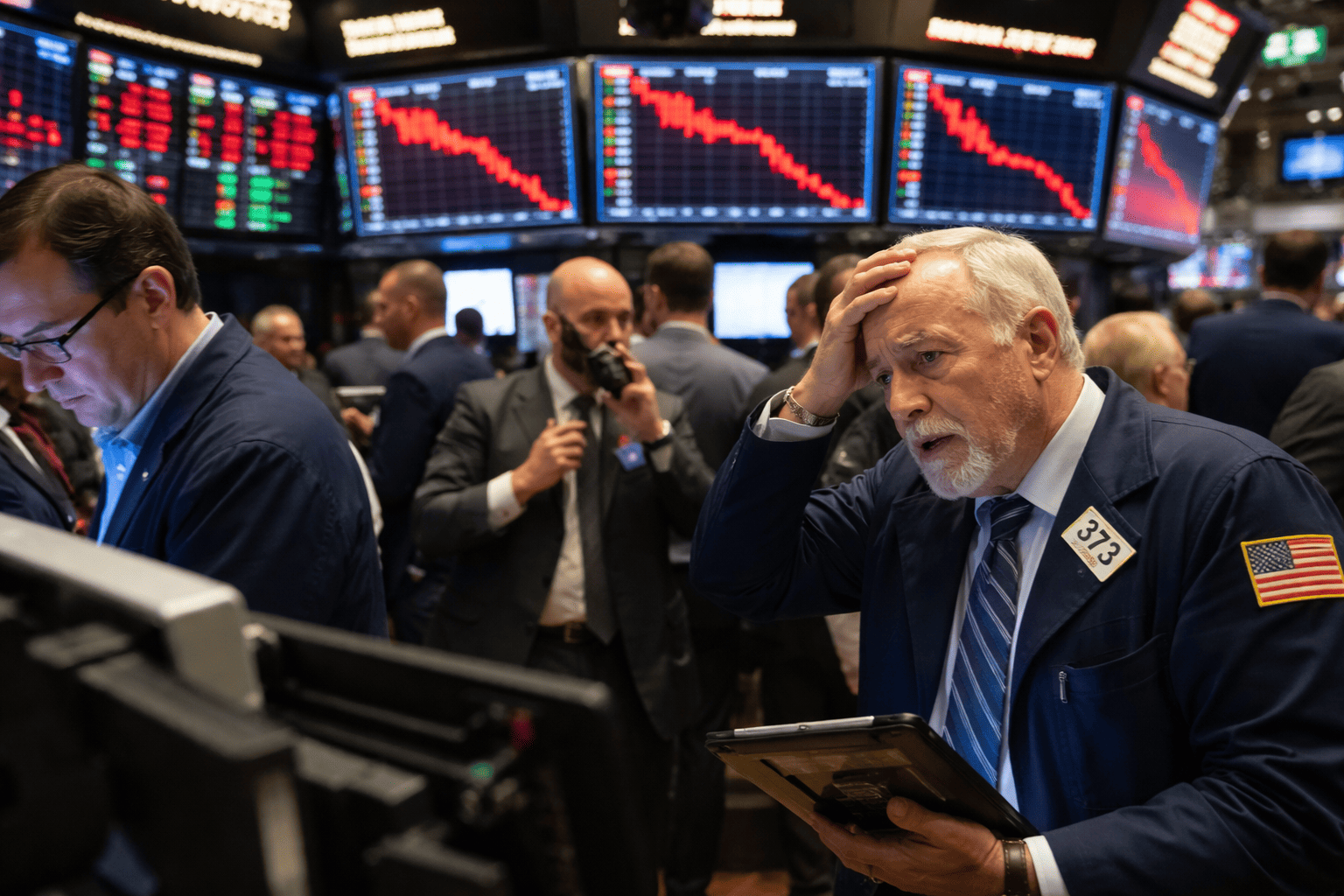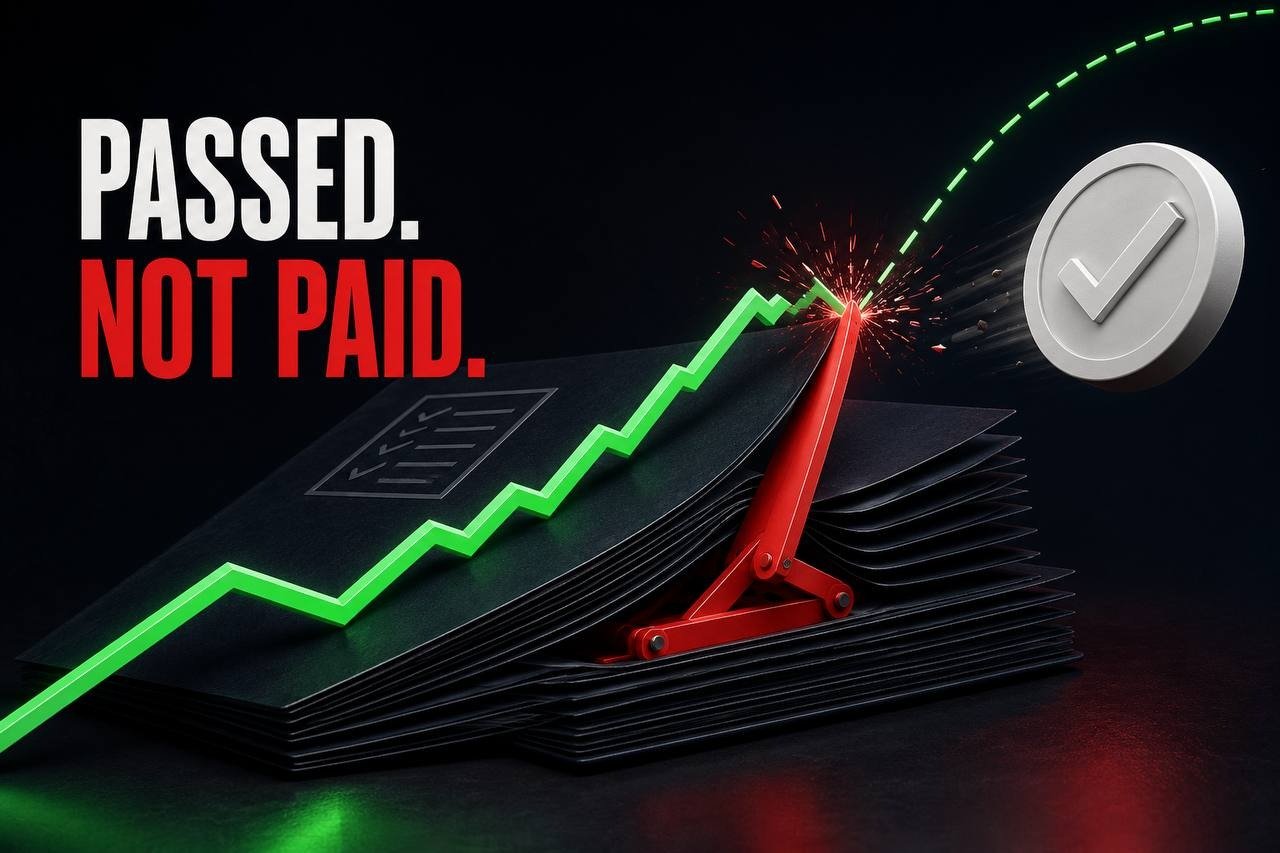
A new report from Velotrade argues that the primary reason funded traders fail to receive payouts is not poor trading performance but obscure provisions buried in prop firm rulebooks. The 2026 Prop Firm Transparency Report examined the published rules of Topstep, FTMO, FundingPips, Blue Guardian, HyroTrader, and Velotrade, focusing on drawdown, consistency, payout, and risk management clauses that often go unread until it is too late.
Industry data supports this claim. A 2024 study by FPFX Tech covering over 300,000 accounts found that only about 7% of funded traders ever received a payout, and roughly 14% cleared a challenge initially. A separate hoc-trade analysis of 500,000 traders indicated that approximately 70% of failures resulted from breaching loss limits rather than missing profit targets. The conclusion is consistent: the rulebook, not the trade, is the primary cause of account termination.

Consistency rules can slash profits
Consistency rules, which cap the percentage of total profit that can come from a single trading day, are a common trap. Four of the six firms reviewed enforce such rules, which can strip 33% to 50% of profit from a strong session. For example, with a 40% single-day cap on a $1,000 target, a $450 day would exceed the threshold and fail the evaluation, even if the target is met. Topstep, FundingPips, Blue Guardian, and HyroTrader each operate variants, while FTMO applies a 50% Best Day Rule on its 1-Step product, detailed in its help center. Velotrade states it has no consistency rule at any stage.
Drawdown methods determine outcomes
The choice between fixed and trailing drawdown can produce opposite results on the same trade. A fixed drawdown, calculated from the opening balance, remains static—on a $100,000 account with a 10% limit, failure occurs at $90,000. A trailing drawdown rises with equity and does not retreat. The report models a scenario where a routine pullback leaves a fixed-drawdown account intact and profitable, but the same pullback triggers a trailing-drawdown account termination. FTMO uses a fixed 10% maximum loss, while Topstep's trailing limit advances with the end-of-day balance and locks at the starting figure.
Max-risk-per-trade rules: a hidden pitfall
Perhaps the most insidious provision is the max-risk-per-trade rule, which limits the unrealized, floating loss on any single position. This rule operates below the advertised daily loss limit and can close an account on a trade that never settles at a loss—if the paper loss briefly hits the cap during the session. Three characteristics make it easy to overlook: it is assessed on unrealized loss, it may trigger even if the trade later profits, and it is often buried in help-center pages rather than principal rules.
The rapid growth of the prop firm industry—monthly search volume for "prop firm" surged from around 880 in early 2020 to roughly 49,500 by 2025—has brought many first-time buyers into a market where critical terms are not on the sales page. This growth has been accompanied by visible failures: The Funded Trader suspended operations and acknowledged over $2 million in denied payouts, True Forex Funds closed on insolvency leaving about 300 traders owed $1.2 million, and SurgeTrader wound down with its CEO admitting roughly 10% of payout obligations were unmet.
Gianluca Pizzituti, CEO of Velotrade, stated: "Could a trader read our rules once, in one sitting, and know every way their account could end? If the answer is no, the rulebook is not finished. Most of this industry has treated that as a marketing problem. We think it is the entire product." For traders evaluating options, understanding these provisions is crucial—especially in the crypto-focused segment, where XRP's recent technical patterns and broader market dynamics add another layer of complexity.
This article is for informational purposes only and does not constitute financial advice.