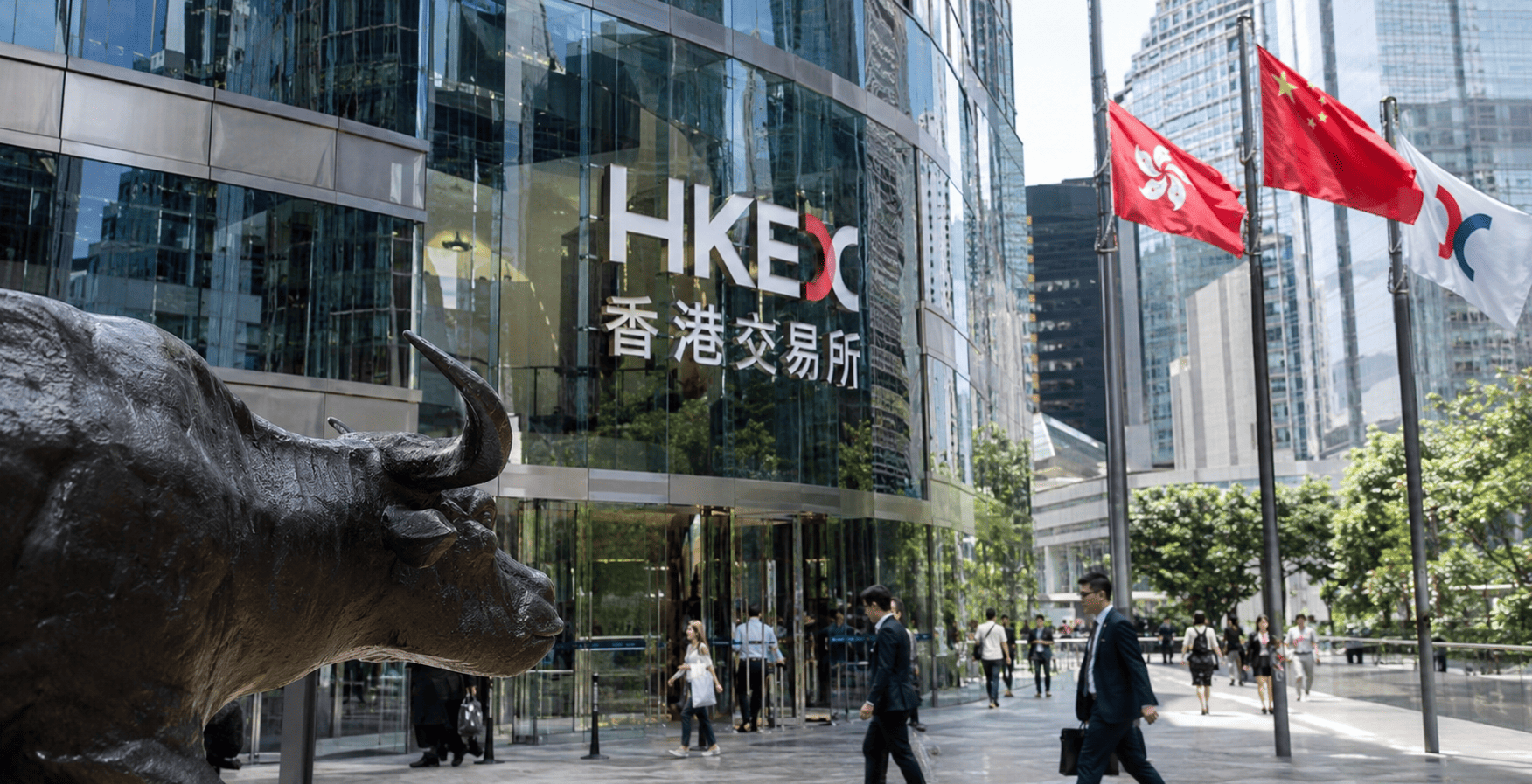
The Hang Seng Index traded in a narrow range on Monday, holding near 24,530 as market participants shifted their attention to a busy week of corporate earnings from some of Hong Kong's largest listed companies. The index has climbed approximately 7.7% from its October low of 22,786, supported by easing geopolitical tensions and a softer oil price environment.
Geopolitical backdrop supports sentiment
President Donald Trump's statement that the United States would not launch further strikes against Iran provided a modest tailwind for risk assets. Trump indicated that additional military action could still occur if diplomatic efforts fail, but the immediate de-escalation helped calm markets. Oil prices, which had spiked on fears of supply disruptions, remained subdued, with both Brent and West Texas Intermediate trading well below their October peaks. Lower energy costs are generally favorable for Hong Kong-listed companies, many of which are net importers of commodities.

Iran, for its part, has maintained that it will not engage in substantive negotiations unless the US meets certain conditions, including lifting the blockade, releasing frozen assets, and recognizing its influence over the Strait of Hormuz. The standoff has contributed to a volatile geopolitical landscape, but for now, investors appear to be looking past the immediate risks.
Earnings season takes center stage
The next major catalyst for the Hang Seng Index is the release of quarterly results from several of its heavyweight constituents. Baidu, China's leading search engine, is scheduled to report earnings on Monday next week. The company's stock has fallen more than 50% from its peak, reflecting challenges in adapting its advertising model to the artificial intelligence era. In its most recent earnings call, Google highlighted the difficulty of monetizing AI-driven search compared to traditional methods, a concern that also weighs on Baidu.
Tencent Holdings will follow with its results on November 18. The tech giant's shares have dropped over 38% from their 52-week high as growth slows and operating costs rise. In October, Tencent raised $5.7 billion to bolster its investment capacity, signaling a focus on long-term strategic initiatives. NetEase and Lenovo Group are set to publish their numbers on Thursday next week, adding to the breadth of the earnings calendar.
Technical outlook points to further upside
From a technical perspective, the Hang Seng Index has rebounded strongly from its October trough. The index has moved above its 50-day exponential moving average (EMA) and the Strong, Pivot, Reverse level of the Murrey Math Lines tool, a sign of improving momentum. The next key resistance level is the Major S/R pivot point at 25,000, which could act as a magnet for buyers if the current uptrend persists.
However, a drop below the Strong, Pivot, Reverse level at 24,215 would invalidate the bullish setup and could trigger a pullback. Traders will be watching these levels closely as earnings season unfolds.
Overall, the Hang Seng Index appears to be in a consolidation phase, with the upcoming earnings reports likely to dictate its near-term direction. Investors will be scrutinizing guidance from Baidu, Tencent, and Lenovo for clues about the health of the Chinese tech sector and the broader economy.
This article is for informational purposes only and does not constitute financial advice.