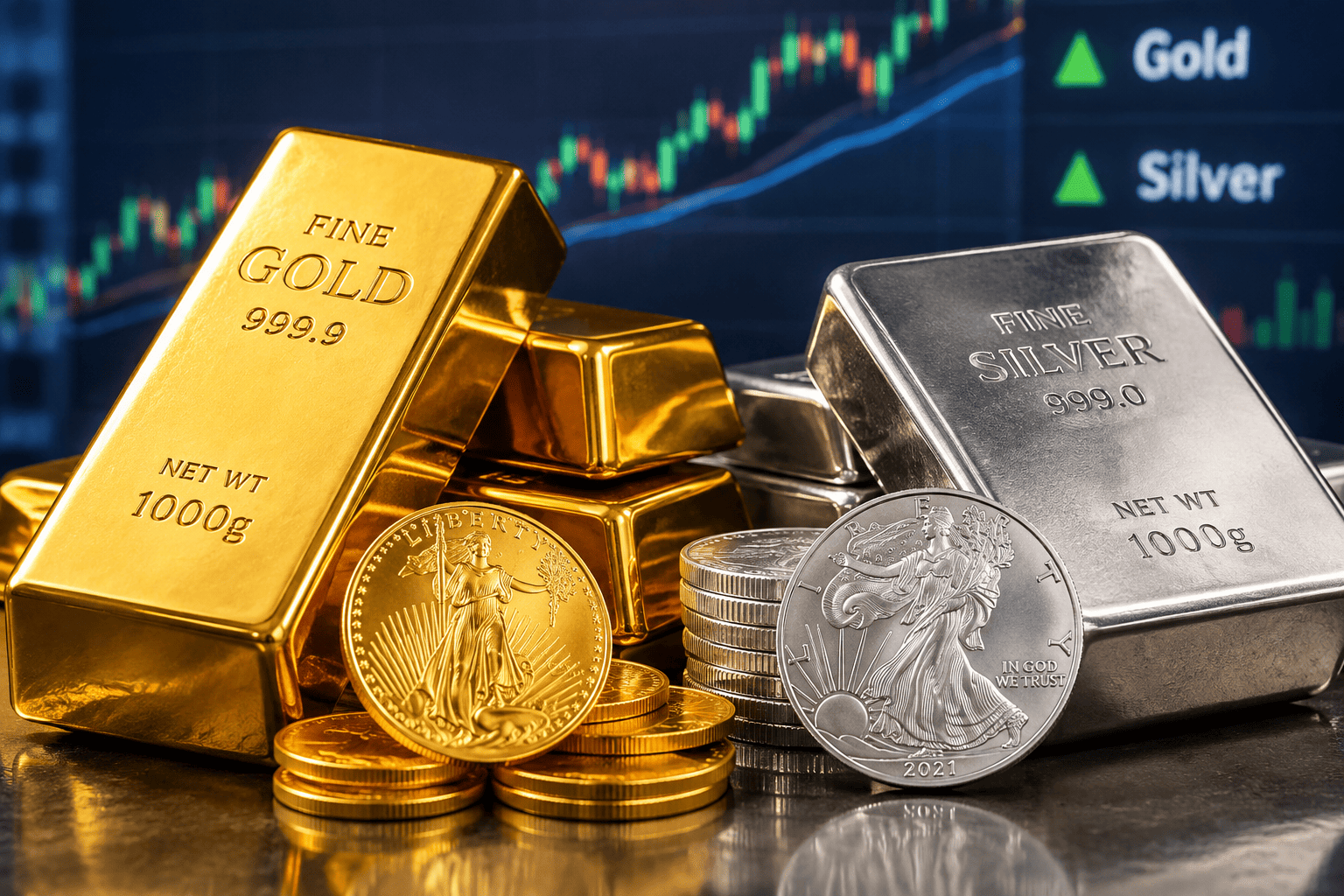
Gold prices edged lower on Wednesday but remained close to their highest level in over three months, as market participants braced for a key US inflation report that could shape the near-term trajectory for bullion. Spot gold was trading around $4,627 an ounce during late Asian hours, after touching nearly $4,700 earlier in the week. US gold futures hovered near $4,684.
The precious metal has climbed roughly 15% in August, supported by a softer dollar, renewed demand for hard assets, and the Treasury's decision to expand its buyback program for longer-dated debt. The immediate focus now shifts to the July Personal Consumption Expenditures (PCE) price index, due at 8:30 am ET, which could influence the Federal Reserve's policy stance in September.

PCE data: The first test for gold's rally
Economists expect headline PCE inflation to ease to about 3.6% year-over-year from 3.7% in June, while core PCE is forecast to slow to 3.2% from 3.3%. Barclays economist Pooja Sriram, cited by Kiplinger, projects a 0.2% month-over-month increase in core prices—a reading that would suggest inflation remains above the Fed's comfort zone but may not necessitate an immediate rate hike.
This distinction is crucial for gold. A softer inflation print could pull real yields lower and weaken the dollar, reducing the opportunity cost of holding non-yielding bullion. Conversely, a hotter reading would likely strengthen the dollar and weigh on gold prices. Futures markets currently assign roughly a 62% probability that the Fed leaves rates unchanged in September.
Treasury buybacks and fiscal concerns underpin demand
Gold's recent breakout began after the Treasury announced it would at least double its long-end liquidity-support buybacks from $2 billion to $4 billion per operation starting September 9. While the program aims to improve Treasury-market liquidity, investors have also interpreted it as a response to rising government debt and pressure on long-term borrowing costs.
ANZ Research analysts, in comments carried by The Wall Street Journal, noted that markets remain cautious because the interplay between Treasury debt management and monetary policy has become harder to read. This uncertainty has kept demand for gold elevated even as Treasury yields remain relatively high. The dollar index was hovering near 98.9 on Wednesday, close to multi-month lows, adding another source of support for internationally traded bullion.
Jackson Hole speech could set the tone
Attention will soon turn to Federal Reserve Chair Kevin Warsh, who is scheduled to deliver keynote remarks at Jackson Hole at 10 am ET on Friday. His first major symposium address comes as investors debate whether inflation remains the Fed's dominant concern or whether weaker employment data and tighter financial conditions warrant patience.
Wells Fargo Investment Institute's Mason Mendez told MarketWatch that resilient global demand, renewed central-bank purchases, and geopolitical uncertainty continue to support gold. The firm maintains a 2026 target of $4,900 to $5,100, although it expects monetary-policy headwinds to make the path higher uneven.
Oil's recent decline may also provide indirect support. Brent crude has fallen sharply on hopes of progress over the Strait of Hormuz, easing one source of inflation pressure. As oil retreats, the inflation outlook could improve, potentially giving the Fed more room to pause.
Investors will also be watching for any signals on the Treasury buyback plan and its implications for long-term yields. The recent gold rally has been partly driven by these fiscal concerns, and any shift in tone from Warsh could either extend or reverse the move.
As the market digests the PCE data and prepares for Jackson Hole, gold's path toward the $5,000 level remains uncertain. A dovish stance from the Fed could reignite the rally, while a hawkish surprise might trigger a pullback. For now, traders are treading carefully.
This article is for informational purposes only and does not constitute financial advice.