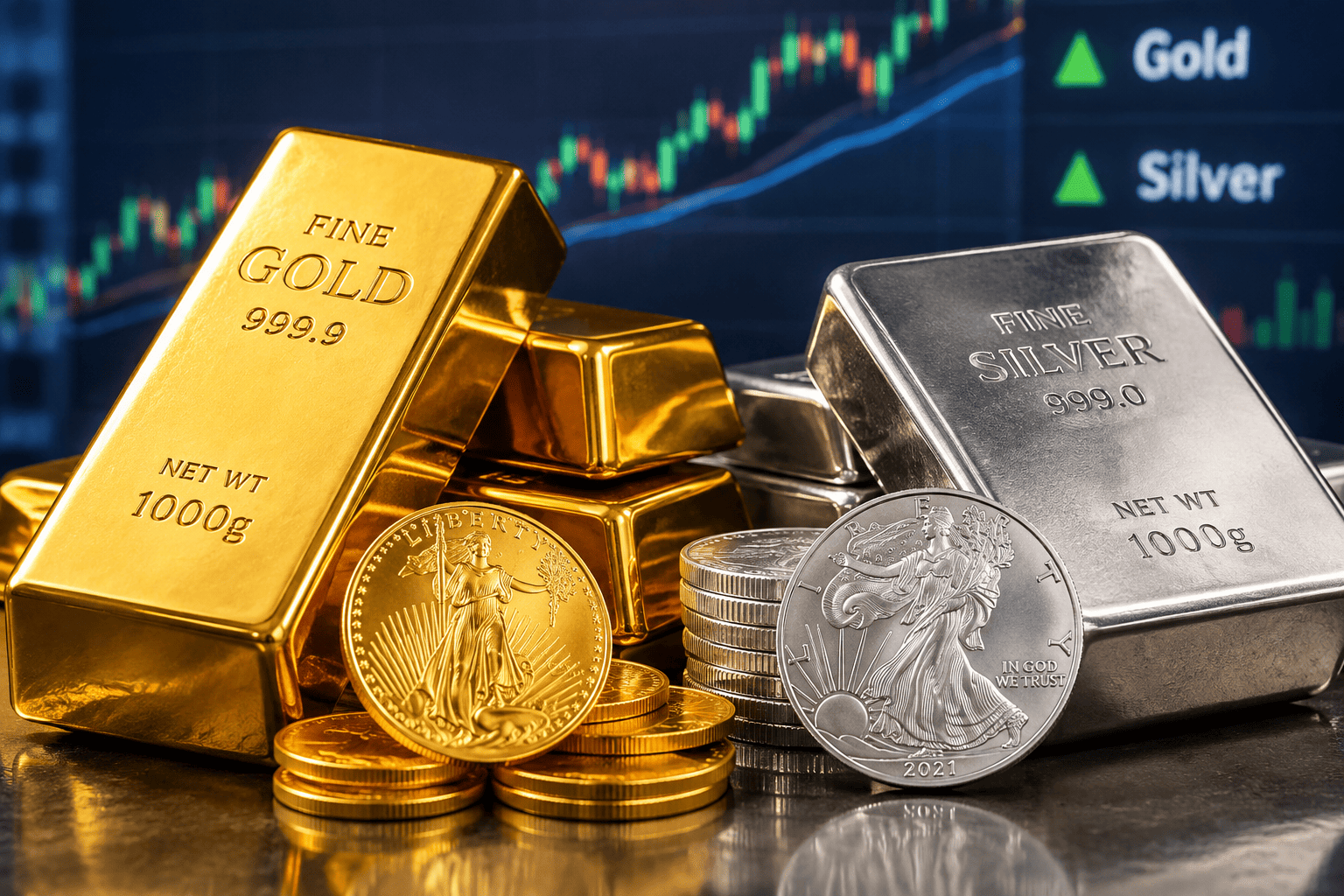
Gold extended its August rally on Monday, reaching its highest level in over three months as a softer dollar continued to lift haven demand. Spot bullion climbed roughly 0.8% to $4,641.27 an ounce in Asian trading, its strongest since May 15, while US futures advanced to about $4,697.70. The move builds on last week's 5% gain, driven by dollar weakness and renewed concerns about US fiscal policy and Treasury market intervention.
Dollar weakness fuels the rally
The dollar remained near multi-month lows on Monday after sliding sharply last week. The latest leg lower followed the Treasury's decision to expand buybacks of longer-dated securities, a move initially aimed at improving liquidity after a surge in long-term borrowing costs. For gold, the signal extends beyond yields: the Treasury action has revived worries about debt sustainability and the dollar's purchasing power, prompting investors to favor scarce assets like bullion and Bitcoin.
Marc Chandler, managing director at Bannockburn Global Forex, told Kitco News that gold's move above $4,600 has strengthened its technical position. He sees a convincing extension above that level potentially opening the way toward roughly $4,680, though he cautioned that momentum has become stretched after the rapid advance.
PCE data and Warsh speech in focus
The rally now faces a more conventional macro test. The Bureau of Economic Analysis will release July personal income and spending figures, including the PCE price index, on Wednesday, August 26. The latest reading showed headline PCE inflation at 3.7% in June, still well above the Fed's 2% target. Fed Chair Kevin Warsh is scheduled to deliver keynote remarks at the Jackson Hole Economic Policy Symposium on Friday, August 28, and his comments will be scrutinized after July's Fed meeting revealed greater concern about inflation and growing support for tighter policy.
Markets still favor the Fed leaving rates unchanged in September, although futures continue to assign a meaningful probability to a quarter-point increase. Higher rates would normally weigh on non-yielding gold. FXTM's Lukman Otunuga told Kitco News that the PCE report and Warsh's address could set the tone for gold into September, with the dollar remaining one of bullion's most important near-term drivers.
Geopolitical support adds another layer
Geopolitics is providing a second layer of support. Washington is preparing tougher sanctions against Iran and its trading partners as the two sides remain locked in a dispute over the Strait of Hormuz. US officials have presented the coming measures as an unusually aggressive financial campaign aimed at cutting Tehran's access to trade and funding. Oil slipped on Monday as investors took profits ahead of the announcement, but the confrontation remains a source of inflation and market risk.
Silver held near $69 an ounce, while platinum traded around $1,879 and palladium around $1,350. Gold's next challenge is whether it can hold above $4,600 once attention shifts from dollar weakness to inflation and Fed policy. Softer price data or a flexible message from Warsh could reinforce the rally, while a renewed rise in real yields would test the strength of the breakout.
For broader context, gold's recent surge follows a pattern seen in other haven assets. As noted in our coverage of Treasury buybacks dragging yields and the dollar lower, similar dynamics have supported bullion. Additionally, the current rally echoes the momentum seen in gold holding near a two-month high ahead of PPI data, where inflation prints became key catalysts. Investors are also watching the expansion of stablecoin users as a sign of shifting dollar demand, which could indirectly affect gold's appeal.
This article is for informational purposes only and does not constitute financial advice.