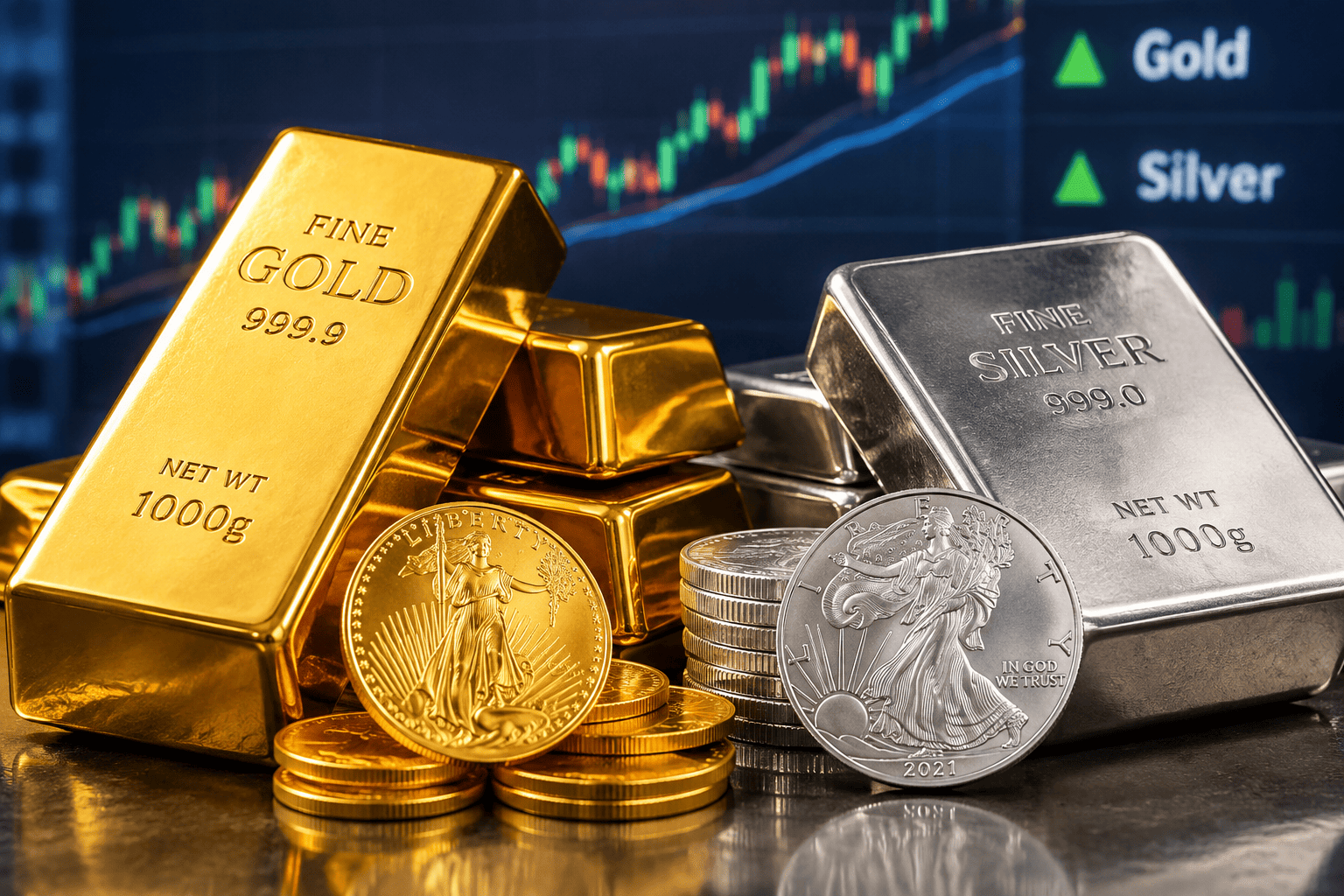
Gold prices edged lower on Friday as a rebound in the U.S. dollar prompted some profit-taking, but the metal is still poised to post its first monthly advance in five months. Buyers have consistently stepped in near the $4,000-per-ounce level, suggesting that this price point is becoming a valuation floor rather than just a psychological milestone.
Spot gold slipped 0.6% to $4,076.53 per ounce by 0253 GMT, while U.S. gold futures for August delivery declined 0.4% to $4,074.20. Despite the daily dip, bullion is up roughly 1.7% for July and heading for a 0.6% weekly gain. The recovery is modest compared with the violent swings seen earlier this year, but the pattern of repeated bargain hunting around $4,000 indicates a shift in how investors perceive the metal's value.

$4,000 becomes the market's buying line
Gold's July performance has been driven less by momentum and more by opportunistic buying. After briefly dipping below $4,000 in late June, following a retreat from January's record high, each test of that area has drawn fresh demand. Tim Waterer, chief market analyst at KCM Trade, noted that the level has developed into a cushion for bullion, helping it absorb pressure from higher yields and shifting rate expectations.
This view aligns with the World Gold Council's mid-year assessment, which suggested that bargain demand could limit a deeper decline. The council sees gold trading broadly within 5% of $4,100 if growth, inflation, and policy expectations remain close to consensus. However, a worsening economy, a renewed geopolitical shock, or a reversal in rate expectations could reopen a path toward $4,500.
Dollar rebound exposes the rally's limits
Friday's decline highlighted the recovery's vulnerability to currency movements. The dollar rose about 0.3% after tumbling 2.4% on Thursday, its steepest one-day fall since January 2023. A stronger greenback makes gold more expensive for holders of other currencies, often prompting selling.
Waterer attributed the softer tone to investors trimming positions as the dollar recovered, rather than a decisive change in bullion's underlying outlook. Meanwhile, the Federal Reserve has left traders with another source of uncertainty. Policymakers held the target rate at 3.5% to 3.75% in a 9-3 vote, with three officials favoring a quarter-point increase. The statement said inflation remained above the 2% goal and linked some pressure to energy supply shocks.
CME FedWatch pricing assigned a 63% probability to a September increase. That keeps the opportunity cost of holding non-yielding gold elevated, even though Chair Kevin Warsh offered little guidance on the next policy move. For context, related market dynamics are also affecting other assets; for instance, bitcoin's recent pullback reflects similar rate-sensitive pressures.
Shipping risks sustain the strategic hedge
Geopolitics remains the counterweight to the rate threat. A drone strike triggered fires on two gas vessels at Egypt's Damietta port, raising concerns about security near the Suez Canal as other Middle Eastern export routes remain under pressure. The incident did not produce an immediate surge in bullion, but it reinforced the case for protection against a wider conflict or energy shock.
The Strait of Hormuz, which carried roughly a fifth of global oil and liquefied natural gas supplies before the war, is already close to a standstill. BCA Research analysts expect the immediate Hormuz crisis eventually to fade, but they argue that a more fragmented geopolitical order, slower global integration, and persistent U.S. fiscal imbalances should preserve gold's role as a hedge against U.S. assets. This strategic demand is a key reason why gold's support near $4,000 has held despite headwinds.
Broader precious metals picture
Silver fell 0.8% to $58.48 per ounce, while platinum dropped 1.7% to $1,631.77 and palladium lost 0.8% to $1,294. Both platinum and palladium, however, remain on track for monthly gains. The precious metals complex is benefiting from a mix of safe-haven demand and supply concerns, though gold's performance remains the focal point for investors.
Gold's July rebound has repaired support rather than restored a full bull trend. Holding above $4,000 would keep dip buyers engaged, but a durable breakout still requires either a softer rate path or a fresh geopolitical catalyst. As traders weigh these factors, the metal's ability to maintain its footing will likely hinge on upcoming economic data and central bank signals. For a broader view of market sentiment, investors are also watching equity volatility indicators that often move in tandem with gold's risk dynamics.
This article is for informational purposes only and does not constitute financial advice.