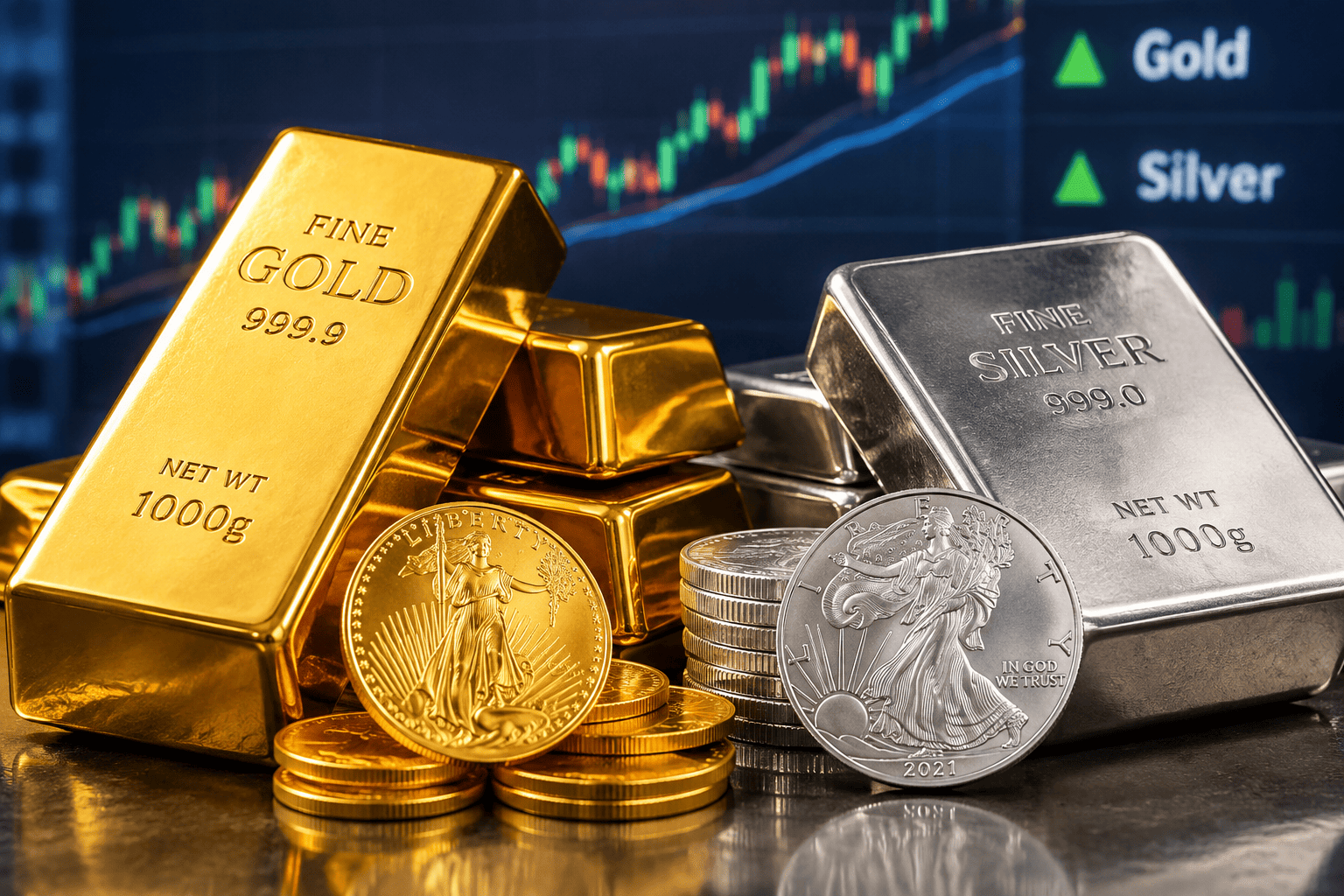
Gold slipped toward $4,050 an ounce in Asian trading on Tuesday, pressured by a firmer dollar and growing uncertainty over the Federal Reserve's next policy move. Spot bullion declined roughly 0.7% to $4,044.81 by 0239 GMT on July 28, while the dollar hovered near a one-month high, making the non-yielding metal more expensive for overseas buyers.
The Fed is widely expected to hold its target range at 3.50%-3.75% at the conclusion of its meeting on Wednesday. However, CME FedWatch data, derived from 30-day federal-funds futures, indicated a roughly 38% probability of a quarter-point increase. The headline risk, therefore, is not a forecast but a scenario that could materialize if policymakers signal a more aggressive stance.
Gold has already demonstrated its ability to trade below $4,000. Front-month futures briefly touched about $3,975 in late June before recovering. A sustained break below that psychological level would likely require a broader repricing of U.S. interest rates rather than a single cautious policy adjustment.
Dollar strength and yield dynamics
The immediate challenge for gold is the cost of holding an asset that pays no interest. A stronger U.S. currency raises the price of bullion for buyers using euros, yen, and other currencies, while rising Treasury yields improve the relative appeal of bonds. DHF Capital chief executive Bas Kooijman noted in a Tuesday report that the Fed, Bank of Japan, and Bank of England are all expected to leave rates unchanged. However, he warned that a hawkish tilt could cap any gains in gold.
An unchanged rate would not automatically be bullish for gold. Guidance pointing to a possible September increase, persistent inflation, or additional tightening could strengthen the dollar and lift yields even without an immediate policy move. This distinction matters because markets are pricing in a range of outcomes, and any hawkish signal could reinforce the dollar's recent rebound.
The Middle East adds another layer of complexity. A pause in U.S.-Iran attacks has reduced some demand for defensive assets, including gold. Yet the resulting fall in oil prices could ease inflation pressure and reduce the Fed's need to tighten aggressively, potentially providing some support for bullion. For more on how easing geopolitical tensions are affecting markets, see our coverage of the dollar's recent moves amid Iran tensions.
Deutsche Bank's $3,800 risk case
Deutsche Bank analyst Michael Hsueh said in a late-June note that resilient economic data and changing Fed expectations have become more important for gold than oil prices. A risk case of pricing in three to four Fed hikes could bring gold to $3,800 an ounce, he said. Hsueh's base case was substantially more constructive, projecting gold at $4,800 in the fourth quarter if the Fed remains on hold indefinitely.
The contrast between these scenarios highlights how heavily bullion's direction depends on whether markets price a prolonged pause or a renewed tightening cycle. An immediate move to $3,800 is not the central expectation. It would require investors to anticipate several increases, likely supported by stronger inflation, employment, or growth data. U.S. GDP and inflation readings later this week could reinforce that scenario even if policymakers stand still on Wednesday.
For context on how other assets are reacting to the same macro forces, see our report on the silver rally amid dollar weakness. Additionally, the Dow's recent jump illustrates how oil price declines can fuel risk-on sentiment, potentially diverting capital away from safe havens like gold.
This article is for informational purposes only and does not constitute financial advice.