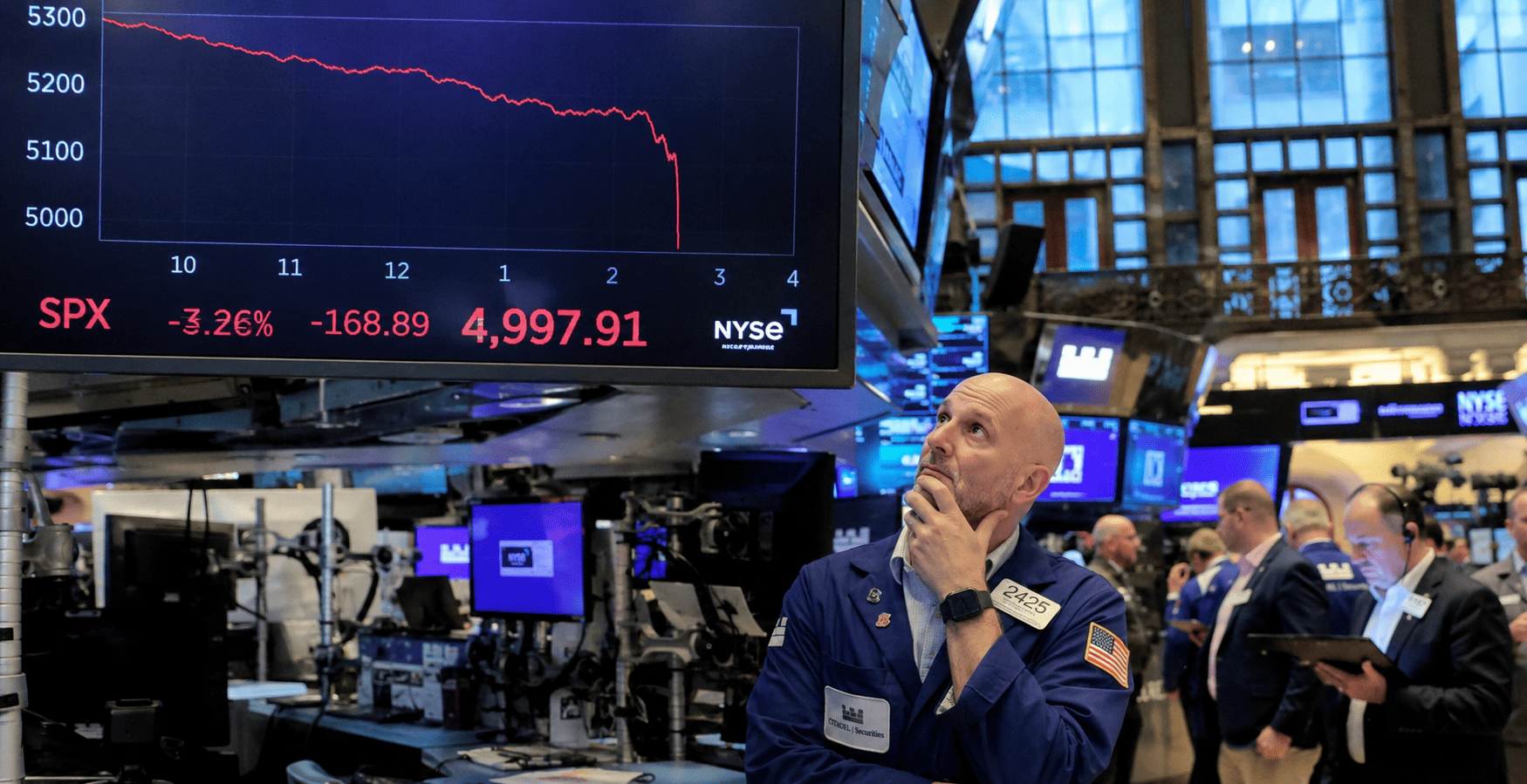
The Dow Jones Industrial Average has slipped approximately 3.25% from its 2026 high of 53,298, currently trading near 51,600. Despite this pullback, the index remains up about 6.5% year-to-date. The decline has pushed the Fear and Greed Index into the fear zone at 32, a level that historically has preceded market recoveries.
Fear and Greed Index Signals Caution
The Fear and Greed Index, a widely watched sentiment gauge, has dropped to 32, indicating heightened investor fear. Subcomponents such as market momentum, stock price breadth, safe-haven demand, and put/call options have all moved into fear or extreme fear territory. In past cycles, such readings have often marked turning points for equities.

Key Risks Weighing on the Dow
Several factors have contributed to the recent weakness. The Federal Reserve held rates steady at 3.50%-3.75% in its latest meeting, but three officials dissented in favor of a hike. Polymarket odds for a rate increase by December have surged above 70%, while the 10-year Treasury yield is approaching its all-time high. Escalating US-Iran hostilities have also stoked fears of higher oil prices, which could fuel inflation and pressure the Fed to tighten further.
Within the Dow, several major components have faced headwinds. Caterpillar, a beneficiary of data center demand, has fallen 27% from its 2026 peak. Cisco, the index's top gainer this year, is down 13%, while Nvidia has dropped 20%. Other AI-linked stocks like Microsoft, IBM, and Salesforce have also declined. Weak earnings from IBM, American Express, and Visa have added to the negative sentiment.
Technical Setup Points to Potential Rebound
Despite the pullback, the Dow's daily chart shows a bullish flag pattern—a formation characterized by a sharp upward move followed by a descending channel. The index has held above its 100-day exponential moving average (EMA), a key support level that suggests the longer-term uptrend remains intact. Historically, such patterns often resolve with a breakout to the upside.
Investors will be watching upcoming earnings from Amazon, Apple, Home Depot, and Walmart, which could reignite momentum. Additionally, the recent sell-off in AI-related stocks, including Nvidia's 2.2% drop amid rotation to memory stocks, highlights the sector's volatility.
Outlook and Key Levels
The Dow's ability to stay above the 100-day EMA will be critical. A sustained break below that level could invalidate the bullish flag and signal a deeper correction. Conversely, if sentiment stabilizes and earnings deliver positive surprises, the index may resume its upward trajectory. The current fear reading, combined with technical support, suggests a potential rebound in August, though risks from geopolitics and monetary policy remain.
This article is for informational purposes only and does not constitute financial advice.