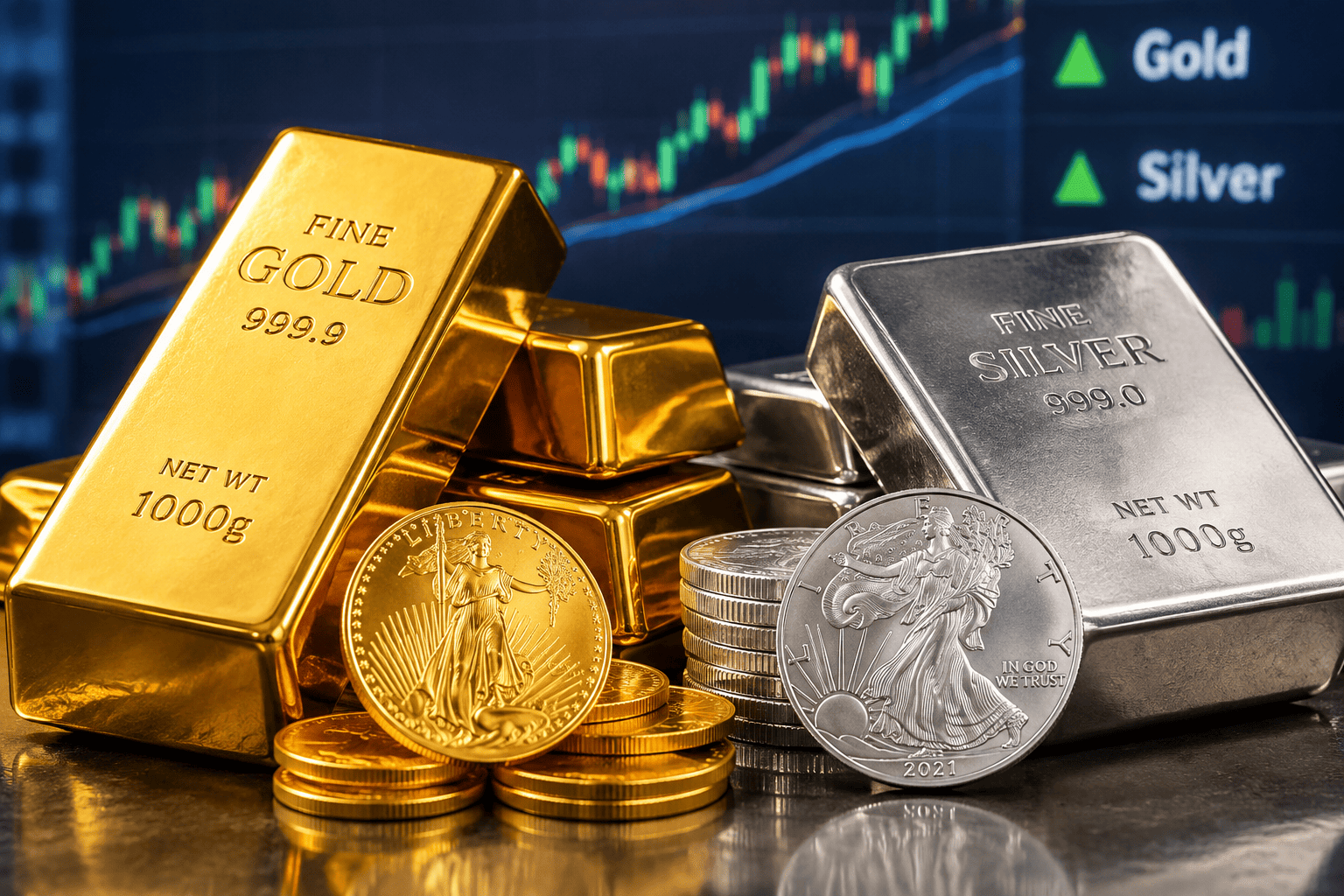
Gold prices climbed back toward the $4,070 mark on Monday, buoyed by a softer dollar and declining oil prices, which together eased some of the pressure that had built from concerns over Federal Reserve tightening. Spot gold rose 0.7% to $4,068.54 an ounce by 4:37 a.m. GMT, while U.S. futures gained 0.9% to $4,066.60. Earlier in the session, bullion had traded at $4,058.79, keeping the level close to $4,060 and confirming that the latest move was a rebound rather than another slide.
Dollar Weakness and Oil Slide Provide Relief
The dollar weakened after authorities intervened to support the yen, making gold cheaper for buyers using foreign currencies. Lower oil prices also helped by reducing fears that the US-Iran conflict would keep energy inflation elevated and force the Fed to raise borrowing costs. Gold pays no interest and typically struggles when investors expect real yields to remain high.

Tim Waterer, chief market analyst at KCM Trade, described Monday's move as an "upbeat but guarded start" in comments to Reuters. He warned that a Middle East escalation pushing oil higher, or a strong nonfarm-payrolls report reviving September rate-rise expectations, could cap bullion's gains.
Key Tests Ahead: Labor Data and Fed Signals
US labour-market reports due this week will provide the next test for gold. Softer employment data could weaken the dollar and short-dated Treasury yields, improving gold's appeal. Strong numbers would strengthen the case for restrictive monetary policy, potentially weighing on the metal.
Linh Tran, market analyst at XS.com, told The Wall Street Journal that the early rise resembled a technical rebound rather than a safe-haven rush. She said the dollar, Treasury yields, and labour data were likely to matter more than geopolitical headlines over the next few sessions.
The $4,000 Level as a Floor
Gold has repeatedly attracted buyers near $4,000, turning that level into a psychological and technical floor. Its refusal to break decisively lower suggests that part of the Fed's hawkish outlook is already reflected in prices. Aakash Doshi, head of gold strategy at State Street Investment Management, told Kitco News that expectations for Fed tightening appeared overly aggressive. He said gold's next $1,000 move was more likely to be higher and maintained a six-to-nine-month range of $4,750 to $5,500.
Doshi said gold could reach $4,500 to $4,750 before year-end if changing rate expectations pulled the two-year Treasury yield below 4%. However, he expected consolidation until investors received clearer guidance on monetary policy.
Structural Demand Keeps the Longer-Term Case Alive
Standard Chartered analysts noted that the structural foundation of gold's rally had not changed, although prices were searching for a floor before the next catalyst. According to market data, gold's median 2026 price forecast stands at $4,516 an ounce. Central-bank buying, government-debt concerns, and efforts to reduce excessive dependence on the dollar remain supports.
The World Gold Council expects gold to stay broadly rangebound, within about 5%, if the current macroeconomic backdrop persists. Softer rate expectations could revive momentum towards $4,500, while resilient growth and rising yields could extend the correction.
For context, gold recently dipped below $4,050 as dollar strength and rising yields capped gains, and the dollar has steadied near 101.50 as traders weigh geopolitical and policy risks. Meanwhile, silver has surged toward $60 on similar dynamics, and silver slipped toward $58.50 when the dollar rebounded.
This article is for informational purposes only and does not constitute financial advice.