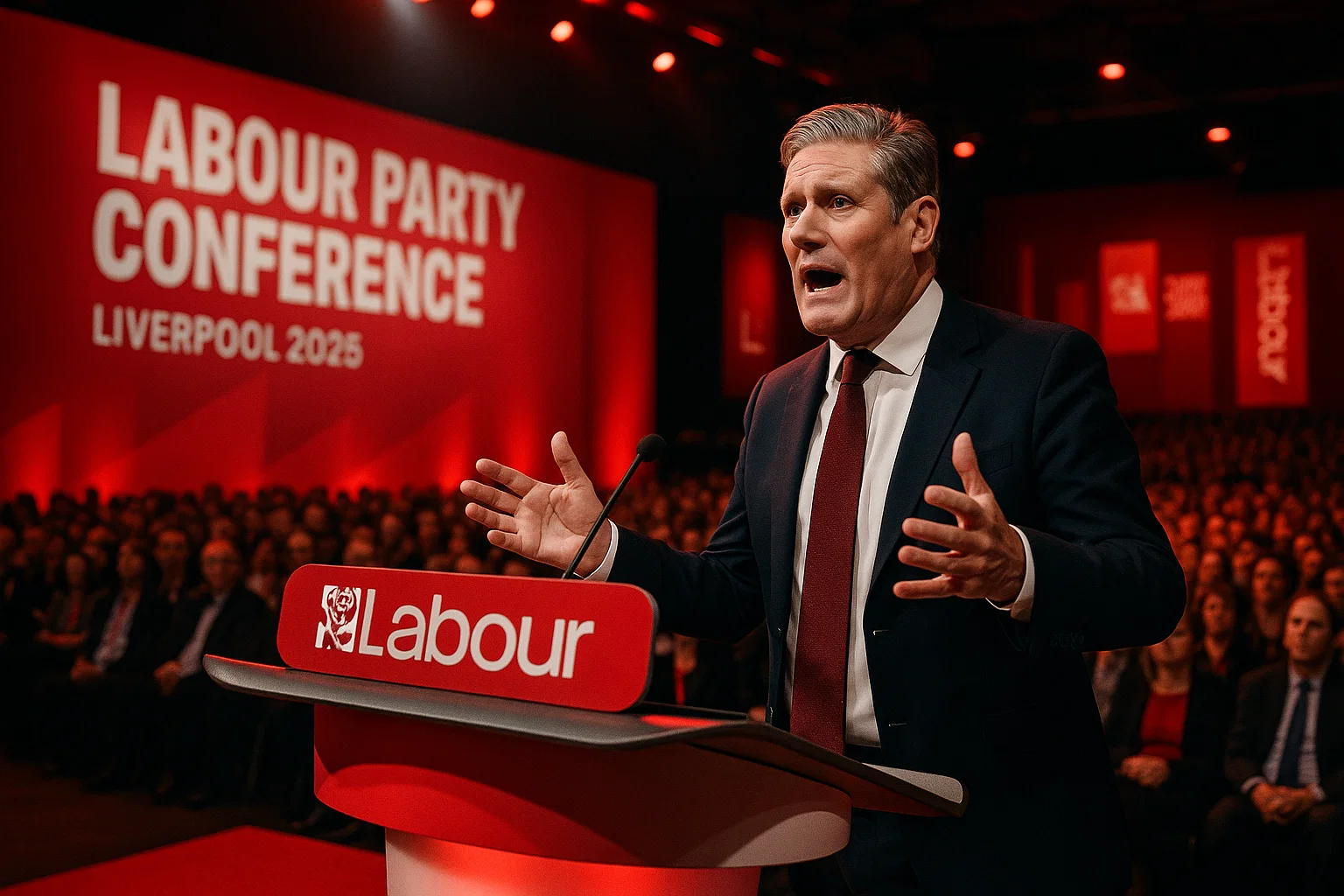
The British pound weakened against the US dollar on Monday, with the GBP/USD pair dropping to 1.3224, a sharp decline from last week's high of 1.3460. The move comes as political turmoil in the UK intensifies, with Prime Minister Keir Starmer reportedly set to announce his resignation timetable today.
According to a Polymarket poll, the probability of Starmer leaving office has surged to 100%, following mounting pressure from within his own cabinet. Starmer, who led the Labour Party to a landslide victory, has faced growing discontent over tax hikes and economic stagnation. His decision to appoint Peter Mandelson as US ambassador, which ended in resignation after Mandelson's name appeared in the Epstein files, further eroded his support.

The UK has seen six prime ministers in the past decade, and the prospect of a seventh—likely Andy Burnham—adds to the sense of instability. High leadership turnover often disrupts policy continuity, and investors are wary of the impact on fiscal and economic direction. Burnham's fiscal plans and choice of chancellor will be closely watched, as detailed in our analysis of UK Leadership Shift: Burnham's Fiscal Plans and Chancellor Pick in Focus as Starmer Steps Down.
Economic and Monetary Policy Headwinds
The UK economy continues to struggle, with the Bank of England warning that underlying growth is slower than headline data suggests. Recent figures show the economy expanded by just 0.7% in April and 1.1% year-over-year. The BoE left interest rates unchanged at 3.75% last week, even as inflation slowed in May. The central bank's cautious stance reflects the delicate balance between supporting growth and controlling prices.
Across the Atlantic, the Federal Reserve delivered a hawkish rate decision, keeping rates steady but signaling potential hikes later this year. This divergence has boosted the US dollar, with the DXY index climbing to 101.50. The stronger dollar has added pressure on GBP/USD, as investors favor the relative safety of US assets amid global uncertainty.
Technical Outlook: Death Cross Signals Further Weakness
From a technical perspective, the GBP/USD pair is approaching a bearish death cross pattern on the daily chart, where the 50-day moving average crosses below the 200-day moving average. This pattern is widely regarded as a continuation signal for downtrends. The pair recently tested support at 1.3164, a level last seen in March, and a break below that could open the door to the 1.3100 mark.
The broader trend remains negative, with the pair having fallen from highs above 1.34. The combination of political instability, weak economic data, and a hawkish Fed suggests further downside risk. For context, similar death cross patterns have preceded extended declines in other markets, such as the Hang Seng, as noted in our coverage of Hang Seng Death Cross Deepens as AI Boom Lifts Nikkei, Kospi to Records.
Market Implications
The ongoing political crisis in the UK is likely to keep sterling under pressure. Investors should monitor developments around Starmer's departure and Burnham's policy agenda. The new prime minister will face the challenge of reviving economic growth while managing public finances. Meanwhile, the BoE's next moves will be critical, as will any shifts in Fed policy.
For forex traders, the GBP/USD pair remains a key barometer of UK sentiment. The death cross pattern adds a technical layer to the fundamental headwinds, suggesting that any rallies may be short-lived. As always, market participants should weigh these factors carefully.
This article is for informational purposes only and does not constitute financial advice.