The Federal Reserve held its benchmark interest rate steady at a range of 3.5% to 3.75% on Wednesday, but the decision was far from unanimous. In a 9-3 vote, three regional bank presidents dissented in favor of a quarter-point increase, underscoring deepening divisions within the central bank over the persistence of inflation.
Cleveland Fed President Beth Hammack, Minneapolis Fed President Neel Kashkari, and Dallas Fed President Lorie Logan again broke ranks, marking the second consecutive meeting where the same trio voted against the majority. The split highlights a growing rift between officials who advocate for patience and those who see inflation risks as still warranting tighter policy.
Warsh: 'Not a Pause, but a Review'
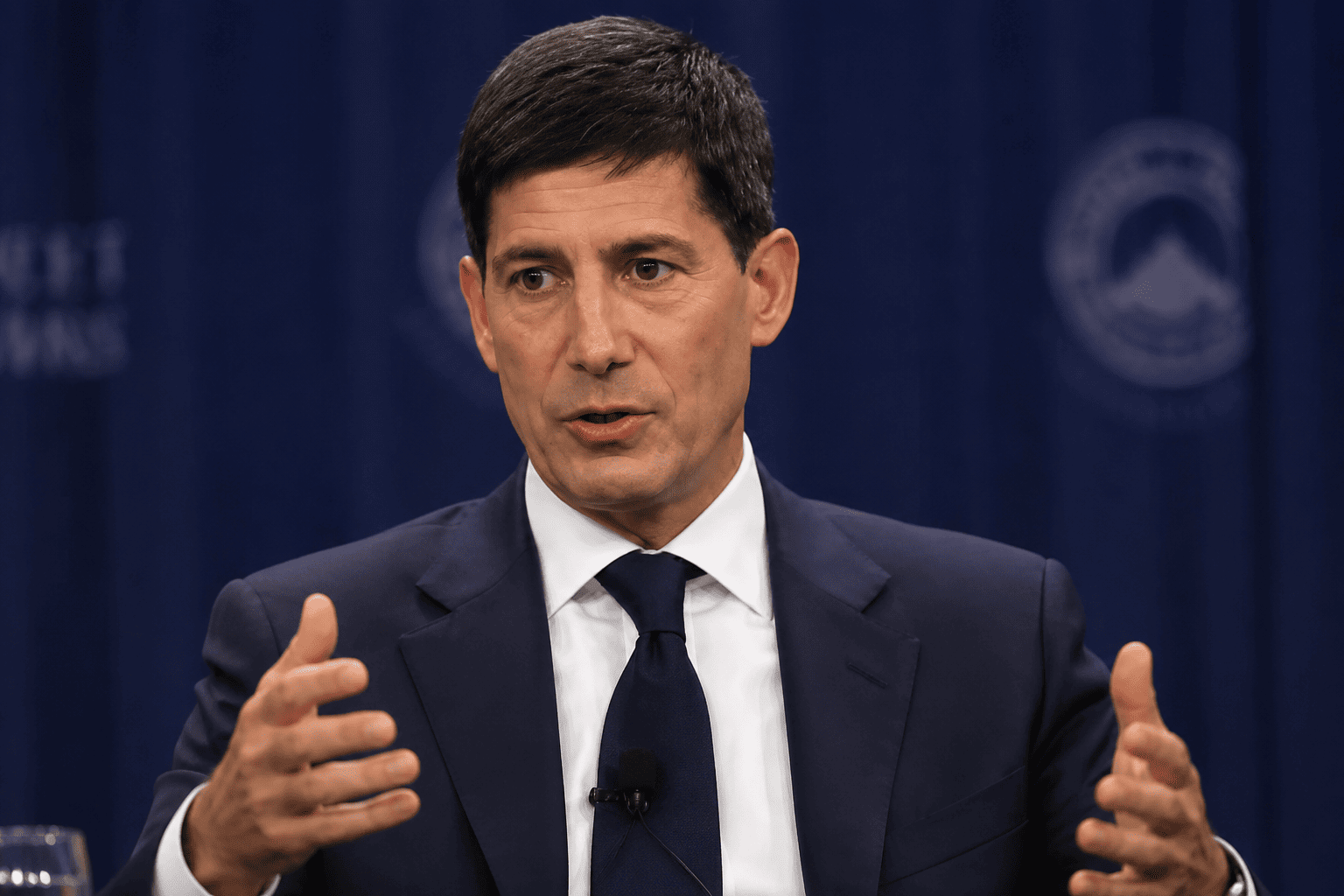
In his post-meeting press conference, Fed Chair Kevin Warsh pushed back against the notion that the central bank is on hold. “I wouldn't characterize what we did as anything like a pause,” he said. “I would characterize what we did as a rigorous review of the economic situation.”
Warsh emphasized that the Fed remains fully committed to returning inflation to its 2% target, noting that “five-plus years of inflation above target cannot be cured in nine weeks.” He stressed that policymakers would avoid signaling future moves, preferring to observe incoming data and market reactions before committing to a specific path.
Market Reaction: Initial Gains Fade
Financial markets initially welcomed the decision, with the S&P 500 briefly turning positive and the Nasdaq Composite recovering earlier losses. Treasury yields pared gains, and the U.S. dollar weakened against major currencies. However, optimism faded as investors digested Warsh's comments. The S&P 500 closed down about 1.5%, the Nasdaq fell roughly 1.7%, and the Dow Jones Industrial Average dropped around 2.19%, reflecting concerns over a more hawkish tone. The broader market sell-off was exacerbated by a rout in chip stocks, as detailed in our coverage of the Dow's 1,152-point tumble.
Key Questions Dominate Policy Debate
Warsh revealed that policymakers spent much of the two-day meeting debating four broad questions. These included the implications of five years of high inflation, the economic shocks from supply chains, geopolitical conflicts, and the surge in AI-related investment. He noted that understanding how these shocks feed through into broader inflation remains one of the Fed's biggest challenges.
“We take these shocks seriously,” Warsh said. “We're trying to understand to what extent these shocks are broadening in their effects on prices that are quite far removed from it.” He added that such developments “make this job and this policy conjuncture a little tougher.”
Inflation Still Above Target
The Fed's statement repeated that inflation “remains elevated relative to the Committee's 2% goal.” While June consumer prices unexpectedly declined 0.4%—the first monthly drop in six years—renewed geopolitical tensions in the Middle East have driven energy prices higher again, reviving concerns that inflation could stay stubbornly above target. This has also impacted other markets, as seen in the 8% jump in oil prices following the Fed's decision.
Analysts See Increasingly Hawkish Fed
Economists noted that the unusually high number of dissents reflects growing concern within the Fed. “The high number of dissents underscore that policymakers are increasingly more hawkish,” said Nationwide Chief Economist Kathy Bostjancic. However, she argued that keeping policy unchanged remains appropriate, since “higher interest rates will not solve the energy supply shock from the Middle East nor slow AI capex that is driving up prices.”
Many policymakers still believe inflation could ease later this year, giving them additional time to assess incoming data before deciding whether further tightening is necessary. The next policy meeting in September will provide officials with two additional months of inflation and labor market data.
This article is for informational purposes only and does not constitute financial advice.