The Federal Reserve kept interest rates unchanged for a fifth consecutive meeting on Wednesday, while President Donald Trump warned Iran of retaliation after an attack on a U.S. base in Jordan, sending oil prices sharply higher and boosting gold.
Fed Holds Rates, Signals Inflation Fight Continues
The Federal Open Market Committee voted 9-3 to maintain the federal funds rate at a range of 3.5% to 3.75%. Three regional Fed presidents—Lorie Logan of Dallas, Beth Hammack of Cleveland, and Neel Kashkari of Minneapolis—dissented, favoring a quarter-point increase to address lingering inflation concerns.

Fed Chair Kevin Warsh told reporters the central bank remains committed to bringing inflation back to its 2% target, rejecting any notion of a softer inflation goal. "There is no soft inflation target," Warsh said. "There is no soft implicit target, not on this committee's watch."
The committee described economic activity as expanding at a "solid pace," citing strong productivity, capital investment, and a stable labor market, while still characterizing inflation as elevated. Warsh noted that higher Treasury yields since the last meeting have already tightened financial conditions, reducing the need for immediate policy action. However, he added that higher rates "could well be part of the solution" if inflation remains stubborn.
Markets had entered the meeting pricing in roughly a 30% chance of a rate hike, after recent data reignited inflation worries. The Fed offered no forward guidance, leaving future decisions data-dependent.
Trump Warns Iran After Jordan Base Attack
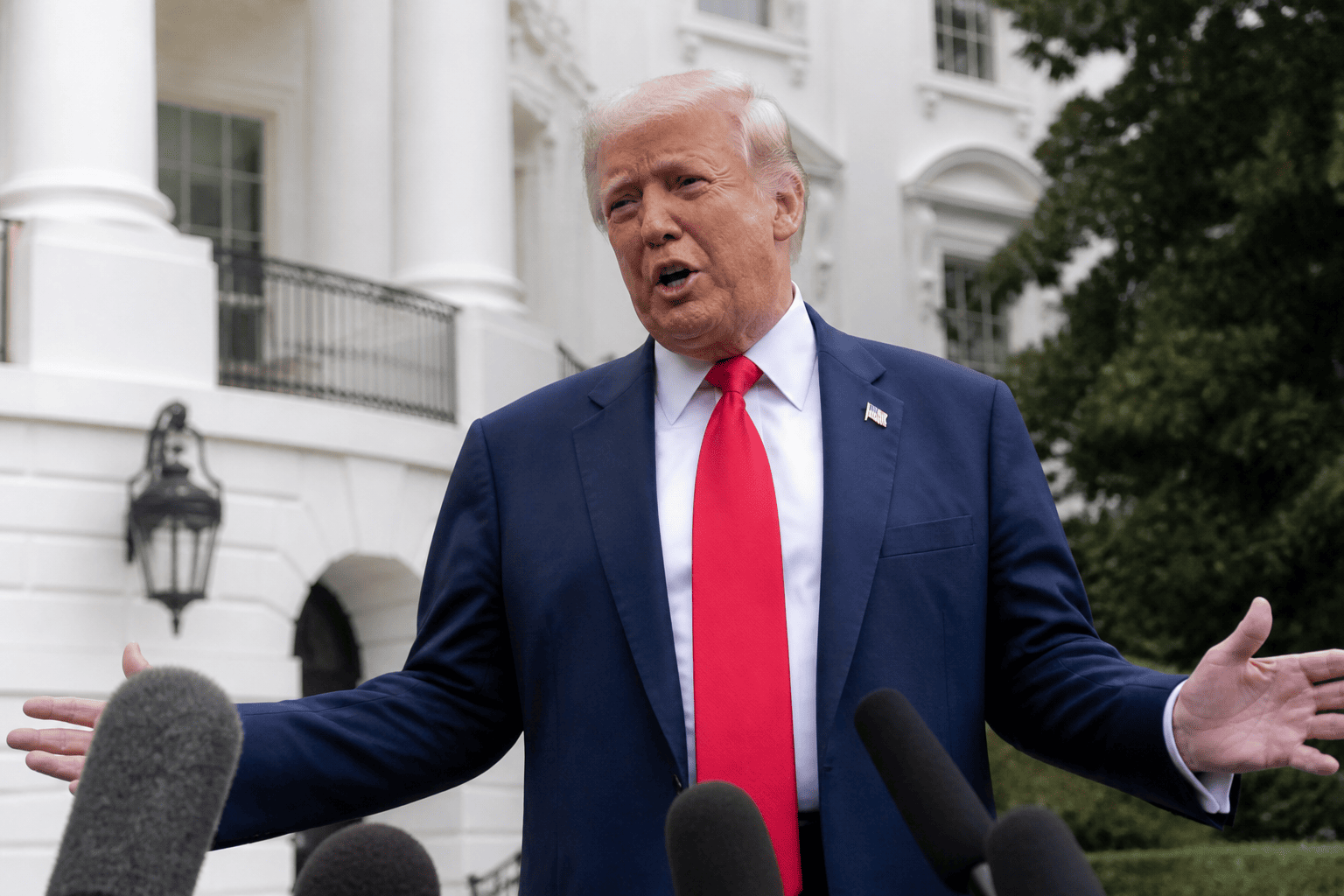
Geopolitical tensions escalated sharply after President Trump vowed retaliation against Iran following what he described as an attack on a U.S. military base in Jordan. "We'll be hitting them hard," Trump told Fox News, adding that Iran was "going to get a beating."
The incident followed renewed military exchanges across the Middle East after a brief pause. Iranian media reported that the Islamic Revolutionary Guard Corps targeted a base in Jordan, while the U.S. and Saudi Arabia launched strikes against Iran-backed militants in Iraq after drone attacks on Saudi oil facilities. Drone attacks also struck two liquefied natural gas vessels at Egypt's Damietta port, though authorities said fires were extinguished and no injuries reported.
The renewed fighting has raised concerns over disruptions to energy supplies through the Strait of Hormuz, where shipping activity remains heavily constrained. Iran reportedly rejected an Omani proposal for joint management of the waterway, insisting on sole control over vessels entering the Persian Gulf. For more on how geopolitical tensions are affecting markets, see our coverage of how strong earnings offset tech weakness.
Gold Rises After Fed Decision
Gold prices climbed following the Fed's decision, as investors welcomed the absence of a surprise rate hike despite the central bank's continued hawkish stance. Spot gold rose more than 0.83% to trade around $4,060.49 an ounce, after initially jumping about $40 following the policy announcement. For context on gold's recent performance, see our analysis of gold holding near $4,029 ahead of the decision.
Oil Surges Nearly 8% on Supply Fears
Oil prices rallied sharply Wednesday as renewed conflict in the Middle East heightened concerns over global crude supplies. Brent crude settled up $6.46, or 7.68%, at $90.53 per barrel, while U.S. West Texas Intermediate crude rose $5.44, or 6.86%, to finish at $84.68 per barrel.
The gains were driven by renewed military action involving the U.S., Iran, and regional allies, as well as continued disruptions to shipping through the Strait of Hormuz. Additional support came from the U.S. Energy Information Administration, which reported that domestic crude inventories fell by 7.2 million barrels to 404.5 million barrels—the lowest level since 2018—far exceeding expectations for a 1.3 million-barrel draw.
The combination of geopolitical risk and tightening supply has refocused investor attention on energy markets. For a broader look at market movements, see our report on diverging Asian market trends.
This article is for informational purposes only and does not constitute financial advice.