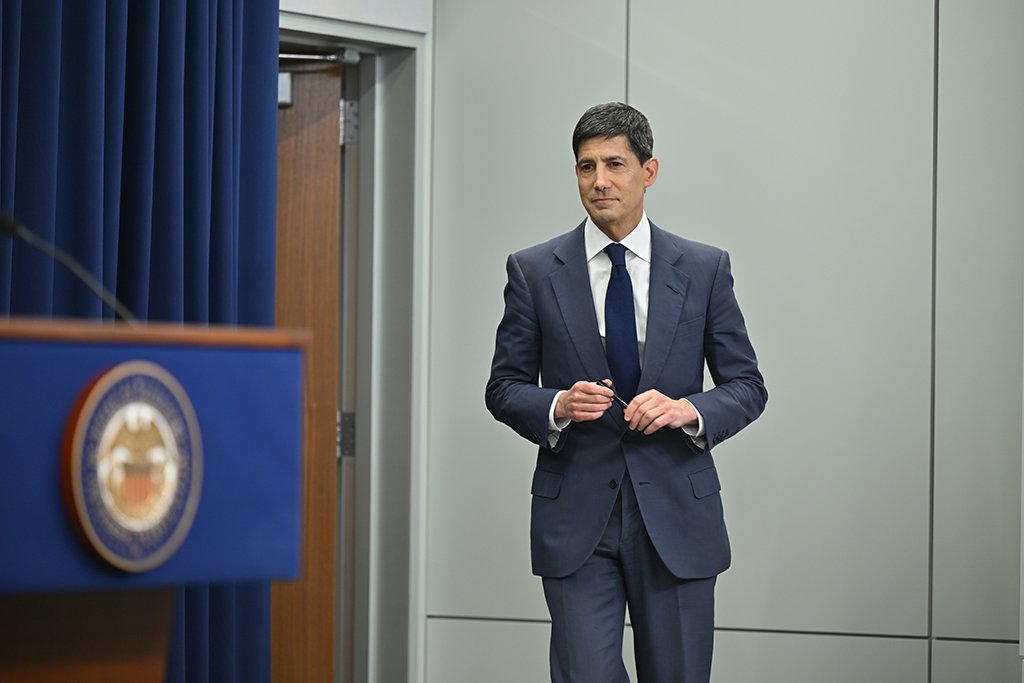
The Federal Reserve delivered a widely anticipated quarter-point rate hike on Wednesday, lifting the federal funds target range to 3.75%–4%. The Federal Open Market Committee's 12-0 vote was unanimous, reflecting broad agreement among policymakers on the need to continue tightening monetary policy.
In its post-meeting statement, the FOMC noted that economic activity is expanding at a solid pace, with domestic spending remaining resilient. The committee also highlighted strong productivity growth and robust capital investment, while acknowledging that job gains have kept pace with the workforce and the unemployment rate has changed little.

Despite these positive signals, the central bank reiterated that inflation remains elevated. The statement said Wednesday's action would support a more timely return to the Fed's 2% inflation objective, underscoring the committee's commitment to price stability.
Dot Plot Points to Further Hikes
The updated dot plot revealed that 16 of 18 participants expect at least one more rate increase this year, with four officials seeing the possibility of two additional hikes. Only two participants anticipate the central bank will pause after the latest move. Notably, Chair Kevin Warsh has chosen not to submit an individual dot since assuming the role.
The projections show no further rate increases in subsequent years, but officials do see one rate cut in 2028 and at least one in 2029. This unusual policy path—raising rates just once when inflation remains too high—reflects the Fed's determination to avoid a premature easing that could undermine its credibility.
Inflation Forecasts Revised Higher
Fed officials also raised their inflation forecasts for this year. The central bank now expects headline personal consumption expenditures (PCE) inflation to reach 3.7% in 2025, while core PCE inflation is projected at 3.4%. Both figures are 0.1 percentage point higher than the June projections.
The Fed does not expect inflation to return to its 2% target until 2029, though it projects a sharp decline in 2027, with headline PCE at 2.3% and core PCE at 2.5%. The higher near-term projections reflect the unusual nature of current inflation pressures, which include rising fuel prices and tariff-related costs. Policymakers have historically looked through temporary increases, but with labor-market conditions stabilizing, they are weighing the cost of continued patience.
The committee also lowered its unemployment forecast to 4.1%, down 0.2 percentage point from the June projection, signaling confidence in the labor market's resilience.
Market Expectations Shifted Sharply
The decision came after a dramatic shift in market expectations over the past month. According to CME Group's FedWatch gauge, traders had priced in a better than 90% probability of a quarter-point hike ahead of Wednesday's meeting, up from roughly 36% a month earlier.
Expectations changed following Chair Warsh's remarks at the central bank's annual symposium in Jackson Hole, Wyoming, coupled with stronger-than-expected inflation data and signs of a firming labor market. Additionally, the resurgence of crude oil prices above $100 a barrel amid the Iran conflict added another source of inflation pressure, reinforcing the case for tighter policy.
The result is a Fed outlook that is more restrictive than markets had anticipated just weeks ago. As investors digest the implications, attention will turn to upcoming data and Fed communications for clues on the timing and magnitude of future moves. For context on how these dynamics are playing out in other markets, see our analysis of Bitcoin's push toward $80K and the recent moves in Brent crude.
This article is for informational purposes only and does not constitute financial advice.

