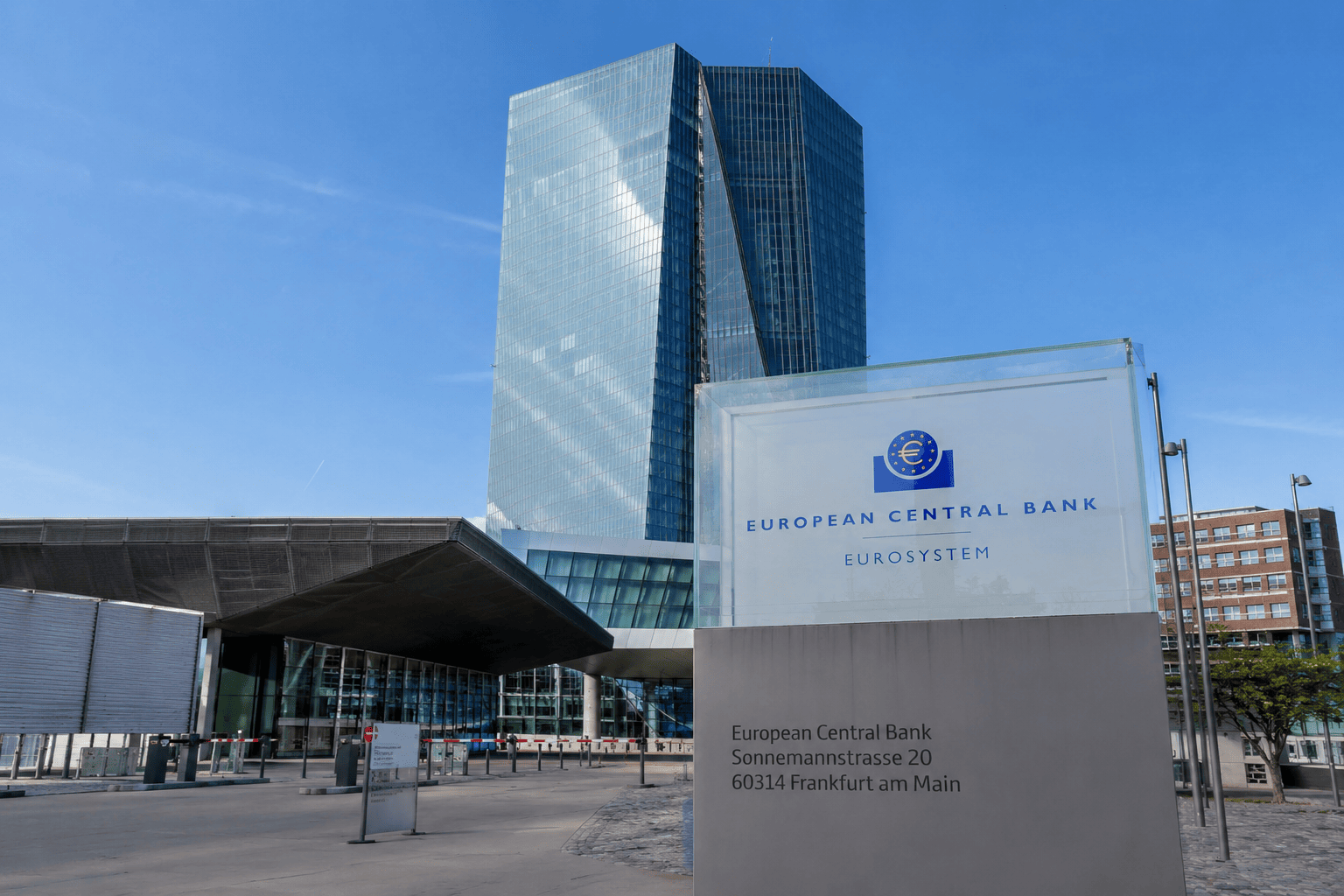
European equity markets declined on July 23, with major indices under pressure as bond yields surged ahead of the European Central Bank's (ECB) upcoming interest rate decision. The DAX slipped 42 basis points, while France's CAC 40 fell 85 basis points. Despite the pullback, the DAX remains just 3.3% below its year-to-date high, and the CAC 40 is trading 3% below its all-time high.
The sell-off extended across the region, with Italy's FTSE MIB, Spain's IBEX 35, and the pan-European Stoxx 50 all dropping more than 0.50%. This weakness mirrored declines in US futures and key Asian indices, reflecting a broad risk-off sentiment driven by rising bond yields and expectations of tighter monetary policy.

ECB Expected to Hold Rates but Signal September Hike
The primary catalyst for the downturn is the upcoming ECB decision. Economists widely expect the central bank to keep its policy rate unchanged at 2.4%, but the accompanying statement is likely to signal readiness to raise rates as early as September. The bank's concern centers on rising inflation pressures, particularly from surging crude oil prices. Brent crude has climbed to $98 per barrel, while West Texas Intermediate (WTI) reached $89, driven by escalating tensions between the US and Iran.
In a note, an ING analyst commented: “The ECB should keep the policy rate at 2.25%, but we do see a September hike as likely, especially as oil prices are moving higher again. One could argue for a front-loaded hike today, but over previous years the ECB has always fully telegraphed any policy moves in advance.”
The hawkish expectations have sent bond yields sharply higher. Germany's two-year yield jumped to 2.87%, while France's two-year yield rose to 3.04%, its highest level since August 2024. In Italy, the two-year yield climbed to 3.09%, and Spain's reached 2.93%. These moves reflect growing bets that the ECB will act to curb inflation, even as economic growth remains uncertain.
Goldman Sachs analysts warned that oil prices could hit $120 if the US-Iran conflict escalates further, adding to inflationary pressures and complicating the ECB's policy path. For context on how rising bond yields are affecting global markets, see our coverage of the Nikkei 225's fluctuations amid similar dynamics.
Earnings Season Delivers Mixed Results
Corporate earnings also influenced market moves. TotalEnergies shares surged to their highest level since June 12 after reporting a 102% jump in net income to $5.4 billion, driven by higher oil prices. The company announced increased dividends and share buybacks, boosting investor sentiment.
Unicredit's stock retreated despite strong results, as CEO Andrea Orcel told CNBC that the bank aims to complete its full buyout of Commerzbank later this year. Orcel stated: “With respect to the normal regulatory environment and antitrust, and what would allow us to take ownership of tendered shares and therefore exercise control, we think now potentially in Q4, maybe later, and that would mark the moment when we go in.”
BNP Paribas reported a rise in net income to €4.35 billion, supported by its trading division, with revenue up 12% to €14.1 billion. However, its stock declined as analysts flagged rising costs following the acquisition of AXA's asset management business. Other notable laggards included L'Oreal, LVMH, Banco Santander, and Schneider Electric.
The broader market weakness also reflects a cautious tone ahead of major central bank decisions and ongoing geopolitical risks. For a look at how similar pressures are affecting US markets, see our report on the Dow's recent surge amid tech earnings optimism.
As bond yields continue to climb and the ECB prepares to navigate a complex inflation-growth trade-off, European indices are likely to remain volatile. Investors will closely watch the ECB's forward guidance and any further developments in the oil market for clues on the near-term direction of equities.
This article is for informational purposes only and does not constitute financial advice.